Affordable Hydraulic Press Price Guide for Metalworking and Fabrication Plants


Introduction to Hydraulic Press Investment in Modern Fabrication
In the competitive landscape of modern metalworking, the acquisition of high-quality machinery is a pivotal decision for any fabrication plant. Among the most versatile and essential tools is the hydraulic press. Whether it is for deep drawing, punching, bending, or assembly, finding an affordable hydraulic press price metalworking fabrication plants can afford without compromising on quality is the primary goal for production managers and business owners alike. HARSLE, a leader in the metalworking machinery industry, understands that price is not just a number but a reflection of value, durability, and long-term efficiency.
The hydraulic press operates on Pascal’s principle, utilizing fluid pressure to generate massive force. This force is harnessed to shape metal with precision that mechanical presses often struggle to match, especially in complex forming operations. However, the market is flooded with options ranging from budget-friendly manual units to multi-million dollar automated systems. Navigating this pricing landscape requires a deep understanding of what drives costs and where a fabrication plant can find the best balance between initial investment and operational excellence.
This guide aims to provide a comprehensive breakdown of the costs associated with hydraulic presses. We will explore the various factors that influence the final price tag, from tonnage and frame design to control systems and safety features. By the end of this article, you will have a clear roadmap for selecting an affordable hydraulic press that meets your specific production needs while ensuring a rapid return on investment.
Price Range Overview: What to Expect
When searching for an affordable hydraulic press price metalworking fabrication plants can integrate into their budget, it is helpful to categorize machines by their capacity and complexity. Generally, the price of a hydraulic press is most heavily influenced by its tonnage—the amount of force it can exert. A small 20-ton shop press will naturally cost significantly less than a 2000-ton heavy-duty industrial press used for automotive body panels.
For small to medium-sized fabrication plants, the most common requirements fall within the 60-ton to 500-ton range. Entry-level machines in the 60-100 ton range typically start between $8,000 and $25,000, depending on the frame type and country of origin. Mid-range presses (200-500 tons) often fall between $30,000 and $85,000. High-capacity presses exceeding 1000 tons are custom-engineered solutions that can exceed $150,000, often reaching much higher figures when advanced CNC controls and robotic integration are included.
| Press Capacity (Tons) | Estimated Price Range (USD) | Typical Applications |
|---|---|---|
| 20T – 60T | $3,000 – $12,000 | Small parts assembly, laboratory testing, light punching. |
| 100T – 300T | $15,000 – $45,000 | General metal forming, bending, shallow drawing. |
| 400T – 800T | $50,000 – $120,000 | Deep drawing, heavy plate forming, automotive components. |
| 1000T+ | $150,000+ | Large scale industrial manufacturing, aerospace, heavy infrastructure. |
Main Cost Drivers in Hydraulic Press Manufacturing
Understanding the affordable hydraulic press price metalworking fabrication plants pay requires looking under the hood. The first major cost driver is the quality of the hydraulic system itself. High-end pumps and valves from reputable brands like Rexroth or Vickers ensure longevity and consistent pressure, but they add to the initial cost. Conversely, using generic components may lower the price but increase the risk of downtime and maintenance costs later.
The structural integrity of the frame is another critical factor. A press frame must withstand immense stress without deforming. The cost of steel and the precision of the welding and machining processes directly impact the price. HARSLE utilizes high-grade Q235B or Q345B steel, which is stress-relieved through vibration or heat treatment to ensure long-term stability. This process adds cost but prevents the frame from warping over years of heavy use.
Control systems represent a significant portion of the budget. A basic manual valve system is the most affordable option, but it lacks the precision and safety of modern PLC (Programmable Logic Controller) systems. Integrating Siemens or Schneider electrics with touch-screen interfaces allows for precise stroke control, pressure monitoring, and recipe storage. While these features increase the affordable hydraulic press price metalworking fabrication plants must pay upfront, they significantly reduce setup time and scrap rates.
Configuration Impact: C-Frame vs. H-Frame vs. Four-Column
The physical configuration of the press is a primary determinant of both its price and its suitability for specific tasks. The three most common designs are C-frame (Gap frame), H-frame (Straight-side), and Four-column presses. Each has a unique cost profile based on the amount of material used and the complexity of the machining required.
C-Frame Presses: These are often the most affordable hydraulic press price metalworking fabrication plants will encounter for lower tonnage applications. The open-front design provides excellent access for operators and allows for the processing of long or wide materials. However, because the frame is open, it is subject to “angular deflection” under high loads. To counteract this, C-frame presses require more massive steel plates, which can drive up the cost as tonnage increases.
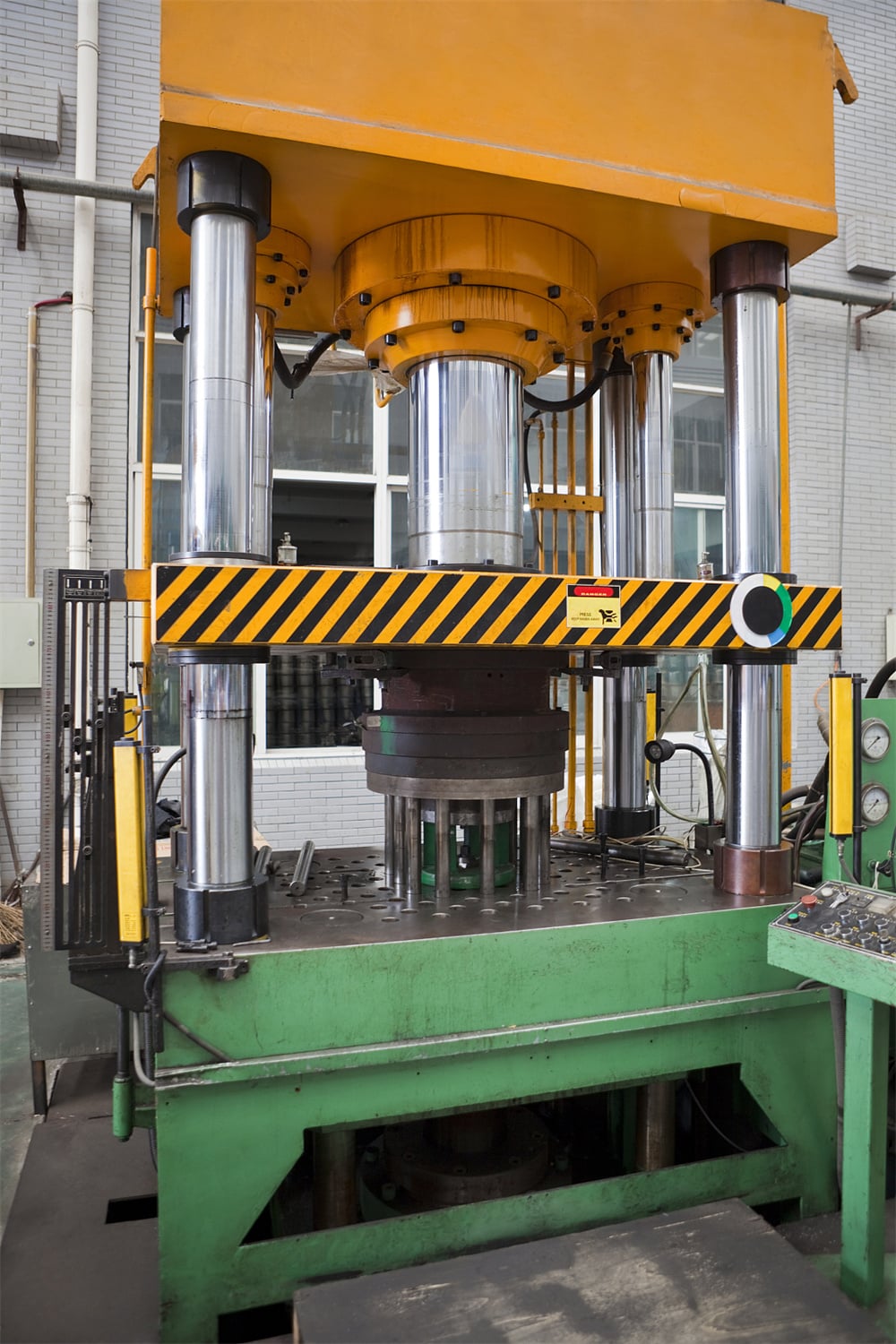
H-Frame and Four-Column Presses: These designs are inherently more rigid. The H-frame encloses the working area, providing a stable platform for high-tonnage operations. Four-column presses offer the best accessibility from all four sides and ensure the most even distribution of pressure across the die surface. Because these designs require more complex assembly and more raw material, they are generally more expensive than C-frame models of the same tonnage. For precision deep drawing or large-die applications, the investment in a four-column or H-frame press is usually mandatory to maintain part quality.
Hidden Costs: Beyond the Sticker Price
When calculating the affordable hydraulic press price metalworking fabrication plants should budget for, it is vital to look beyond the machine’s purchase price. Shipping and logistics can be a major expense, especially for heavy machinery. A 500-ton press can weigh tens of thousands of pounds, requiring specialized heavy-lift transport and potentially ocean freight if sourced internationally. HARSLE works closely with global logistics partners to minimize these costs, but they must always be factored into the total project budget.
Installation and commissioning are the next hurdles. A hydraulic press is not a “plug-and-play” device. It requires a level, reinforced concrete foundation to prevent vibration and structural damage. Furthermore, professional installation ensures that the hydraulic lines are purged, the electrical systems are safely grounded, and the safety light curtains are properly calibrated. Skipping professional installation to save money often leads to expensive repairs or safety violations down the line.
Finally, consider the cost of tooling and hydraulic oil. A press is useless without the dies required to shape the metal. Custom die sets can cost thousands of dollars. Additionally, a large press may require hundreds of gallons of high-quality hydraulic oil, which needs to be filtered and replaced periodically. Maintenance contracts and spare parts availability should also be discussed with the manufacturer to ensure the machine remains an asset rather than a liability.
ROI Calculation: Making the Business Case
To justify the affordable hydraulic press price metalworking fabrication plants are asked to pay, a clear Return on Investment (ROI) analysis is necessary. The primary drivers of ROI in hydraulic pressing are cycle time reduction, material savings, and labor efficiency. Modern hydraulic presses, especially those equipped with servo-motor driven pumps, can reduce energy consumption by up to 50% compared to traditional designs.
Consider a scenario where a fabrication plant replaces an aging, manual press with a modern HARSLE CNC hydraulic press. The new machine’s faster approach and return speeds might reduce the cycle time for a specific part from 30 seconds to 20 seconds. Over an 8-hour shift, this increases production from 960 parts to 1,440 parts—a 50% increase in throughput. If the profit per part is $0.50, the new machine generates an additional $240 per day. Over a 250-day working year, that is $60,000 in additional revenue, potentially paying for the machine in less than a year.
Furthermore, the precision of modern controls reduces scrap. If the old press had a 3% scrap rate and the new press reduces it to 0.5%, the savings in raw material costs can be substantial, especially when working with expensive alloys or stainless steel. When these factors are combined with lower maintenance requirements and improved operator safety (reducing insurance premiums), the “expensive” machine often proves to be the most affordable option in the long run.
Buying Advice for Metalworking Plants
Choosing the right machine involves more than just finding the lowest affordable hydraulic press price metalworking fabrication plants can find. Start by clearly defining your maximum tonnage requirements. It is often wise to buy a press with 20% more capacity than your current heaviest job to allow for future growth and to avoid running the machine at its absolute limit, which extends its lifespan.
Evaluate the manufacturer’s reputation and after-sales support. A cheap machine from an unknown vendor becomes very expensive if you cannot get spare parts or technical support when it breaks down. HARSLE has built a global reputation by providing not only high-quality machinery but also the technical expertise required to keep those machines running. Check for ISO certifications and CE compliance to ensure the machine meets international safety and quality standards.
Lastly, consider the versatility of the press. Can it be easily fitted with different dies? Does the control system allow for easy adjustment of pressure and stroke? A versatile machine can handle a wider variety of contracts, making your fabrication plant more competitive in a changing market. Always request a test run or a video demonstration of the specific model you are interested in to verify its performance and noise levels.
Frequently Asked Questions (FAQ)
1. What is the difference between a mechanical press and a hydraulic press?
Mechanical presses use a flywheel and crank mechanism to deliver force, making them very fast but with a fixed stroke and pressure. Hydraulic presses use fluid to deliver force, allowing for full pressure at any point in the stroke and much greater control over the pressing speed. Hydraulic presses are generally more versatile for deep drawing and complex forming.
2. How often does a hydraulic press need maintenance?
Routine maintenance should be performed daily (checking oil levels and leaks) and weekly (greasing moving parts). A major service, including oil filtration or replacement and seal inspection, should typically occur every 2,000 to 4,000 operating hours. Proper maintenance is key to keeping the affordable hydraulic press price metalworking fabrication plants paid from escalating due to repairs.
3. Can I use a hydraulic press for both metal and plastic?
Yes, many hydraulic presses are used for composite molding, rubber vulcanization, and plastic forming. However, these applications often require heated platens and specific dwell-time controls. If you plan to use the press for multiple materials, ensure the control system can handle the different processing requirements.
4. Is a servo-hydraulic press worth the extra cost?
In most cases, yes. While the initial affordable hydraulic press price metalworking fabrication plants pay for a servo-driven model is higher, the energy savings, reduced noise, and improved precision usually result in a much faster ROI. Servo systems only run the motor when pressure is needed, whereas traditional systems run the motor constantly.
5. What safety features should I look for?
At a minimum, a modern hydraulic press should have dual-hand start buttons (to keep hands away from the die), emergency stop buttons, and light curtains that stop the machine if the light beam is broken. Overload protection and safety interlocks on access doors are also essential for protecting operators and the machine itself.
6. How do I determine the tonnage I need?
Tonnage is calculated based on the material type, thickness, and the length of the cut or the area of the form. Most tooling manufacturers provide formulas or charts to help calculate the required force. It is always recommended to consult with HARSLE engineers to verify your calculations before purchasing.