Case Study: Solving Complex Part Cutting Challenges A Laser Cutting Machine


Introduction to Modern Metal Fabrication Challenges
In the rapidly evolving landscape of industrial manufacturing, the demand for high-precision, complex metal parts has never been greater. Industries such as aerospace, automotive, medical device manufacturing, and high-end electronics require components with intricate geometries, tight tolerances, and flawless edge finishes. Traditional cutting methods, including mechanical punching, plasma cutting, and even older CO2 laser systems, often struggle to meet these modern requirements without significant secondary processing or high scrap rates.
This Case Study: Solving Complex Part Cutting Challenges A Laser Cutting Machine examines how advanced fiber laser technology has revolutionized the production floor. By transitioning to high-performance fiber laser cutting machines, manufacturers can overcome the limitations of physical tooling and thermal distortion. The ability to move directly from a CAD drawing to a finished part in minutes, regardless of the complexity of the internal cutouts or the hardness of the material, has become a competitive necessity.
HARSLE, a leader in metal fabrication machinery, has observed a significant shift in client needs. Customers are no longer just looking for a machine that cuts; they are looking for a comprehensive solution that integrates software intelligence, mechanical stability, and high-speed execution. This article explores the technical nuances and strategic considerations involved in deploying a laser cutting machine to solve the most demanding fabrication puzzles.
The core of the challenge often lies in the balance between speed and quality. When dealing with complex parts—those with hundreds of small holes, sharp angles, or varying thicknesses—the machine’s control system and motion hardware must work in perfect harmony. Throughout this case study, we will break down the specific technical hurdles faced by fabricators and how modern fiber laser systems provide the necessary precision to overcome them.
Key Considerations for Complex Part Cutting
When approaching a complex part cutting project, several critical factors must be evaluated to ensure success. The first is material compatibility and thickness. While fiber lasers are exceptionally efficient at cutting thin to medium-gauge metals, the gas dynamics and power modulation required for thick stainless steel or aluminum differ significantly. Understanding the thermal conductivity of the material is essential to preventing melting or dross buildup on intricate corners.
Another major consideration is the geometry of the part itself. Complex parts often feature “heat-sensitive” zones where multiple cuts are located in close proximity. Without intelligent nesting and path planning, the cumulative heat can cause the material to warp or the “islands” between cuts to fall out or tip up, potentially damaging the laser head. Modern CNC systems now include features like ‘Leapfrog’ movement and ‘Cooling Points’ to mitigate these risks.
- Path Optimization: The software must calculate the most efficient route to minimize non-cutting time while ensuring the material remains stable throughout the process.
- Micro-Jointing: For very small or delicate parts, using micro-joints (tiny tabs) keeps the part attached to the skeleton until the entire sheet is processed, preventing parts from falling into the scrap bin or tilting.
- Gas Pressure Control: Precise control over auxiliary gases (Oxygen, Nitrogen, or Compressed Air) is vital for achieving a clean, burr-free edge on complex contours.
- Dynamic Power Control: The laser power must automatically adjust based on the cutting speed, especially when slowing down for sharp corners, to prevent over-burning.
Furthermore, the mechanical rigidity of the machine frame cannot be overlooked. High-speed cutting of complex shapes involves rapid acceleration and deceleration (G-force). If the machine frame is not sufficiently dampened or rigid, vibrations will translate into the cut edge, resulting in a wavy finish or dimensional inaccuracies. This is why high-end machines utilize heavy-duty welded frames or even cast iron beds to ensure long-term stability.
Technical Details of High-Performance Laser Systems
To solve the challenges mentioned in this Case Study: Solving Complex Part Cutting Challenges A Laser Cutting Machine, one must look under the hood of the equipment. A fiber laser cutting machine is a symphony of high-tech components. The laser source itself, often provided by industry giants like Raycus or IPG, generates a high-density beam that is delivered via a flexible fiber optic cable. This allows for a simpler optical path compared to CO2 lasers, reducing maintenance and increasing energy efficiency.
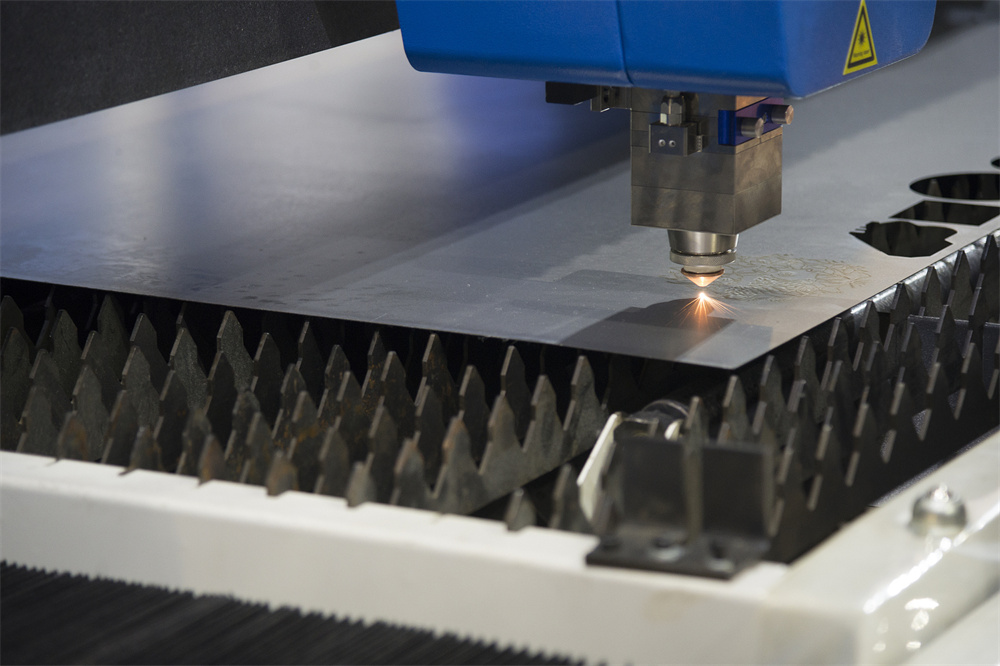
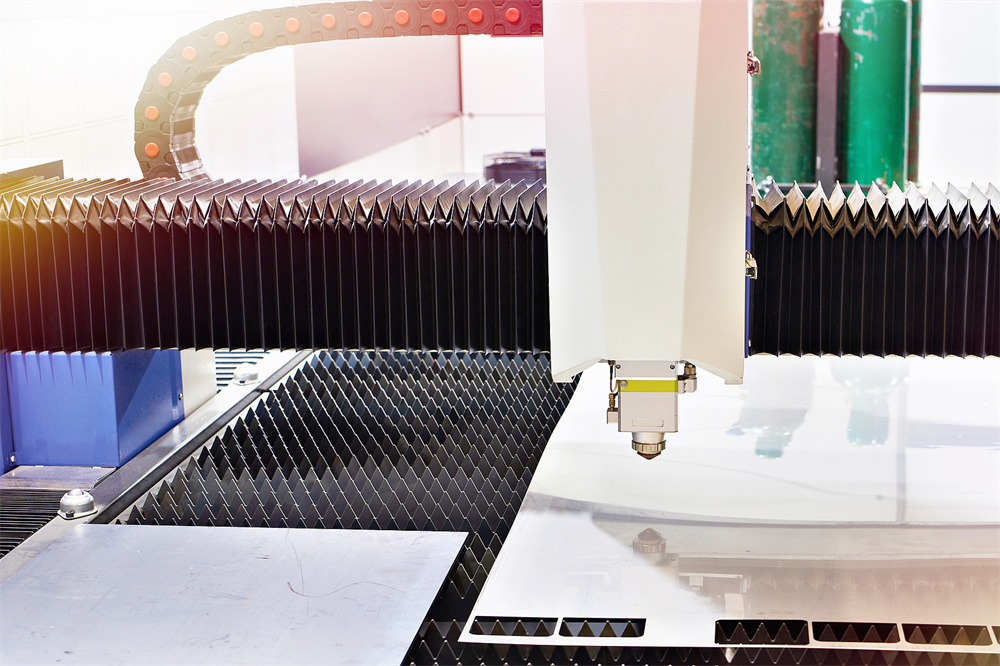
The cutting head is the “business end” of the machine. Modern heads feature autofocus capabilities, where the internal lens moves automatically to maintain the optimal focal point relative to the material surface. This is crucial when cutting sheets that may have slight undulations. Additionally, the sensor in the cutting head maintains a constant distance (stand-off) from the material, reacting in milliseconds to any changes in height.
Core Components and Their Functions
| Component | Technical Specification/Feature | Impact on Complex Cutting |
|---|---|---|
| Laser Source | Fiber Laser (1kW – 30kW+) | Determines cutting speed and maximum material thickness. |
| CNC Controller | CypCut / HypCut / EtherCAT | Processes complex G-code and manages real-time adjustments. |
| Motion System | Servo Motors & Rack/Pinion | Ensures high acceleration (up to 1.5G) for intricate paths. |
| Cutting Head | Autofocus / Anti-collision | Maintains precision on uneven surfaces and protects the lens. |
| Chiller | Dual-circuit Water Cooling | Stabilizes the temperature of the laser source and the head. |
The integration of the CNC controller is perhaps the most vital element for complex parts. Systems like CypCut allow for advanced nesting, which optimizes material usage and reduces waste. They also support “Fly-Cutting,” a technique where the laser cuts a line of holes without stopping the motion of the gantry, significantly increasing throughput for perforated designs. This level of technical sophistication is what allows a HARSLE machine to handle jobs that were previously considered impossible or too expensive.
Moreover, the drive system—consisting of high-precision linear guides and rack-and-pinion sets—must provide sub-millimeter repeatability. In a complex part with hundreds of features, a deviation of even 0.1mm can lead to a cumulative error that renders the part useless. Therefore, the calibration of these mechanical components is a cornerstone of the manufacturing process at HARSLE.
Selection Advice: Choosing the Right Machine for Your Needs
Selecting the right laser cutting machine requires a deep understanding of your specific production goals. It is not always about buying the highest wattage available. For instance, if your primary work involves thin-gauge decorative panels with high complexity, a 2kW or 3kW machine with high-speed motors might be more cost-effective and precise than a 12kW machine designed for heavy plate. This Case Study: Solving Complex Part Cutting Challenges A Laser Cutting Machine emphasizes the importance of matching machine specs to the application.
Consider the “Total Cost of Ownership” (TCO). This includes the initial purchase price, electricity consumption, gas costs, and the price of consumables like nozzles and protective windows. Fiber lasers generally have a much lower TCO than CO2 lasers because they lack mirrors that require alignment and have a much higher wall-plug efficiency. However, the choice of auxiliary gas can significantly impact operating costs; using nitrogen for a clean finish on stainless steel is more expensive than using oxygen for carbon steel.
When evaluating a machine, ask the manufacturer for a “cut sample” of your most complex part. Observe the edge quality, the sharpness of the corners, and the time it took to complete the cut. A reputable manufacturer like HARSLE will provide detailed data on the cutting parameters used. Additionally, consider the software ecosystem. Is the nesting software user-friendly? Does it integrate with your existing CAD/CAM workflow? The ease of going from design to cut is a major factor in overall productivity.
- Power Selection: 1kW-3kW for thin sheets; 6kW-12kW for medium plate; 15kW+ for heavy industrial use.
- Bed Size: Ensure the working area (e.g., 3015, 4020, or 6025) accommodates your largest sheets to minimize material handling.
- Automation: For high-volume complex parts, consider an automatic shuttle table or a load/unload system to keep the laser firing continuously.
- After-Sales Support: Complex machines require expert maintenance. Ensure your provider offers robust technical support and readily available spare parts.
Finally, think about future-proofing. The metal fabrication market is shifting toward thicker materials and faster turnaround times. Investing in a machine with a slightly higher power rating than you currently need can provide the flexibility to take on more diverse projects as your business grows. A modular design that allows for future upgrades to the laser source or the addition of automation is also a wise strategic choice.
Frequently Asked Questions (FAQ)
What makes a part “complex” for a laser cutting machine?
A part is considered complex if it features intricate internal geometries, very small holes relative to material thickness, sharp angles that require precise deceleration, or tight tolerances (e.g., +/- 0.05mm). Complex parts often require sophisticated nesting and path planning to avoid heat distortion and ensure structural integrity during the cutting process.
How does a fiber laser handle heat-sensitive materials?
Fiber lasers have a very small beam diameter and high energy density, which results in a narrow Heat Affected Zone (HAZ). For heat-sensitive materials, the CNC controller can use “pulsed” cutting modes or cooling points to manage the temperature. Additionally, using nitrogen as an auxiliary gas helps cool the cut edge and prevents oxidation, which is critical for materials like stainless steel and aluminum.
Can a laser cutting machine replace a CNC punch press?
In many cases, yes. While a punch press is faster for simple, repetitive shapes in thin metal, a laser cutting machine offers far more flexibility. There is no need for expensive physical tools (dies), meaning you can change designs instantly. For complex parts with non-standard shapes, the laser is almost always the superior choice in terms of both cost and capability.
What maintenance is required for a fiber laser cutting machine?
Fiber lasers are relatively low-maintenance compared to older technologies. Daily tasks include cleaning the protective window of the cutting head and checking the nozzle for debris. Weekly tasks involve checking the chiller water levels and cleaning the guide rails. The laser source itself is solid-state and typically requires no maintenance for up to 100,000 hours of operation.
Is it difficult to learn how to operate these machines?
Modern CNC software, such as the systems used by HARSLE, is designed with user-friendliness in mind. Most operators with a basic understanding of computers and metalworking can become proficient within a week of training. The software handles most of the complex calculations, such as lead-ins, lead-outs, and nesting, allowing the operator to focus on material loading and quality control.
Conclusion: The Future of Precision Cutting
As we have explored in this Case Study: Solving Complex Part Cutting Challenges A Laser Cutting Machine, the transition to advanced fiber laser technology is a game-changer for metal fabricators. The ability to tackle complex geometries with high precision, minimal waste, and no tooling costs provides a significant competitive advantage. Whether it is reducing the lead time for prototypes or scaling up production of intricate components, the fiber laser cutting machine stands as the cornerstone of the modern smart factory.
The technical advancements in laser sources, motion control, and software integration continue to push the boundaries of what is possible. We are seeing a trend toward even higher wattages, which not only increases the thickness of materials that can be cut but also dramatically boosts the cutting speed for thinner gauges. This efficiency is essential in an era where energy costs and labor shortages are constant challenges for the manufacturing sector.
HARSLE remains committed to providing the industry with the tools needed to solve these complex challenges. By focusing on machine stability, cutting-edge CNC technology, and comprehensive customer support, we help our clients transform their production capabilities. As you look to the future of your fabrication business, consider how a high-performance laser cutting machine can unlock new opportunities and streamline your most difficult cutting tasks. The investment in precision today is the foundation for the growth and success of tomorrow.