How Laser Cutting Technology Enhanced Productivity In A Contract Manufacturing Plant


Introduction: The Evolution of Efficiency in Metal Fabrication
In the competitive landscape of modern industrial production, the phrase “Laser Cutting Technology Enhanced Productivity In A Contract Manufacturing Plant” has become more than just a headline; it represents a fundamental shift in how metal components are designed, processed, and delivered. Contract manufacturing plants, which often handle a diverse range of projects for various clients, face unique challenges. They must balance high-volume production with the flexibility to switch between different materials and complex geometries at a moment’s notice. Traditional methods, such as mechanical punching, plasma cutting, or manual shearing, often fall short in this high-mix, high-volume environment due to long setup times and secondary finishing requirements.
The introduction of fiber laser technology has revolutionized these facilities. By replacing legacy systems with high-speed, high-precision fiber lasers, plants have seen a dramatic reduction in lead times and a significant increase in throughput. This article explores the technical nuances, strategic considerations, and real-world impacts of integrating advanced laser cutting systems into a contract manufacturing workflow. We will delve into how these machines eliminate bottlenecks, reduce waste, and ultimately drive profitability in a sector where margins are often razor-thin.
For a contract manufacturer, productivity is measured not just by how fast a machine can cut, but by how much sellable product leaves the shipping dock every day. Laser cutting technology addresses this by offering a “lights-out” manufacturing capability, where automated loading and unloading systems allow the machine to run with minimal human intervention. This shift from labor-intensive processes to technology-driven production is the cornerstone of the modern industrial revolution in metalworking.

Key Considerations for Implementing Laser Technology
When a contract manufacturing plant decides to upgrade its capabilities, several key considerations must be addressed to ensure that the investment translates into actual productivity gains. The first consideration is the power rating of the laser source. In the past, 2kW or 4kW lasers were the industry standard. Today, 12kW, 20kW, and even 30kW fiber lasers are becoming common. Higher power doesn’t just mean cutting thicker materials; it means cutting medium-thickness materials at exponentially faster speeds, which is a primary driver of productivity.
Another critical factor is the integration of CAD/CAM software and nesting algorithms. Productivity is often lost in the office before the metal even hits the machine bed. Advanced nesting software can optimize the layout of parts on a sheet of metal, reducing scrap rates by up to 30%. For a contract manufacturer handling expensive alloys or high volumes of stainless steel, these material savings directly impact the bottom line. Furthermore, the ability to import 3D models and automatically generate cutting paths reduces the engineering time required for each job.
Material handling and automation are also paramount. A laser that cuts at 50 meters per minute is useless if the operator takes ten minutes to manually load a new sheet and unload the finished parts. Therefore, many plants opt for shuttle tables (exchange tables) or fully automated tower systems. These systems allow the machine to continue cutting on one table while the operator unloads the previous job from the other, ensuring that the laser beam is active for the maximum possible percentage of the work shift.
Finally, the choice of assist gas—oxygen, nitrogen, or compressed air—plays a vital role in both quality and cost. Nitrogen cutting provides a clean, oxide-free edge that is ready for welding or painting without secondary grinding. This elimination of secondary operations is a major factor in how laser cutting technology enhanced productivity in a contract manufacturing plant. By producing a finished part directly from the machine, the plant saves hours of labor and reduces the overall cycle time for every project.
Technical Details: The Mechanics of High Productivity
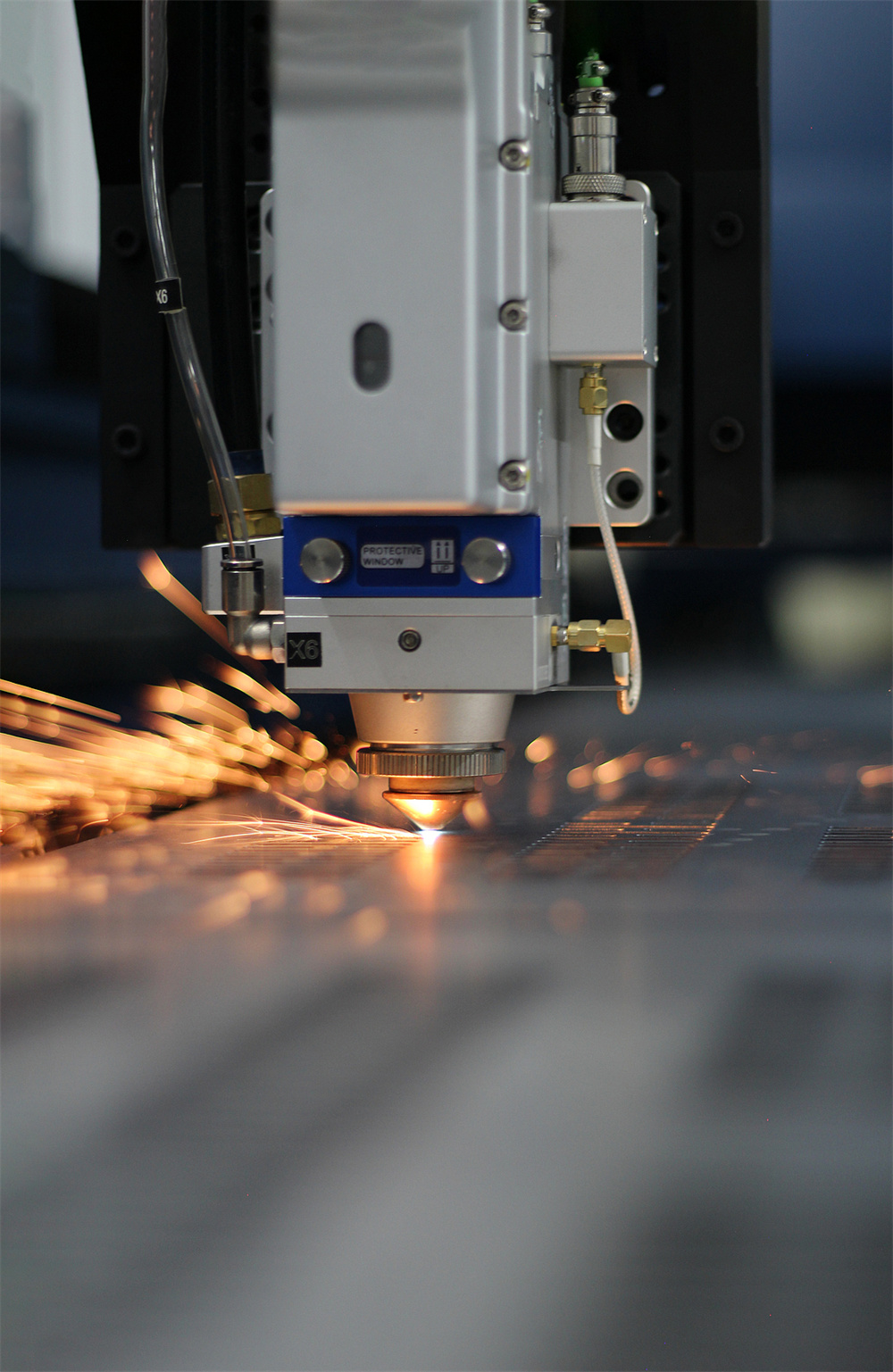
The technical superiority of fiber lasers over older CO2 lasers is a primary reason for the productivity surge. Fiber lasers use a solid-state gain medium, which is more energy-efficient and requires significantly less maintenance. There are no mirrors to align or bellows to replace, meaning the machine’s uptime is much higher. In a contract manufacturing setting, where a machine might run 20 hours a day, this reliability is crucial.
The wavelength of a fiber laser (typically around 1.06 microns) is about ten times shorter than that of a CO2 laser. This shorter wavelength is more readily absorbed by metals, particularly reflective materials like aluminum, brass, and copper. This allows the laser to cut through these materials with ease, expanding the range of jobs a contract manufacturer can accept. The beam quality is also superior, resulting in a smaller focal spot and a narrower kerf, which enables the cutting of intricate details that would be impossible with other methods.
Comparison of Cutting Technologies
| Feature | Traditional Plasma | CO2 Laser | Fiber Laser (Modern) |
|---|---|---|---|
| Cutting Speed (Thin Sheet) | Moderate | High | Ultra-High |
| Edge Quality | Rough (Dross) | Excellent | Superior (Oxide-Free) |
| Maintenance Requirements | High | High (Gas/Mirrors) | Low (Solid State) |
| Energy Efficiency | Low | Low (approx. 10%) | High (approx. 35-45%) |
| Material Versatility | Conductive Metals | Limited Reflective | All Metals |
The motion control system of the machine also contributes to productivity. High-end machines utilize linear motors rather than traditional rack-and-pinion or ball screw drives. Linear motors allow for higher acceleration and deceleration rates (often exceeding 2G), which is essential when cutting parts with many small holes or complex contours. The faster the cutting head can move between cuts (the “traverse speed”), the less non-productive time is spent during the cycle.
Furthermore, modern laser heads are equipped with auto-focus sensors and anti-collision technology. The auto-focus ensures that the beam is always at the optimal position relative to the material surface, even if the sheet is slightly warped. Anti-collision sensors prevent the head from crashing into tipped-up parts, which is a common cause of downtime in automated cutting. These technical features work in harmony to ensure that the machine operates at peak efficiency with minimal human intervention.
Selection Advice: Choosing the Right Laser for Your Plant
Selecting the right laser cutting machine is a strategic decision that requires a deep understanding of your current workload and future growth plans. For a contract manufacturing plant, versatility is usually the most important factor. You need a machine that can handle 20-gauge decorative panels in the morning and 1-inch structural plates in the afternoon. This typically points toward a high-wattage fiber laser (6kW to 12kW) as the “sweet spot” for most general-purpose fabrication shops.
Consider the bed size carefully. While a standard 5’x10′ (1500mm x 3000mm) bed is the industry norm, larger formats like 6’x13′ or even 8’x20′ can offer significant advantages. Larger beds allow for the nesting of very large parts or the ability to lay out multiple smaller sheets at once, reducing the frequency of material changes. If your plant frequently handles oversized architectural elements or large industrial components, investing in a larger format machine can be a major competitive advantage.
Don’t overlook the importance of the manufacturer’s service and support network. A laser cutting machine is a complex piece of equipment, and even the best machines will eventually require maintenance or parts. Downtime in a contract manufacturing plant is incredibly expensive, often costing thousands of dollars per hour in lost revenue. Choosing a partner like HARSLE ensures that you have access to technical expertise and spare parts when you need them most, keeping your productivity high over the long term.
Finally, evaluate the software ecosystem. The machine is only as good as the instructions it receives. Ensure that the machine’s controller is user-friendly and that the nesting software integrates seamlessly with your existing ERP or quoting systems. The ability to quickly generate accurate quotes based on actual nesting data can help a contract manufacturer win more bids and ensure that every job is profitable.
How Laser Cutting Technology Enhanced Productivity: A Case Study Perspective
To truly understand how laser cutting technology enhanced productivity in a contract manufacturing plant, we can look at the typical workflow improvements. In a traditional shop, a job might start with a paper drawing, move to a manual layout, then to a shear, and finally to a drill press or a manual mill for holes and internal cutouts. Each of these steps involves material handling, setup time, and the potential for human error. If a part is out of tolerance at the final stage, the entire process must be repeated.
With a fiber laser, this entire sequence is compressed into a single operation. The CAD file is imported, nested, and sent to the machine. The laser cuts the perimeter, the internal holes, and even adds etchings for part identification or bend lines for the press brake department. Because the laser is incredibly precise (often within +/- 0.002 inches), there is no need for downstream checking or rework. The parts are ready for the next stage of production immediately.
This “one-and-done” approach has a ripple effect throughout the entire plant. The press brake operators receive parts that are consistent and accurate, which makes their setup faster and more predictable. The welding department receives parts with perfect fit-up, reducing the time spent on clamping and jigging. By improving the quality and speed of the first step in the fabrication process, laser cutting technology elevates the productivity of every subsequent department.
FAQ: Common Questions About Laser Productivity
1. How much faster is a fiber laser compared to a CO2 laser?
In thin materials (under 3mm), a fiber laser can be 3 to 5 times faster than a CO2 laser of the same power. As material thickness increases, the speed advantage narrows, but the fiber laser remains more efficient due to lower operating costs and higher uptime.
2. Can laser cutting eliminate the need for deburring?
Yes, especially when using nitrogen as an assist gas. Nitrogen prevents oxidation, resulting in a shiny, clean edge that typically requires no secondary deburring or cleaning before painting or welding. This is a major factor in how laser cutting technology enhanced productivity in a contract manufacturing plant.
3. What is the typical ROI for a high-power fiber laser?
While the initial investment is significant, many contract manufacturers see a return on investment (ROI) within 12 to 24 months. This is driven by increased throughput, reduced labor costs, lower energy consumption, and significant material savings through better nesting.
4. Is it difficult to train operators for CNC laser machines?
Modern CNC interfaces are designed to be intuitive, often featuring touchscreens and graphical representations of the cutting process. While a basic understanding of metalworking is helpful, most operators can become proficient in basic operation within a few days, and advanced nesting/programming within a few weeks.
5. How does automation impact productivity in a small shop?
Even for smaller shops, simple automation like an exchange table can increase productivity by 30-50% by allowing the machine to cut while the operator is busy with other tasks. Full automation (towers and robots) is generally reserved for high-volume environments but is becoming more accessible to mid-sized plants.
6. What maintenance is required to keep productivity high?
Daily maintenance includes cleaning the slats, checking the protective windows (lenses), and ensuring the gas supply is adequate. Weekly and monthly checks involve lubricating the motion system and checking the chiller’s water quality. Consistent maintenance prevents unexpected downtime.
Conclusion: The Future of Contract Manufacturing
The evidence is clear: laser cutting technology enhanced productivity in a contract manufacturing plant by streamlining workflows, reducing waste, and providing unparalleled precision. As the technology continues to evolve, with even higher power levels and more sophisticated AI-driven automation, the gap between those who embrace these tools and those who rely on legacy methods will only widen. For a contract manufacturer, the ability to deliver high-quality parts faster and more affordably than the competition is the ultimate key to success.
Investing in a high-quality fiber laser system from a reputable manufacturer like HARSLE is not just an equipment purchase; it is a strategic move to future-proof your business. By reducing the cost per part and increasing the overall capacity of the plant, laser cutting technology allows manufacturers to take on more complex projects, serve a wider range of industries, and achieve sustainable growth in an ever-changing global market. The journey toward peak productivity begins with the right technology, and for the modern metal fabricator, that technology is the fiber laser.