How to Estimate Hydraulic Press Price Before Requesting a Quote: A Comprehensive Guide


Introduction to Hydraulic Press Budgeting
In the world of metal fabrication, purchasing a hydraulic press is a significant capital investment. Whether you are a small workshop looking for a 50-ton C-frame press or a large-scale automotive manufacturer requiring a 2,000-ton multi-station H-frame system, understanding the financial landscape is crucial. Many buyers find themselves frustrated by the lack of transparent pricing online. This is because industrial machinery is often highly customized to specific production needs. However, you can Estimate Hydraulic Press Price Before Requesting A Quote by understanding the core variables that dictate the final invoice.
Estimating costs beforehand allows your procurement team to align with budgetary constraints, justify the ROI to stakeholders, and enter negotiations with manufacturers like HARSLE from a position of knowledge. A well-prepared buyer can distinguish between a ‘base model’ price and a ‘production-ready’ price, which often includes essential peripherals and safety features. This guide will break down the complex pricing structures of hydraulic presses into manageable categories, helping you build a realistic financial model for your next acquisition.
Price Range Overview: Categorizing by Tonnage and Type
The most immediate factor in determining the price of a hydraulic press is its tonnage—the amount of force it can exert. Generally, as tonnage increases, so does the amount of steel required for the frame, the size of the hydraulic cylinders, and the power of the motor. To Estimate Hydraulic Press Price Before Requesting A Quote, you should first identify which category your needs fall into.
Entry-Level and Small Capacity Presses (10 – 60 Tons)
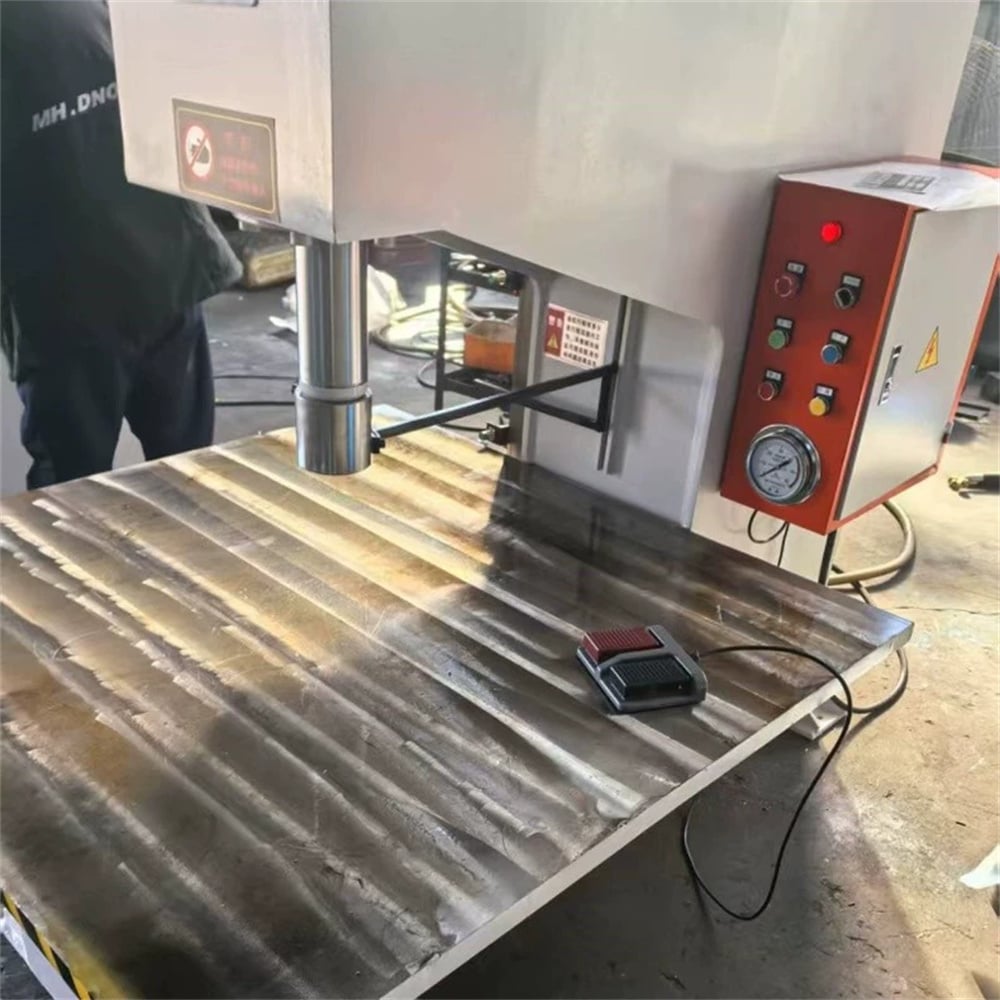
Small capacity presses, often C-frame or benchtop models, are used for light assembly, punching, and small-part forming. These machines are relatively affordable because they use less raw material and simpler hydraulic circuits. You can expect prices in this range to vary from $5,000 to $25,000. The lower end usually covers manual or basic PLC-controlled machines, while the higher end includes semi-automatic features and enhanced safety guarding.
Mid-Range Production Presses (100 – 500 Tons)
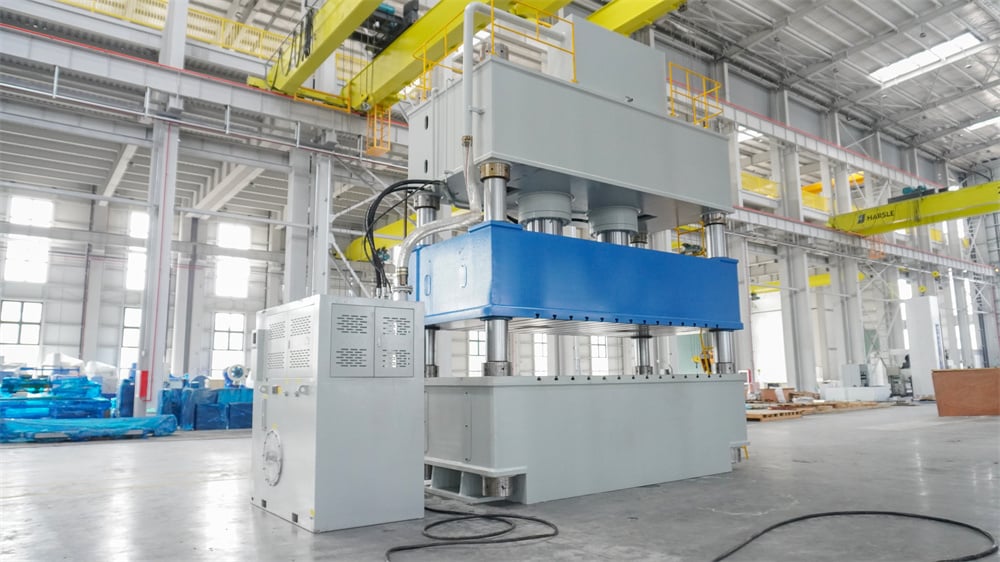
This is the ‘sweet spot’ for many general fabrication shops. These presses are typically 4-column or H-frame designs, offering better rigidity for deep drawing, heavy stamping, and molding. A standard 200-ton 4-column hydraulic press might start around $35,000, but with high-speed valves and CNC integration, the price can easily climb to $85,000 or more. At this level, the quality of components (such as Rexroth valves or Siemens electronics) begins to significantly influence the price.
Heavy-Duty and Specialized Systems (800 – 5,000+ Tons)
When you move into the thousands of tons, you are looking at massive industrial installations. These machines are often custom-engineered for specific industries like aerospace or automotive body panel stamping. Prices for these units rarely start below $150,000 and can exceed $1,000,000 for fully automated lines with robotic loading and unloading. Estimating these requires a deep dive into custom engineering hours and specialized transport logistics.
Main Cost Drivers: What Are You Actually Paying For?
To accurately Estimate Hydraulic Press Price Before Requesting A Quote, you must look beyond the sticker price and analyze the technical specifications. The following five factors are the primary drivers of cost in any hydraulic press build.
1. Tonnage and Frame Rigidity
As mentioned, tonnage is king. However, it isn’t just about the force; it’s about the frame’s ability to withstand that force without deflection. A ‘heavy-duty’ frame uses thicker steel plates and more intensive welding/stress-relieving processes. If your application requires high precision (like fine blanking), you will pay a premium for a frame with minimal deflection rates. A C-frame press is cheaper because it offers three-sided access, but it is prone to ‘yawning’ under high pressure, whereas an H-frame is more expensive but provides superior structural integrity.
2. Stroke Length and Daylight
Daylight is the vertical opening between the bolster plate and the slide in its fully retracted position. Stroke is the distance the slide travels. If you are deep drawing large tanks, you need significant daylight and a long stroke. Increasing these dimensions requires longer hydraulic cylinders and taller frames, which increases both material costs and shipping complexities. Adding 200mm to the stroke can sometimes add 5-10% to the base machine cost.
3. Speed and Cycle Times
Standard hydraulic presses move relatively slowly. If your production requires high-speed approach, pressing, and return speeds, you need larger pumps, high-flow valves, and more powerful motors. High-speed ‘fast-acting’ presses often utilize accumulator circuits to store energy, which adds significant cost to the hydraulic manifold assembly. A press designed for 20 cycles per minute will be substantially more expensive than one designed for 5 cycles per minute.
4. Bed Size and Bolster Dimensions
The ‘real estate’ of the press bed dictates the size of the tools you can run. A larger bed requires a thicker bolster plate to prevent bending. If you need a 2000mm x 1500mm bed instead of a standard 1000mm x 1000mm bed, the price increase isn’t just linear; it involves exponential increases in steel weight and machining time for the T-slots and mounting holes.
Configuration Impact: Standard vs. Advanced Features
The configuration of the machine determines its versatility and ease of use. When you Estimate Hydraulic Press Price Before Requesting A Quote, consider how these optional (but often necessary) upgrades affect the total.
CNC and Control Systems
A basic press might use manual buttons or a simple PLC (Programmable Logic Controller) with a monochrome touch screen. Upgrading to a full CNC system with multi-axis control (for controlling cushions, ejectors, and feed systems) can add $10,000 to $30,000. Brands like Siemens, Allen-Bradley, and Mitsubishi carry a premium but offer better long-term support and parts availability.
Servo-Hydraulic Systems
One of the biggest trends in modern fabrication is the move toward servo-driven hydraulic pumps. Unlike traditional motors that run constantly, servo motors only spin when the machine needs pressure. While a servo system can add 20% to 30% to the initial purchase price, it can reduce energy consumption by up to 70% and significantly lower noise levels. For high-volume shops, the energy savings often pay for the upgrade within 24 months.
Safety Features and Compliance
Safety is not an area to skimp on, but it does impact the price. Light curtains, safety gates, dual-channel safety PLCs, and hydraulic monitoring valves are essential for OSHA or CE compliance. Depending on the level of automation and the risk assessment of the application, a comprehensive safety package can add $3,000 to $15,000 to the build.
Hidden Costs: Beyond the Machine Price
When you Estimate Hydraulic Press Price Before Requesting A Quote, many buyers forget the ‘landed’ cost. The price quoted by the manufacturer is often EXW (Ex-Works) or FOB (Free on Board), meaning it doesn’t include the following:
- Shipping and Logistics: Large presses are heavy and oversized. They may require flat-rack containers or specialized heavy-haul trucking. Ocean freight and inland trucking for a 20-ton machine can cost several thousand dollars.
- Foundation Requirements: A 500-ton press cannot sit on a standard 4-inch shop floor. You may need to excavate and pour a reinforced concrete pad or even a pit. Foundation work can cost between $5,000 and $50,000 depending on soil conditions and press size.
- Installation and Commissioning: Will you need a rigger to move the machine into place? Does the manufacturer send a technician for setup? These service fees, plus the technician’s travel expenses, should be budgeted.
- Hydraulic Oil: Large presses require hundreds of gallons of hydraulic oil. A 500-gallon reservoir can cost $3,000 to $5,000 just to fill the first time.
- Training: Ensuring your operators know how to use the CNC interface and perform basic maintenance is vital for longevity.
ROI Calculation: Justifying the Investment
To truly understand if the estimated price is ‘fair,’ you must calculate the Return on Investment (ROI). A cheaper machine that breaks down frequently or has a slow cycle time will eventually cost more than a premium HARSLE press. Consider the following in your ROI model:
| Factor | Impact on Cost/Savings |
|---|---|
| Cycle Time Improvement | Faster speeds mean more parts per hour, reducing labor cost per unit. |
| Energy Efficiency (Servo) | Calculate monthly KWh savings against your local utility rates. |
| Scrap Reduction | Precision CNC controls reduce setup errors and material waste. |
| Maintenance Intervals | High-quality components (valves/seals) extend the time between overhauls. |
If a $100,000 press allows you to produce 20% more parts than a $75,000 press, the $25,000 difference is often recovered in the first year of operation. Always look at the ‘Cost per Part’ rather than just the ‘Cost of Machine.’
Buying Advice: How to Approach Manufacturers
Once you have used this guide to Estimate Hydraulic Press Price Before Requesting A Quote, you are ready to contact suppliers. To get the most accurate and competitive quote, follow these steps:
- Provide a Detailed RFQ: Don’t just ask for a “200-ton press.” Specify your required bed size, stroke, daylight, and the material you are working with.
- Share Your Part Drawings: Manufacturers like HARSLE can often suggest a more efficient machine configuration if they see the actual parts you intend to make.
- Ask About Component Brands: Request a list of the brands used for the hydraulics, electronics, and seals. This ensures you are comparing ‘apples to apples’ when looking at multiple quotes.
- Inquire About Lead Times: A lower price might come with a 6-month lead time. If you need the machine in 8 weeks, you might have to pay a premium for a stock unit or expedited production.
- Check References: Ask for testimonials or case studies from customers in your specific industry.
Frequently Asked Questions (FAQ)
How much does a 100-ton hydraulic press cost?
A standard 100-ton 4-column hydraulic press typically ranges from $15,000 to $35,000. The price varies based on the control system, speed requirements, and whether it includes safety features like light curtains.
Is a servo-hydraulic press worth the extra cost?
Yes, for most high-production environments. The 20-30% higher upfront cost is usually offset by 50-70% energy savings, reduced cooling requirements (as the oil stays cooler), and quieter operation, which improves the work environment.
What is the difference between a C-frame and an H-frame press price?
For the same tonnage, a C-frame press is generally 15-25% cheaper than an H-frame press. However, H-frame presses offer much higher rigidity and are better suited for high-precision or off-center loading applications.
Can I customize the bed size without a huge price jump?
Minor adjustments to bed size are usually manageable. However, once you exceed standard plate widths used by the manufacturer, the price increases significantly due to the need for custom-ordered steel and specialized machining setups.
Do hydraulic press prices include tooling?
Usually, no. The quote is for the machine itself. Tooling (dies, molds, punches) is a separate cost and is often designed specifically for your part. You should budget an additional 10-30% of the machine price for initial tooling.
How long do hydraulic presses last?
A well-maintained industrial hydraulic press can last 20 to 30 years. When estimating price, remember that you are investing in a long-term asset. Choosing higher-quality components initially will reduce the total cost of ownership over these decades.