Hot Press vs Cold Press: Which Hydraulic Press Process Works Best?


Comparison Summary: Understanding the Thermal Divide
In the world of industrial manufacturing and metal fabrication, the hydraulic press stands as a cornerstone of production. However, a fundamental question often arises when selecting equipment: should you utilize a hot press or a cold press? The choice between Hot Press Vs Cold Press: Which Hydraulic Press Process Works Best? depends entirely on the material properties, the desired finish, and the specific structural requirements of the end product. At its core, the difference lies in the application of thermal energy. While both machines utilize Pascal’s Law to generate massive compressive force through hydraulic fluid, the hot press introduces controlled heating elements to alter the physical or chemical state of the workpiece during the cycle.
Cold pressing is generally defined by its operation at ambient temperatures. It relies purely on mechanical force to shape, bond, or compress materials. This process is favored for its simplicity, lower energy consumption, and high speed in applications like metal stamping or furniture assembly. Conversely, hot pressing integrates heating platens—often powered by electricity, steam, or thermal oil—to soften materials, cure resins, or facilitate molecular bonding. This is essential for composites, specialized alloys, and high-quality wood laminates where a simple mechanical bond is insufficient for long-term durability.
Choosing the wrong process can lead to catastrophic failures, such as material springback in cold pressing or thermal degradation in hot pressing. Manufacturers must weigh the initial capital expenditure against the long-term quality gains. HARSLE, a leader in hydraulic machinery, provides both technologies, ensuring that whether you are forming automotive body panels or curing aerospace-grade carbon fiber, the machinery is optimized for the task. This guide will delve deep into the mechanics, applications, and cost-benefit analyses of both processes to help you make an informed procurement decision.
Machine A Overview: The Hot Press Hydraulic System
The hot press is a sophisticated piece of equipment designed for processes that require simultaneous heat and pressure. The primary components that distinguish a hot press from its cold counterpart are the heating platens and the thermal control system. These platens are precision-engineered to ensure uniform temperature distribution across the entire surface area. In a HARSLE hot press, advanced PID controllers manage the temperature, often reaching several hundred degrees Celsius depending on the application. This precision is vital because even a minor temperature gradient can cause warping or uneven curing in the final product.
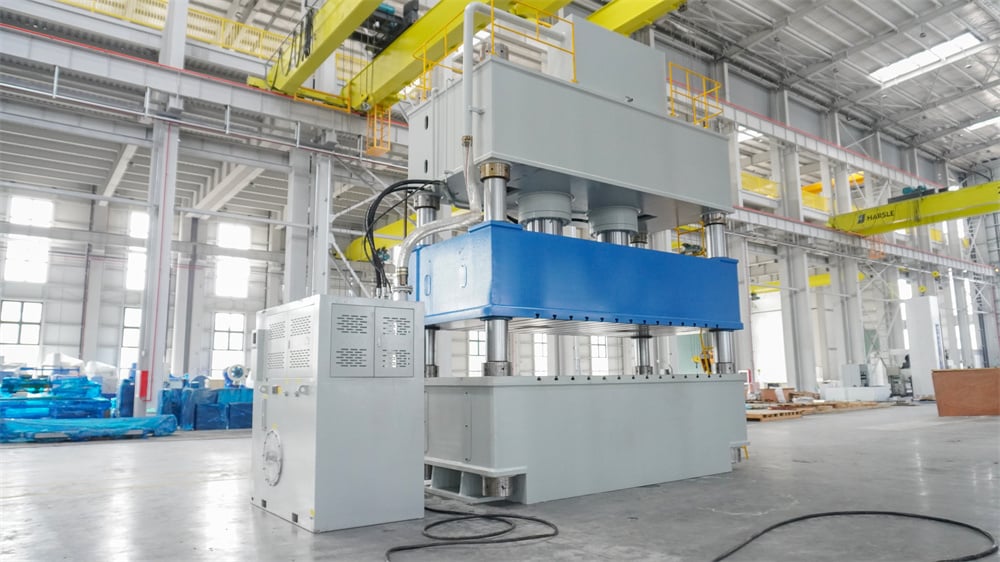
The heating mechanism in a hot press can vary. Electric heating is common for smaller, high-precision tasks due to its rapid response time. For larger industrial scales, thermal oil or steam circulation is often preferred for its efficiency and ability to maintain stable temperatures over long cycles. The hydraulic system in a hot press must also be specifically designed to withstand heat transfer. Specialized seals and high-temperature hydraulic fluids are employed to prevent leaks and maintain pressure consistency as the heat radiates from the platens into the machine frame.
One of the most significant advantages of the hot press is its ability to facilitate chemical reactions. For instance, in the production of plywood or particleboard, the heat activates the adhesives, creating a bond that is significantly stronger than a cold-glued joint. In metalworking, hot pressing (often referred to as hot forging or isothermal pressing) allows for the shaping of complex geometries in hard alloys by reducing the material’s yield strength. This results in less wear on the dies and a more refined grain structure in the finished metal part.
However, the hot press process is inherently slower than cold pressing. The cycle must include a heating phase, a dwell time for curing or forming, and sometimes a cooling phase before the pressure is released. This makes it a “quality-first” process rather than a “volume-first” process. Maintenance requirements are also higher, as the constant thermal cycling can lead to metal fatigue in the platens and requires regular inspection of the heating elements and insulation layers.
Machine B Overview: The Cold Press Hydraulic System
The cold press hydraulic system is the workhorse of the metal fabrication and assembly industries. Operating at room temperature, these machines focus on delivering maximum tonnage with high cycle speeds. A cold press consists of a robust frame, a hydraulic cylinder, and a set of dies or flat platens. Because there is no heating system involved, the design is more straightforward, focusing on structural rigidity and the speed of the hydraulic ram. HARSLE cold presses are renowned for their durability and ease of operation, making them ideal for high-volume production environments.
In cold pressing, the material is shaped through plastic deformation. When the hydraulic ram descends, it exerts force exceeding the material’s yield strength, causing it to take the shape of the die. This is the standard process for deep drawing, punching, and blanking in the automotive and appliance industries. Since the material is not heated, it undergoes “work hardening,” which can actually increase the strength of the finished part. This is a distinct advantage for structural components that require high tensile strength without the need for subsequent heat treatment.
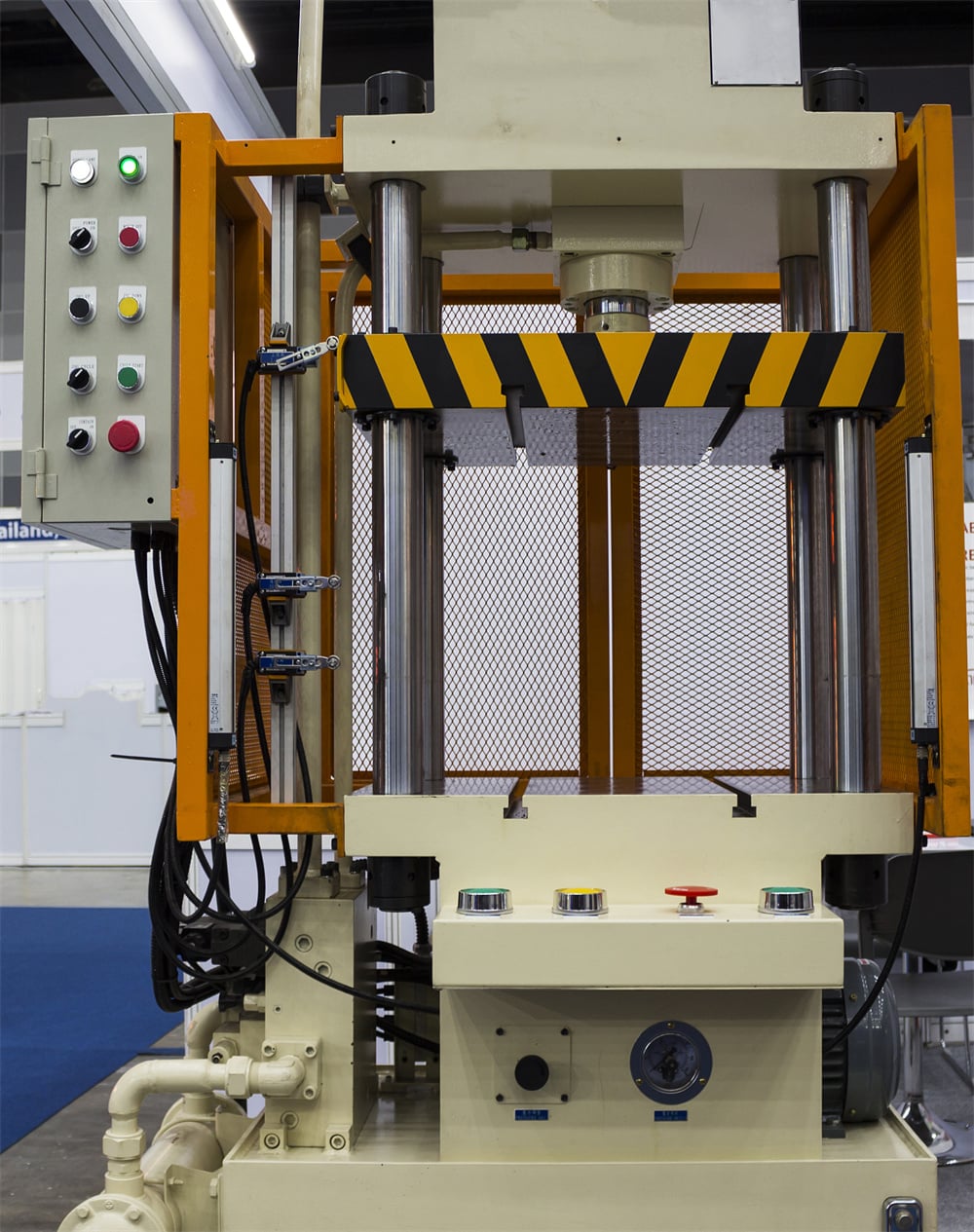
Another common use for the cold press is in the woodworking and furniture industry for basic lamination. While it doesn’t offer the chemical curing speed of a hot press, it is highly effective for bonding large batches of panels using cold-set glues. A cold press can often handle a “stack” of materials at once, applying pressure to multiple layers simultaneously. This batch processing capability compensates for the longer setting times required by cold adhesives, making it a cost-effective solution for mass-produced furniture components.
The simplicity of the cold press translates to lower operational costs. There are no expensive heating elements to replace, and the energy consumption is limited strictly to the hydraulic pump’s operation. Furthermore, the absence of high heat means that standard hydraulic seals and oils have a much longer lifespan. However, the primary limitation of the cold press is “springback.” Because the material is formed cold, it retains some elastic memory and may slightly return to its original shape once the pressure is released. Engineers must account for this by over-bending or using specialized die designs.
Specification Comparison Table
| Feature | Hot Press Process | Cold Press Process |
|---|---|---|
| Operating Temperature | 100°C to 500°C+ | Ambient (Room Temperature) |
| Cycle Time | Slow (Minutes to Hours) | Fast (Seconds to Minutes) |
| Material Behavior | Softening, Curing, Molecular Bonding | Plastic Deformation, Work Hardening |
| Energy Consumption | High (Hydraulics + Heating) | Low (Hydraulics Only) |
| Primary Industries | Composites, Aerospace, High-end Wood | Automotive, Stamping, General Assembly |
| Tooling Wear | Lower (Material is softer) | Higher (Material is hard) |
| Springback Risk | Minimal to None | Significant (Requires compensation) |
| Initial Investment | Higher (Complex systems) | Lower (Simpler design) |
Best-fit Applications: Choosing the Right Process
Determining Hot Press Vs Cold Press: Which Hydraulic Press Process Works Best? requires a deep dive into the specific application. For the Hot Press, the best-fit applications involve materials that are “thermosetting.” This includes carbon fiber reinforced polymers (CFRP), where the resin must be heated to cross-link and harden. In the electronics industry, hot presses are used for multi-layer PCB lamination, ensuring that the various layers are perfectly bonded without air pockets. Additionally, the production of friction materials, such as brake pads, requires a hot press to fuse metallic and ceramic powders with bonding agents under intense heat.
The Cold Press shines in the realm of sheet metal fabrication. If your goal is to produce thousands of identical brackets, panels, or enclosures, the cold press is the superior choice. It is also the standard for “cold heading” and “cold forging” of fasteners like bolts and rivets. In the furniture industry, a cold press is the go-to for veneering flat surfaces where the volume is high and the cost of energy must be kept low. It is also used extensively in waste compaction and recycling, where the goal is simply to reduce volume through sheer force.
Another critical application for hot pressing is in the field of “Hot Stamping” for the automotive sector. High-strength steel is heated until it is austenitic, then formed and rapidly quenched within the press dies. This creates parts that are incredibly strong yet lightweight, a requirement for modern vehicle safety cells. Cold pressing cannot achieve this level of material transformation. Conversely, for simple assembly tasks—such as pressing a bearing into a housing—a cold press is the only logical choice, as heat would likely damage the bearing’s lubrication or temper.
Cost and Maintenance Comparison
When analyzing the cost of ownership, the Hot Press represents a significantly higher investment. The initial purchase price is elevated due to the inclusion of heating platens, thermal insulation, temperature sensors, and sophisticated control software. Operationally, the energy bill for a hot press is substantial; maintaining platens at 200°C for an entire shift requires constant power. Maintenance is also more intensive. Thermal expansion and contraction can cause bolts to loosen and frames to stress over time. The heating elements themselves have a finite lifespan and must be replaced periodically to ensure temperature uniformity.
The Cold Press, by comparison, is much more economical. The lack of heating systems means the machine is simpler to build and maintain. Energy is only consumed when the hydraulic motor is running, and since cycle times are shorter, the motor runs for less time per part produced. Maintenance typically involves routine oil changes, filter replacements, and seal inspections. Because the machine operates at room temperature, the hydraulic fluid does not degrade as quickly, and the risk of thermal-related component failure is non-existent.
However, one must consider the “cost of quality.” While a cold press is cheaper to run, if the application requires the properties only achievable through heat (like zero springback or chemical bonding), the cost of scrap and product failure from a cold press would far outweigh the savings. Manufacturers must also consider the cost of tooling. Hot press tooling often requires specialized heat-resistant steels, which are more expensive than the standard tool steels used in cold pressing. However, because the material being pressed is softer when hot, the dies may actually last longer before requiring regrinding.
Recommendation: How to Select Your HARSLE Press
To decide which process works best for your facility, follow this selection checklist:
- Material Type: Are you working with thermosetting resins, rubber, or specialized alloys? Choose a Hot Press. Are you working with standard sheet metal or basic wood glue? A Cold Press is likely sufficient.
- Production Volume: Do you need to produce one part every 10 seconds? The Cold Press is your only option. Is your production measured in parts per hour with a focus on high structural integrity? The Hot Press is the way to go.
- Precision and Finish: If your part suffers from springback issues that affect assembly, the Hot Press (or hot forming) can eliminate this problem by stress-relieving the material during the press cycle.
- Budgetary Constraints: If capital is limited and the process allows for it, start with a Cold Press. It offers the fastest return on investment for general-purpose forming and assembly.
- Energy Infrastructure: Does your facility have the electrical capacity or the boiler systems required to support a high-tonnage hot press? If not, the infrastructure upgrades must be factored into the cost.
At HARSLE, we recommend consulting with our engineering team to perform a trial run on your specific material. Often, a hybrid approach or a specific tonnage adjustment can optimize a cold press to perform tasks that previously seemed to require heat, or vice versa. Our goal is to provide a machine that balances throughput, quality, and operational cost.
FAQ: Common Questions About Hot and Cold Pressing
1. Can a hot press be used as a cold press?
Yes, a hot press can operate without the heating elements turned on, effectively functioning as a cold press. However, it is an expensive way to perform cold pressing, and the presence of insulation and heating channels might make the platens slightly less rigid than a dedicated cold press designed for high-impact stamping.
2. Which process is safer for operators?
Both processes require strict adherence to safety protocols. However, the hot press introduces the risk of thermal burns and requires specialized ventilation to handle fumes that may be released from heated resins or adhesives. Cold presses generally have fewer environmental hazards but operate at higher speeds, requiring advanced light curtains and two-hand controls.
3. How does heat affect the hydraulic fluid?
In a hot press, heat can transfer from the platens to the hydraulic cylinders. This can lower the viscosity of the hydraulic oil, potentially leading to internal leakage or reduced pressure. HARSLE hot presses use cooling jackets and high-viscosity-index oils to mitigate these effects, whereas cold presses can use standard hydraulic fluids.
4. Is the bonding strength really that different?
In applications like plywood or composite manufacturing, the difference is massive. A hot-pressed bond is a chemical transformation that creates a unified structure. A cold-pressed bond is often just a mechanical adhesion. For structural or outdoor use, hot-pressed products are almost always required.
5. What is the typical lifespan of these machines?
Both machines are built for decades of use. A HARSLE cold press might last 30+ years with basic maintenance. A hot press has a similar structural lifespan, but the heating elements and thermal sensors may need replacement every 5-10 years depending on the intensity of use.