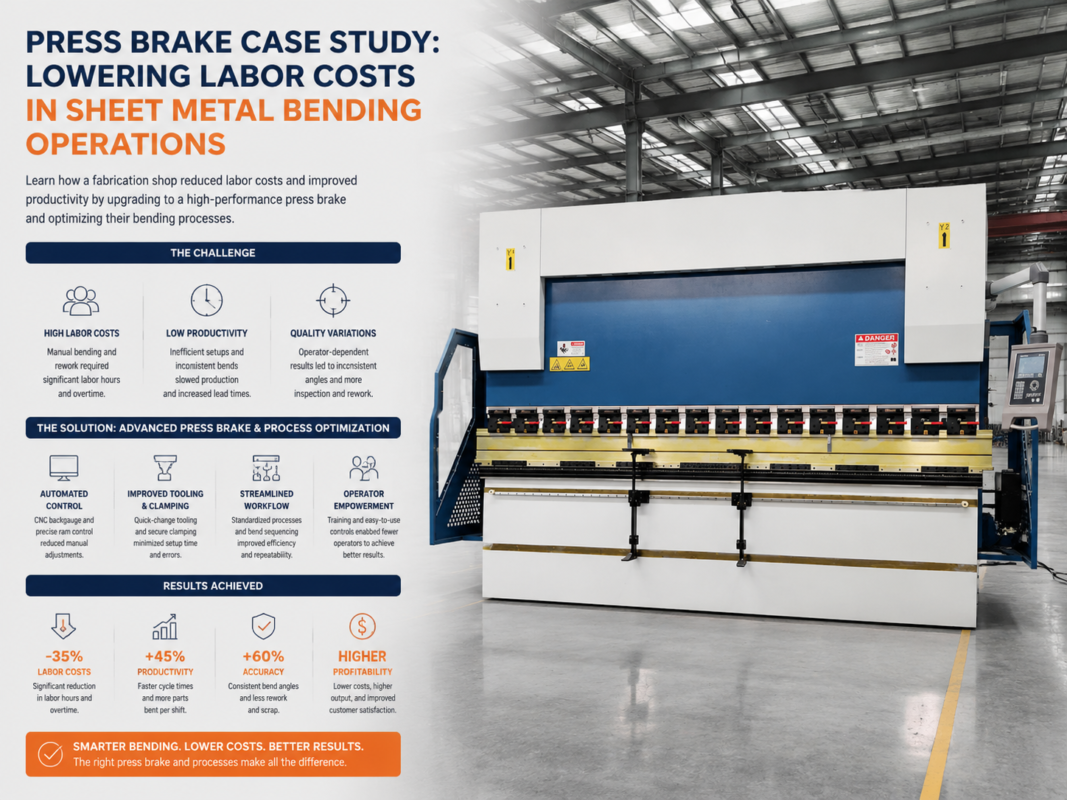
4-Column Hydraulic Press vs Single-Column Hydraulic Press: Which Should You Buy?


Comparison Summary: Understanding the Core Differences
In the world of metal fabrication, selecting the right hydraulic press is a foundational decision that dictates your production efficiency, part accuracy, and long-term operational costs. Two of the most common configurations found in modern workshops are the 4-column hydraulic press and the single-column (often referred to as a C-frame) hydraulic press. While both machines utilize hydraulic fluid to generate massive force, their structural designs lead to vastly different performance characteristics and ideal use cases.
The 4-column hydraulic press is the workhorse of heavy-duty industrial applications. Its design features four vertical pillars that support the upper slide and guide it with extreme precision. This structure is inherently balanced, making it the go-to choice for large-scale workpieces and processes requiring high-tonnage pressure distributed across a wide surface area. It excels in stability and is less prone to the structural deflection that can plague other designs under extreme loads.
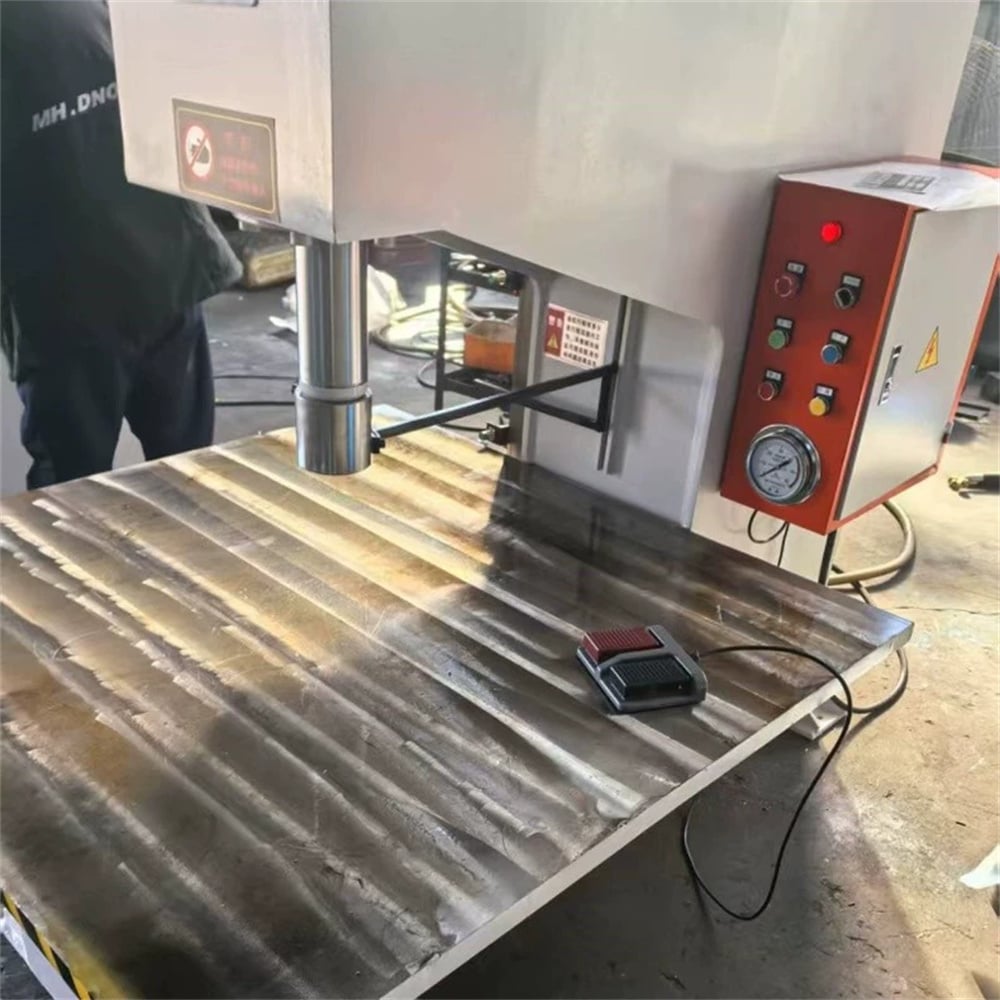
Conversely, the single-column hydraulic press, or C-frame press, is defined by its open-front design. This ‘C’ shape allows operators or automated systems to access the work area from three sides. This accessibility is a game-changer for smaller parts, assembly lines, and manual operations where speed and ease of material handling are paramount. However, because the frame is open, it must be engineered with significant reinforcement to prevent ‘yawning’ or frame stretching during high-pressure cycles.
Choosing between these two depends on several factors: the size of your parts, the required precision, your floor space, and your budget. At HARSLE, we provide both configurations, engineered to meet rigorous industrial standards. This guide will dive deep into the technical nuances of each machine to help you make an informed investment for your manufacturing facility.
4-Column Hydraulic Press Overview: Precision and Power
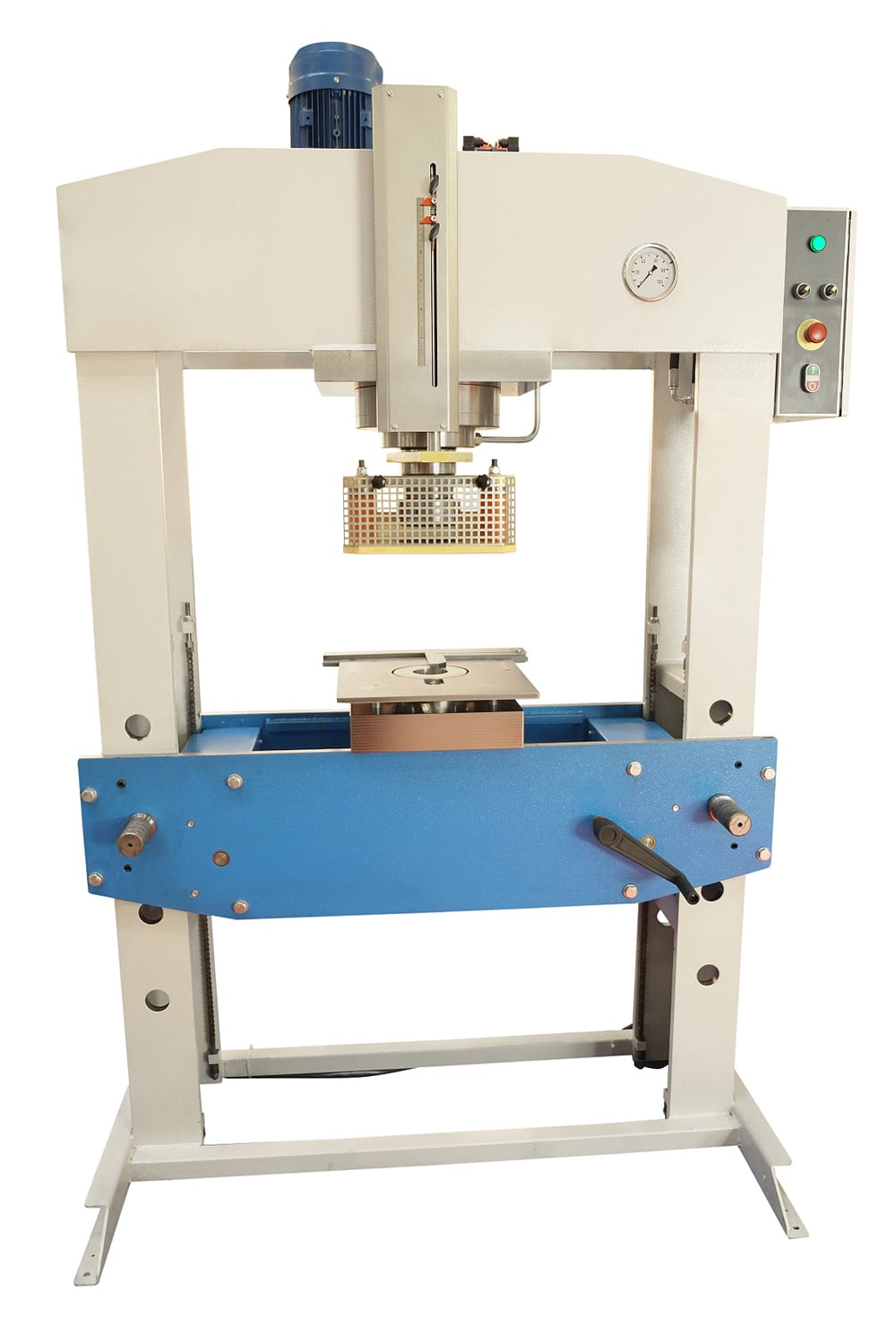
The 4-column hydraulic press is widely regarded as the most versatile and stable design in the hydraulic machinery category. The four pillars (or columns) serve a dual purpose: they act as the primary structural support for the machine and as the guiding rails for the moving bolster (the slide). This symmetrical design ensures that the force generated by the main cylinder is distributed evenly across the entire bed area. This is critical when working with complex dies or when performing deep drawing operations where even a millimeter of misalignment can lead to part failure or tool damage.
One of the standout features of the HARSLE 4-column series is the guiding accuracy. Because the slide is guided by four points, the machine can maintain exceptional parallelism between the upper and lower bolsters. This makes it ideal for applications involving eccentric loads—where the pressure isn’t perfectly centered. While no machine should be subjected to extreme off-center loading, the 4-column design handles these stresses far better than a C-frame, protecting the hydraulic seals and the integrity of the frame over years of service.
From a technical standpoint, these machines often feature larger bed sizes. Because the columns are placed at the corners, the interior workspace is expansive. This allows for the installation of large, multi-stage dies. Furthermore, the 4-column design is highly adaptable for automation. It is relatively simple to integrate light curtains, safety gates, and robotic loaders around the perimeter of the machine, as the structure provides natural mounting points for these safety and productivity enhancements.
Maintenance on a 4-column press is also straightforward. The columns are typically chrome-plated and polished to reduce friction and wear on the bushings. HARSLE utilizes advanced lubrication systems to ensure that the slide moves smoothly along these pillars. While the footprint of a 4-column press is generally larger than a single-column machine, the trade-off is a machine that can handle higher tonnages—often ranging from 100 tons to over 5,000 tons—with unwavering consistency.
Single-Column Hydraulic Press Overview: Accessibility and Efficiency
The single-column hydraulic press, frequently called a C-frame press due to its profile, is designed with the operator in mind. By eliminating the front two columns found in the 4-column design, the C-frame provides an unobstructed workspace. This is particularly beneficial for tasks such as punching, blanking, riveting, and small-part assembly. Operators can easily feed material from the front or sides, and the machine’s compact footprint makes it an excellent choice for facilities where floor space is at a premium.
Despite its smaller size, a high-quality single-column press from HARSLE is built with a heavy-duty, welded steel frame. The primary engineering challenge with a C-frame is ‘deflection.’ When the press applies downward force, the open nature of the frame wants to push the top and bottom apart, similar to a jaw opening. To counter this, HARSLE uses thickened steel plates and reinforced ribbing to ensure the frame remains rigid. This allows our C-frame presses to maintain high levels of accuracy, even during high-speed stamping operations.
The single-column press is often favored for its speed. Because the moving parts are generally lighter than those in a massive 4-column press, the approach and retraction speeds can be significantly faster. This makes the C-frame the preferred choice for high-volume production of small components, such as automotive electrical connectors, appliance parts, and hardware. It is also the standard choice for manual ‘job shop’ environments where the setup changes frequently throughout the day.
Another advantage of the single-column design is its cost-effectiveness. Generally, for the same tonnage, a C-frame press will have a lower initial purchase price than a 4-column press. It requires fewer raw materials to manufacture and has a simpler guiding system. For businesses that do not require the massive bed size or the extreme parallelism of a 4-column machine, the single-column press offers a faster return on investment (ROI) without sacrificing the quality of the finished product.
Specification Comparison Table
To help visualize the differences, the following table compares the typical specifications and characteristics of HARSLE’s 4-column and single-column hydraulic presses.
| Feature | 4-Column Hydraulic Press | Single-Column (C-Frame) Press |
|---|---|---|
| Structural Rigidity | Excellent (Symmetrical support) | Good (Reinforced for deflection) |
| Accessibility | Limited (Columns on 4 sides) | Excellent (3-sided access) |
| Tonnage Range | High (100T to 5000T+) | Low to Medium (10T to 500T) |
| Bed Size | Large and Square/Rectangular | Small to Medium |
| Precision/Parallelism | Very High (4-point guiding) | Moderate to High |
| Footprint | Large | Compact |
| Best For | Deep drawing, large stamping | Punching, assembly, small parts |
| Cost | Higher initial investment | More economical |
Best-fit Applications: Choosing Based on Your Project
The decision between these two machines often comes down to the specific geometry and material of the parts you intend to produce. For instance, if your facility focuses on the automotive industry, specifically producing large body panels, floor pans, or structural reinforcements, the 4-column hydraulic press is the only viable option. These parts require massive dies and consistent pressure across a large surface area to prevent wrinkling or tearing of the metal during the deep drawing process.
In the aerospace and energy sectors, the 4-column press is used for forming thick alloy plates and composite materials. The ability to integrate heated platens and precise stroke control allows for the molding of complex shapes that must meet stringent safety standards. Additionally, the 4-column design is preferred for powder metallurgy and the compression molding of plastics and rubbers, where the material must be compressed evenly to ensure uniform density.
On the other hand, the single-column press shines in the electronics and light industrial sectors. Consider the production of small metal brackets, terminals, or the assembly of bearings into housings. These tasks require an operator to quickly place a part, trigger the press, and remove the part. The open throat of the C-frame allows for this rapid cycle time. It is also the standard tool for ‘notching’ and ‘punching’ operations where the material might be a long strip that needs to pass through the machine laterally.
Furthermore, the C-frame press is an excellent choice for laboratory settings or R&D departments. Its smaller size and ease of use make it perfect for testing materials or developing prototypes. If your production line involves a variety of small, different parts that require frequent tool changes, the accessibility of the single-column press will save your team hours of setup time every week, directly impacting your bottom line.
Cost and Maintenance Comparison
When evaluating the total cost of ownership, you must look beyond the sticker price. A 4-column hydraulic press is a significant capital investment. Beyond the purchase price, you must consider the costs of a reinforced foundation (for high-tonnage models), higher electricity consumption for larger hydraulic pumps, and the space it occupies in your factory. However, its durability is legendary. A well-maintained HARSLE 4-column press can operate for decades, providing a very low cost-per-part over its lifespan.
Maintenance for the 4-column press focuses heavily on the guiding system. The bushings and columns must be kept clean and lubricated. If the columns become scored or the bushings wear unevenly, the precision of the machine will drop. Hydraulic oil management is also critical; because these machines often have large oil reservoirs, regular filtration and oil analysis are necessary to prevent contamination from damaging the expensive piston pumps and valves.
The single-column press is more affordable upfront and generally cheaper to maintain. The hydraulic systems are smaller and simpler, meaning replacement parts like seals, hoses, and solenoid valves are less expensive. However, because C-frame presses are often used for high-speed, repetitive tasks, they can experience vibration-related wear. It is essential to regularly check the frame bolts and the alignment of the ram to ensure that the ‘yawning’ effect hasn’t become permanent due to overloading.
For both machines, HARSLE recommends a proactive maintenance schedule. This includes daily checks of oil levels and leak inspections, weekly cleaning of the work area, and monthly inspections of the electrical safety systems. By investing in routine maintenance, you protect your machinery from unexpected downtime, which is the most significant hidden cost in any fabrication shop.
Recommendation: Which Should You Buy?
To make the final decision, we recommend a ‘needs-based’ checklist. Ask yourself the following questions:
- What is the maximum tonnage I need? If you require more than 500 tons of pressure, a 4-column press is almost always the safer and more reliable choice.
- What are the dimensions of my largest die? Measure your tooling. If the die is wide or deep, it may not fit within the throat depth of a C-frame press, necessitating the open-center design of a 4-column machine.
- How will the material be loaded? If you are using a robot or a large overhead crane to load heavy blanks, the 4-column press provides a stable environment. If an operator is hand-feeding small parts, the C-frame is more ergonomic.
- What is my precision requirement? For high-precision deep drawing where parallelism is non-negotiable, choose the 4-column. For general punching and assembly, the C-frame is more than sufficient.
- What is my budget and space? If you are a startup or have limited floor space, the single-column press offers the best entry point into hydraulic forming.
In many modern factories, the answer is actually ‘both.’ A 4-column press handles the heavy primary forming, while a fleet of single-column presses handles the secondary operations like trimming, punching, and final assembly. At HARSLE, our engineers can help you analyze your production workflow to determine the perfect mix of machinery for your specific goals.
Frequently Asked Questions (FAQ)
1. Can a single-column press handle off-center loads?
While HARSLE C-frame presses are built to be rigid, they are more sensitive to off-center loading than 4-column presses. Extreme off-center loads can cause the ram to tilt slightly, leading to uneven wear on the seals and potentially damaging the tooling. It is always best to center the load as much as possible on a C-frame.
2. Is the 4-column press slower than the C-frame?
Generally, yes. Because 4-column presses are designed for larger, heavier workpieces and higher tonnages, their cycle times are often slower to ensure safety and precision. However, HARSLE offers high-speed versions of 4-column presses equipped with advanced servo-hydraulic systems to bridge this gap.
3. Which machine is safer for the operator?
Both machines are safe when equipped with modern safety features. The C-frame is easier to guard with light curtains because of its open front. The 4-column press requires guarding on all four sides if there is a risk of entry. HARSLE equips all machines with emergency stops, dual-hand start buttons, and safety interlocks as standard.
4. Can I use a 4-column press for small parts?
Absolutely. A 4-column press can do everything a C-frame can do, but it may be ‘overkill.’ Using a 500-ton 4-column press to do a 20-ton assembly job is inefficient in terms of energy use and floor space. It also makes part handling more difficult for the operator.
5. How do I prevent ‘yawning’ in a single-column press?
The best way to prevent frame deflection is to never exceed the rated tonnage of the machine. Additionally, ensuring that your dies are well-maintained and sharp will reduce the amount of force required for the job, thereby putting less stress on the C-frame structure.
6. Does HARSLE offer custom bed sizes for these presses?
Yes, HARSLE specializes in customizing hydraulic presses. Whether you need an extra-deep throat on a C-frame or an oversized bolster on a 4-column press, our engineering team can design a machine that fits your specific production requirements.