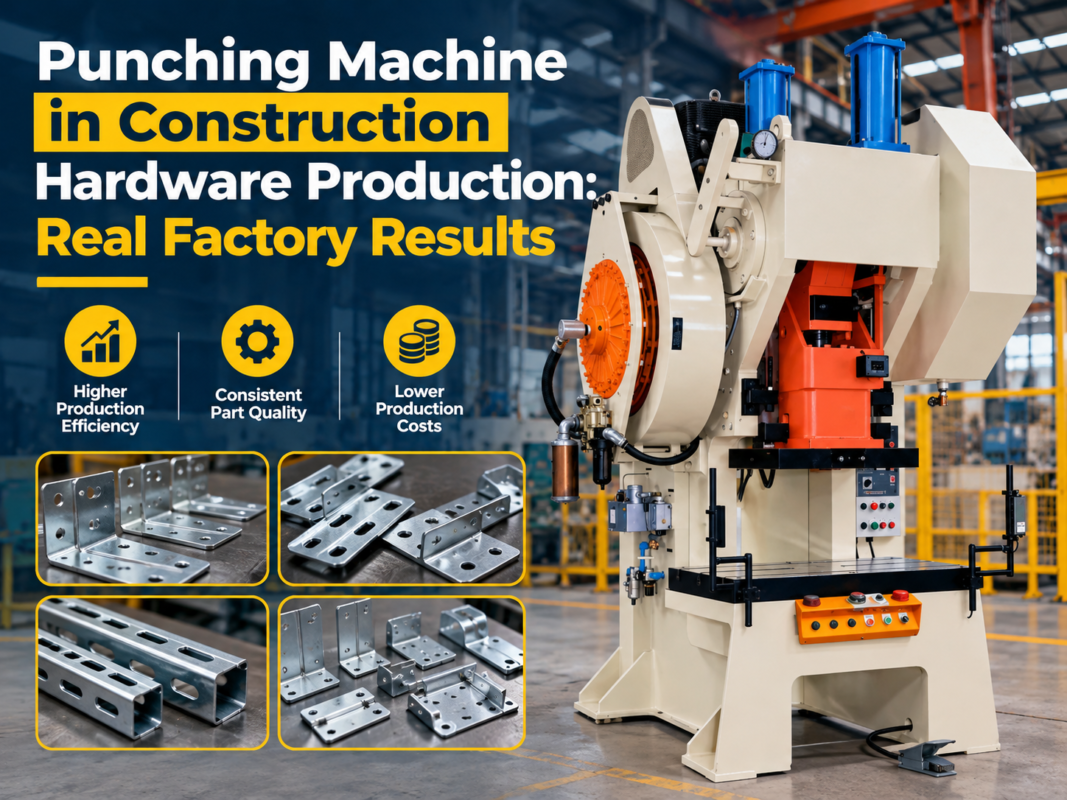
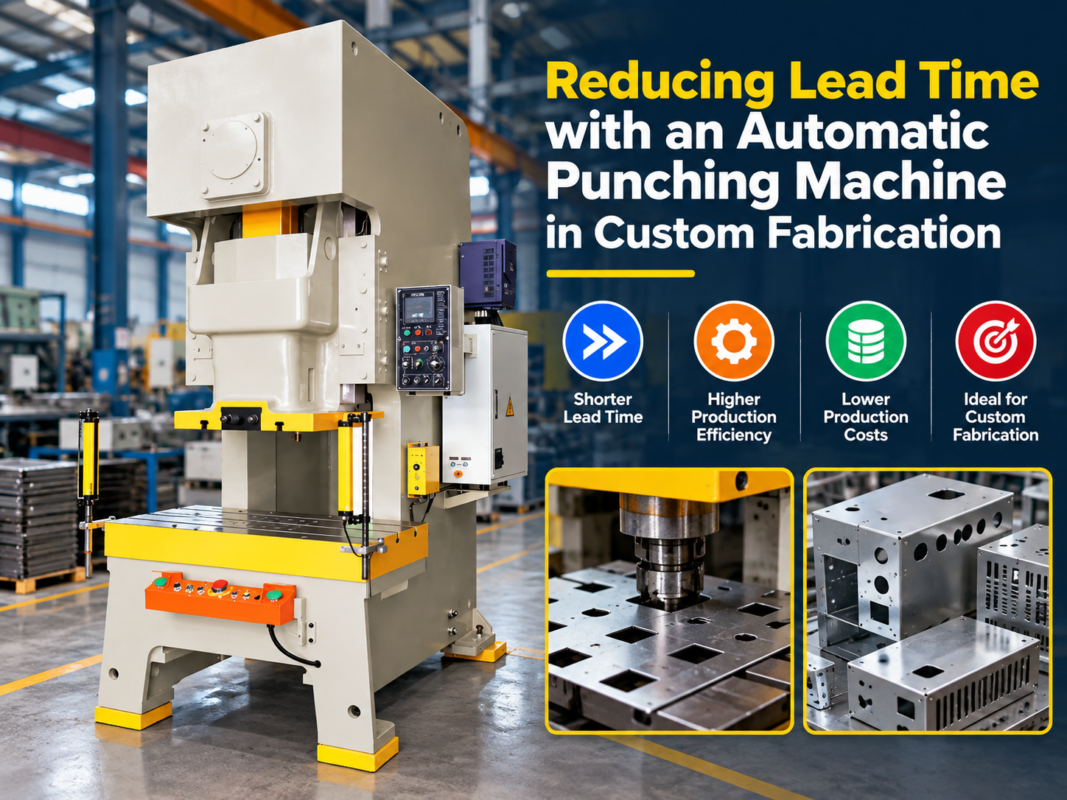
How a Hydraulic Press Supported Efficient Mass Production in Machinery Manufacturing


Introduction: The Evolution of Mass Production in Machinery Manufacturing
In the competitive landscape of modern industrial fabrication, the ability to produce high-quality components at scale is the primary differentiator between market leaders and their competitors. Central to this capability is the hydraulic press, a cornerstone of heavy industry that has undergone a technological revolution. When we examine how a hydraulic press supported efficient mass production in machinery manufacturing, we see a transition from simple brute force to sophisticated, CNC-controlled precision. This evolution has allowed manufacturers to meet the rigorous demands of the automotive, aerospace, and appliance sectors with unprecedented speed and accuracy.
The fundamental principle of the hydraulic press—Pascal’s Law—states that pressure applied to a confined fluid is transmitted undiminished in every direction. In a manufacturing context, this allows for the generation of massive force with relatively small input energy. However, the modern application of this principle goes far beyond simple compression. Today’s hydraulic presses are integrated with advanced sensors, high-speed valves, and programmable logic controllers (PLCs) that allow for complex forming operations that were previously impossible or too slow for mass production environments.
HARSLE has been at the forefront of this industrial shift, providing machinery that doesn’t just apply force, but manages it with surgical precision. By understanding the nuances of material flow, heat dissipation, and cycle time optimization, HARSLE’s hydraulic solutions have become essential for facilities looking to scale their operations. In this article, we will delve deep into the technicalities, strategic considerations, and selection criteria that define how a hydraulic press supported efficient mass production in machinery manufacturing.
Key Considerations for High-Volume Hydraulic Pressing
When transitioning to mass production, the requirements for a hydraulic press change significantly compared to small-batch or prototype work. The first major consideration is cycle time. In a mass production environment, every second saved per stroke translates into thousands of additional units per month. This necessitates the use of high-speed hydraulic systems that feature rapid approach and return speeds. By minimizing the ‘dead time’ when the ram is moving but not yet in contact with the workpiece, manufacturers can drastically increase their overall equipment effectiveness (OEE).
Another critical factor is repeatability. Mass production relies on the assumption that the first part produced in a shift will be identical to the ten-thousandth part. Hydraulic presses used in these environments must maintain consistent pressure and stroke depth regardless of temperature fluctuations in the hydraulic oil or minor variations in material thickness. Advanced cooling systems and closed-loop feedback mechanisms are essential to ensure that the machine’s performance remains stable over 24/7 operation cycles.
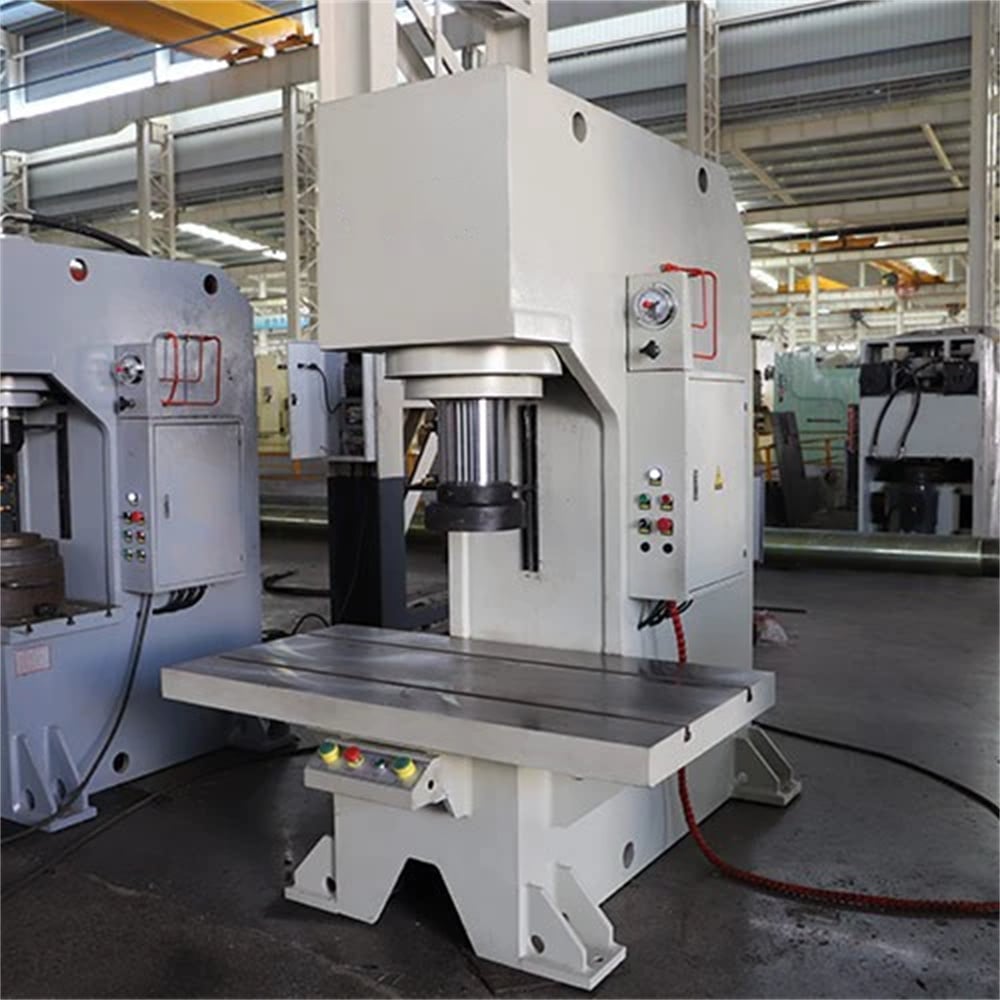
Durability and maintenance intervals also play a pivotal role. A machine that breaks down once a week is a liability in a high-volume facility. Therefore, the structural integrity of the press frame—whether it is a C-frame, H-frame, or four-column design—must be engineered to withstand continuous stress without fatigue. High-quality seals, chrome-plated pistons, and robust filtration systems are not just features; they are necessities for ensuring that the hydraulic press remains a reliable workhorse in the production line.
Finally, the integration of automation is what truly defines how a hydraulic press supported efficient mass production in machinery manufacturing. Modern presses are rarely standalone units; they are often part of a larger automated cell featuring robotic arms for loading and unloading, coil feeders for continuous material supply, and automated scrap removal systems. The press’s control system must be capable of communicating seamlessly with these external devices to create a synchronized, high-speed manufacturing ecosystem.
Technical Details: The Mechanics of Efficiency
The Hydraulic Circuit and Power Units
The heart of any hydraulic press is its power unit. For mass production, the power unit must be capable of delivering high flow rates at high pressures. This is often achieved through the use of variable displacement axial piston pumps. These pumps are highly efficient because they only deliver the amount of oil required for the specific phase of the stroke, reducing energy consumption and heat generation. In a mass production setting, energy efficiency is a major cost driver, and HARSLE’s use of servo-driven hydraulic systems can reduce energy usage by up to 50% compared to traditional fixed-speed motors.
Control Systems and Precision
The shift toward ‘Smart Manufacturing’ has brought PLC systems to the forefront of hydraulic press design. These controllers manage the timing of valves, the position of the ram (often measured by linear transducers with micron-level accuracy), and the pressure applied at various stages of the forming process. For complex parts, multi-stage pressing profiles can be programmed, allowing the press to slow down just before contact to prevent material shock, and then accelerate through the forming phase. This level of control is a key reason why a hydraulic press supported efficient mass production in machinery manufacturing so effectively; it reduces scrap rates by ensuring the material is formed perfectly every time.
Frame Design and Deflection Management
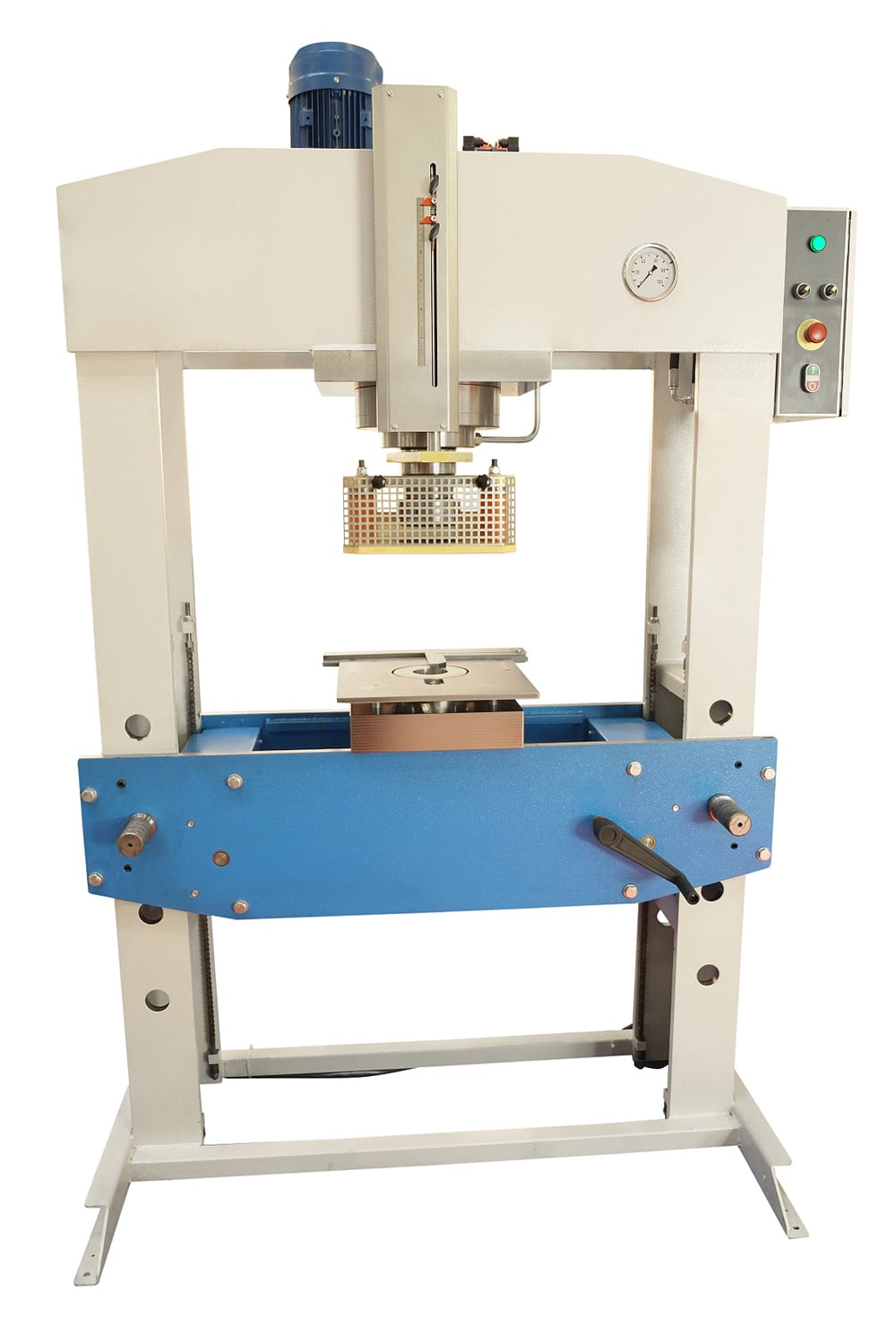
In high-tonnage applications, frame deflection is a significant challenge. If the frame flexes under load, the dies may become misaligned, leading to uneven part thickness or premature tool wear. H-frame (or straight-side) presses are often preferred for mass production because their symmetrical design distributes the load evenly, minimizing deflection. HARSLE utilizes finite element analysis (FEA) during the design phase to identify stress points and reinforce the structure, ensuring that the press remains rigid even under maximum load. This rigidity is crucial for maintaining the tight tolerances required in modern machinery components.
Safety Systems in High-Speed Environments
Efficiency cannot come at the cost of safety. In mass production, where machines operate at high speeds, integrated safety systems are paramount. Light curtains, dual-hand control stations, and hydraulic interlocks are standard. Furthermore, modern presses include diagnostic software that monitors the health of the machine in real-time. If a valve begins to lag or a filter becomes clogged, the system alerts the operator before a failure occurs, allowing for predictive maintenance that prevents costly unplanned downtime.
Selection Advice: Choosing the Right Press for Your Production Line
Selecting the appropriate machinery is the most critical step in ensuring that a hydraulic press supported efficient mass production in machinery manufacturing for your specific needs. The first step is to calculate the required tonnage. This isn’t just about the maximum force needed to form the part; it also includes a safety margin and consideration for the stripping force required to remove the part from the die. Overloading a press leads to rapid wear, while underloading it results in incomplete forming.
Next, consider the stroke length and daylight. In mass production, you want the shortest stroke possible that still allows for easy part removal and tool clearance. A shorter stroke means a faster cycle time. Daylight—the distance between the bolster plate and the ram in its fully retracted position—must be sufficient to accommodate your largest dies plus any automation equipment like transfer rails or robotic grippers.
Another vital factor is the bolster size. The bolster plate must be large enough to support the entire die set without overhang, which could cause uneven pressure distribution. For manufacturers who produce a variety of parts, a press with a Quick Die Change (QDC) system is highly recommended. QDC systems use hydraulic clamps and rollers to reduce die changeover times from hours to minutes, which is essential for maintaining high productivity in a ‘just-in-time’ manufacturing environment.
Finally, evaluate the manufacturer’s support and customization capabilities. A mass production line is a long-term investment. Choosing a partner like HARSLE ensures that you have access to expert engineering advice, spare parts, and technical support. Customization options, such as adding a hydraulic cushion for deep drawing operations or integrating a vacuum system for part retention, can further optimize the press for your specific application, ensuring maximum efficiency from day one.
Frequently Asked Questions (FAQ)
1. How does a hydraulic press compare to a mechanical press for mass production?
While mechanical presses are often faster for simple, shallow stamping, hydraulic presses offer full tonnage throughout the entire stroke. This makes them superior for complex forming, deep drawing, and applications where the material requires a specific pressure dwell time. Additionally, hydraulic presses are generally more versatile and easier to set up for different die heights.
2. What maintenance is required to keep a hydraulic press running in a 24/7 environment?
Key maintenance tasks include regular oil analysis and filtration, checking for leaks in hoses and seals, lubricating moving parts, and inspecting the electrical connections. In high-volume settings, a preventive maintenance schedule is essential to replace wear items like seals and bushings before they fail and cause production stops.
3. Can a hydraulic press be integrated into an existing automated production line?
Yes, modern hydraulic presses are designed with integration in mind. They feature standard communication protocols (like Profinet or EtherNet/IP) that allow them to interface with robots, feeders, and factory-wide ERP systems. HARSLE provides customized control solutions to ensure seamless integration with your existing infrastructure.
4. What are the energy-saving benefits of modern hydraulic presses?
Older hydraulic systems ran the pump at full speed constantly, wasting energy when the press was idle. Modern systems use servo-motors or variable frequency drives (VFDs) to match the pump output to the actual demand of the cycle. This not only saves electricity but also reduces the heat generated in the oil, extending the life of the hydraulic components.
5. How do I determine the correct tonnage for my application?
Tonnage is determined by the material type, thickness, the perimeter of the cut or form, and the shear strength of the material. It is always best to consult with HARSLE engineers, who can use specialized software and empirical data to help you calculate the precise tonnage required for your specific parts.
Conclusion: The Future of Hydraulic Pressing in Industry
The evidence is clear: a hydraulic press supported efficient mass production in machinery manufacturing by providing the perfect balance of power, precision, and flexibility. As we look toward the future, the role of these machines will only grow as Industry 4.0 principles become more deeply embedded in the fabrication process. The integration of Artificial Intelligence (AI) for predictive maintenance and the use of Digital Twins for process simulation will further enhance the efficiency of hydraulic pressing operations.
For manufacturers, the takeaway is that the hydraulic press is no longer a ‘dumb’ piece of iron. It is a sophisticated, data-driven tool that, when selected and implemented correctly, can significantly lower production costs and improve product quality. By focusing on high-speed circuits, rigid frame designs, and advanced control systems, companies can ensure their production lines are equipped to handle the challenges of tomorrow’s market.
HARSLE remains committed to pushing the boundaries of what is possible in metal forming technology. Whether you are producing automotive components, structural machinery parts, or consumer goods, our range of hydraulic presses is engineered to provide the reliability and performance needed for high-volume success. Investing in the right hydraulic technology is not just a purchase; it is a strategic move toward a more efficient, profitable, and competitive manufacturing future.