Designing Efficient Multi-Station Tooling Setups for Press Brakes


In the evolving landscape of sheet metal fabrication, the demand for precision and efficiency has pushed the limits of traditional bending techniques. For manufacturers handling complex geometries, the transition from single-setup operations to multi-station tooling setups—often referred to as staged bending—is no longer an option but a competitive necessity. This approach allows a single operator to complete all bends on a complex part in one continuous sequence without setting the part down or changing the machine setup between steps.
Multi-station tooling involves placing multiple sets of punches and dies along the length of a press brake’s bed. By optimizing the arrangement of these tools, factory managers can significantly reduce cycle times, eliminate the accumulation of handling errors, and maximize the utilization of high-end CNC equipment. However, implementing this requires a deep understanding of machine kinematics, tool shut heights, and backgauge coordination. This article provides a technical exploration into the engineering principles required to design and execute successful multi-station setups for complex parts.
Understanding the Basics of Multi-Station Tooling

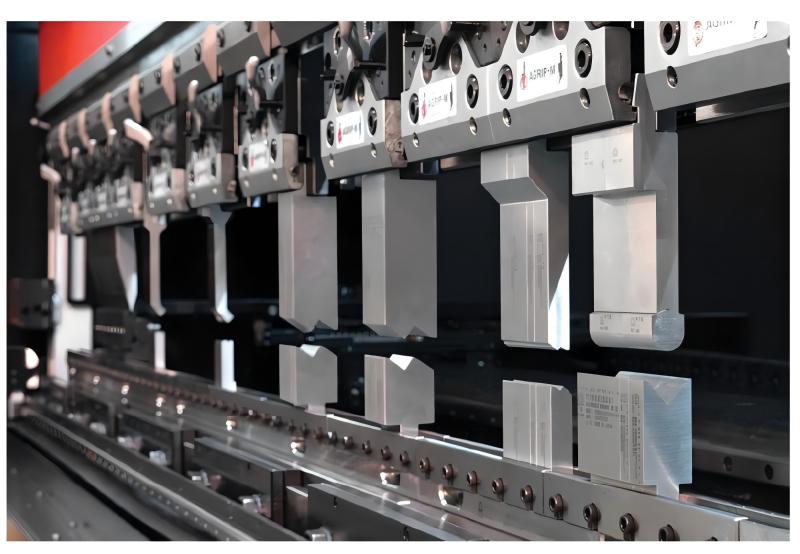
Multi-station tooling is the practice of arranging diverse tooling profiles side-by-side on the press brake beam. The primary objective is to allow the operator to move from left to right (or vice versa) through a sequence of bends. In a standard setup, a complex part requiring four different V-openings or punch profiles would traditionally require four separate machine setups. With a multi-station configuration, those four setups are consolidated into one.
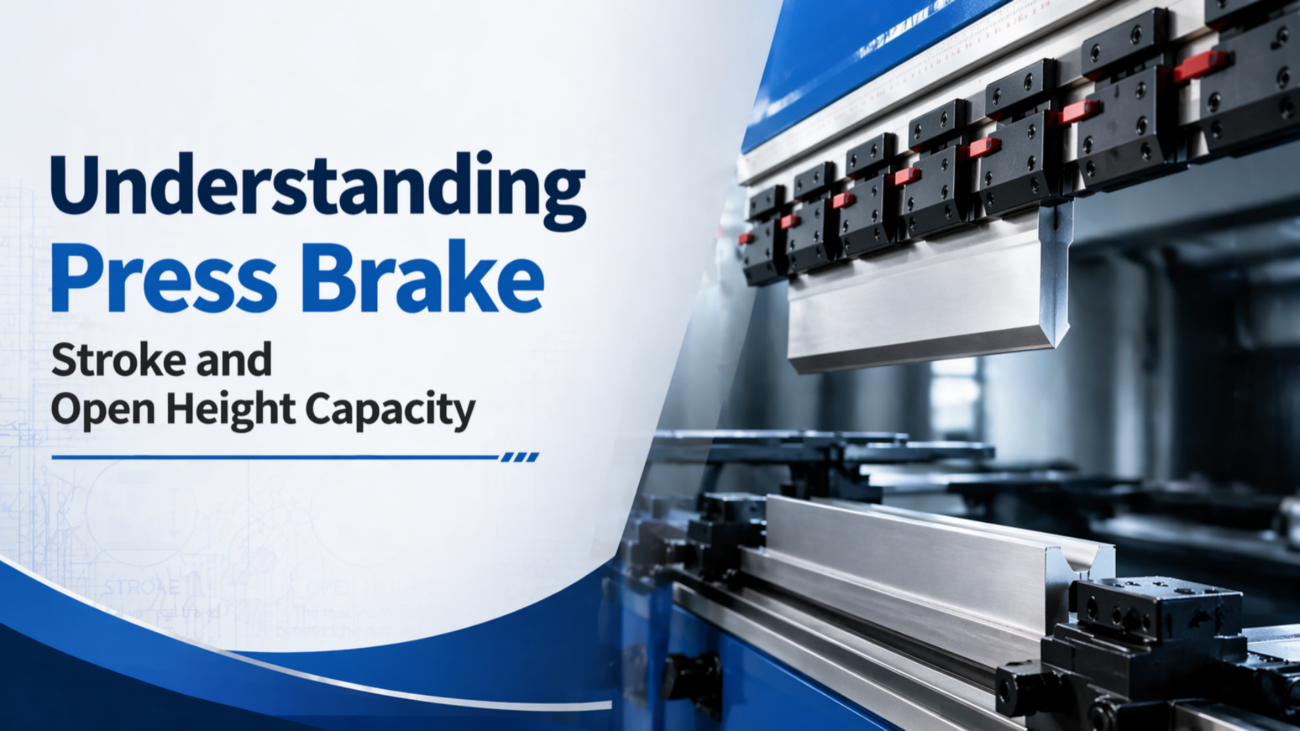
For this to function correctly, the tooling must be “compatible.” This compatibility is defined primarily by the shut height—the distance between the ram and the bed when the machine is fully closed. If one station uses a tall punch and another uses a short one, the taller punch would crash into the die before the shorter one even touches the metal. To solve this, engineers use Common Shut Height (CSH) tooling or specialized shimmed holders to ensure that all tool sets across the bed have a synchronized point of contact.
In modern lean manufacturing, the goal is to touch a part as few times as possible. Multi-station setups are the ultimate expression of this philosophy in the bending department, turning complex part production into a seamless flow.
Why Multi-Station Tooling Matters in Sheet Metal Fabrication
The practical significance of staged bending lies in the intersection of throughput and precision. When a part is bent across multiple machines or separate setups, the risk of dimensional drift increases. Each time a part is picked up and re-indexed against a backgauge, a small margin of error is introduced. In multi-station setups, the part remains in the operator’s hands, and the relationship between the bends is maintained through the programmed logic of the CNC controller.
- Reduced Setup Time: Instead of four 15-minute setups, the operator performs one 20-minute setup. Over a week of production, this saves dozens of hours.
- Minimized Work-in-Process (WIP): Parts are finished immediately rather than waiting in bins between bending stages.
- Increased Accuracy: Consistent use of the same backgauge system for all bends ensures better repeatability and tighter tolerances on flange lengths and bending angles.
- Ergonomic Flow: The operator follows a logical, rhythmic path across the machine, reducing fatigue and the likelihood of orientation errors.
Key Factors to Consider in Multi-Station Tooling Design
Designing a multi-station setup is more complex than simply sliding tools onto the rail. Several technical factors must be balanced to prevent machine damage and ensure part quality.
1. Tooling Shut Height and Stroke
As mentioned, all tool sets must be height-compatible. Most premium tooling manufacturers offer “staged” tooling series where different punch radii and die openings are engineered to have the exact same physical height. If using non-matching tools, precision spacers or adjustable power-clamping systems must be employed.
2. Tonnage Distribution and Off-Center Loading
Press brakes are typically designed to exert their maximum force at the center of the ram. Placing a heavy-tonnage bend at the far left or right of the machine can cause “ram tilt” or damage the hydraulic cylinders and guiding systems. Engineers must calculate the total tonnage of the sequence and ensure the machine’s compensation (crowning) system can handle the distribution.
3. Backgauge Versatility

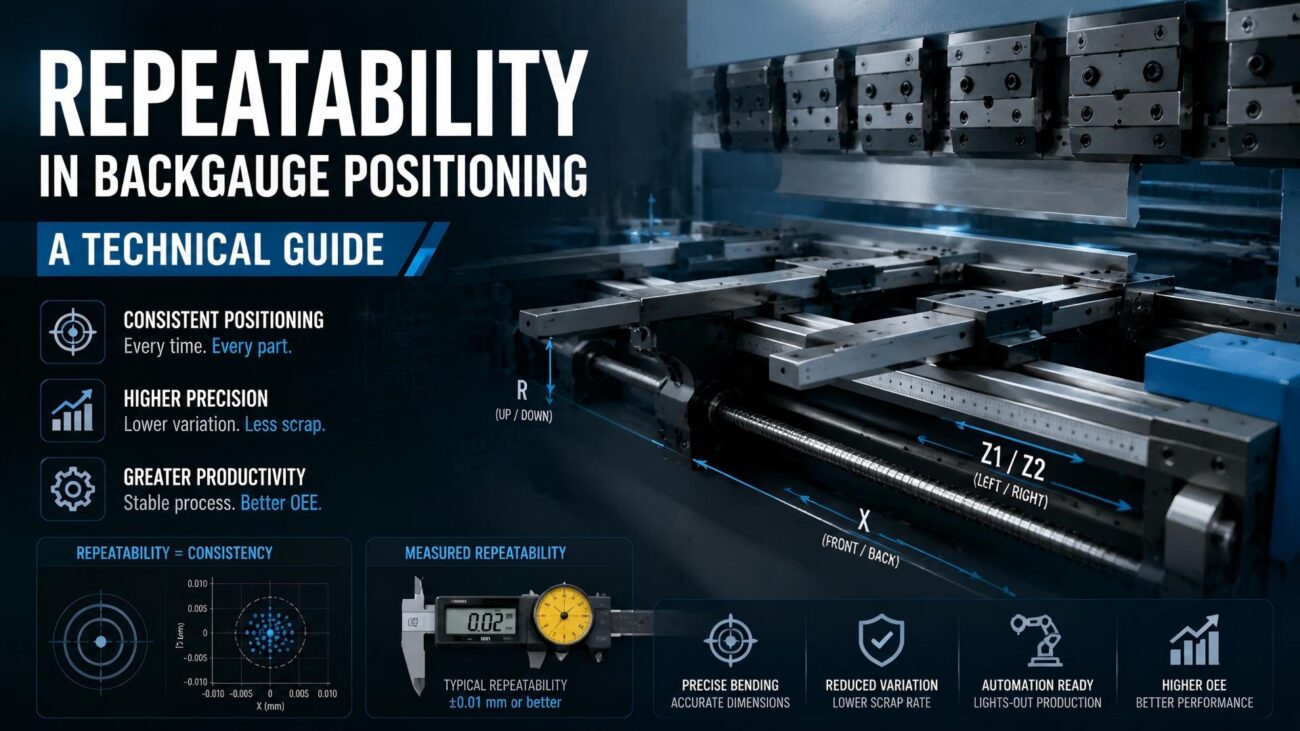
A multi-station setup is only as good as the backgauge. A 6-axis backgauge (X1, X2, R1, R2, Z1, Z2) is almost mandatory for complex staged bending. This allows each station to have an independent depth (X) and height (R) setting, which is critical when the part orientation changes between stations.
Technical Calculation: Tonnage and Clearance
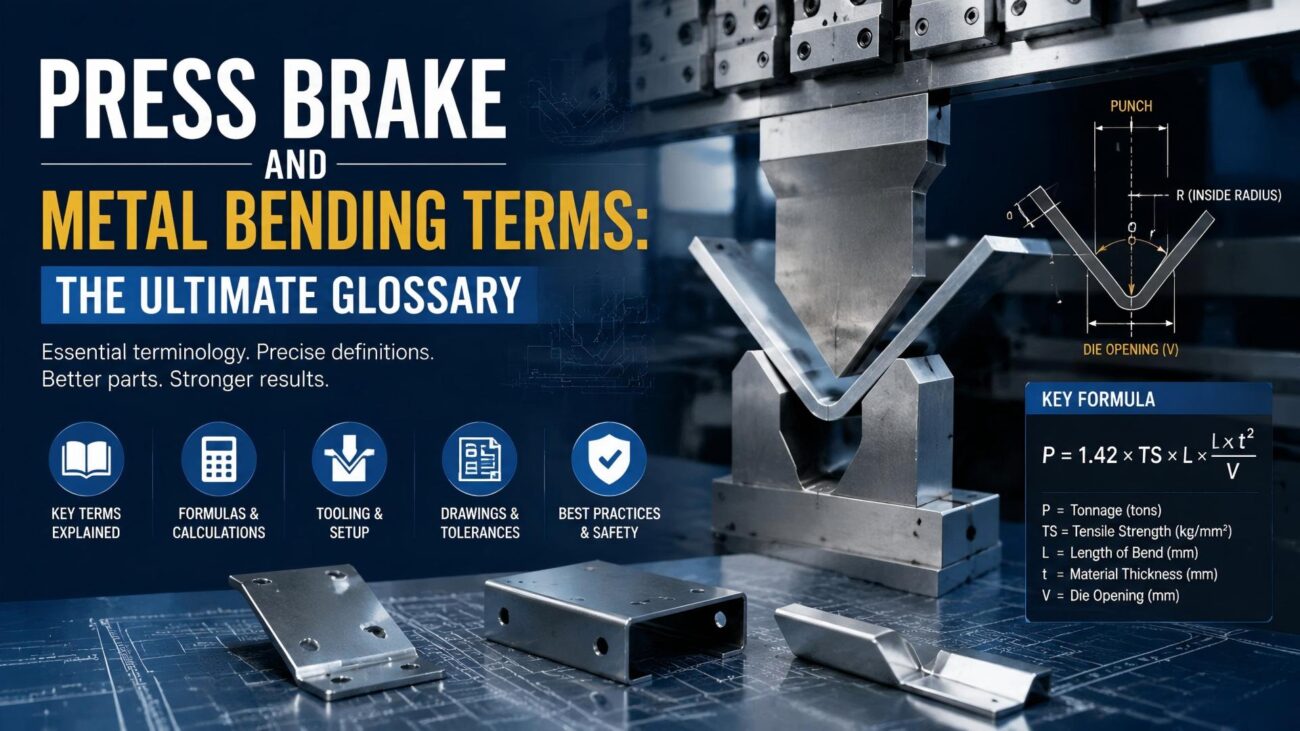
When engineering a multi-station setup, you must calculate the required tonnage for each station and verify it against the machine’s capacity. The formula for the required bending force (P) per meter is:
P = (k * L * s^2 * UTS) / W
Where:
- P = Tonnage (kN or tons)
- k = Tooling factor (typically 1.33 for V-bending)
- L = Length of the bend (mm)
- s = Sheet thickness (mm)
- UTS = Ultimate Tensile Strength of the material (N/mm²)
- W = Die opening width (mm)
In a multi-station environment, you must ensure that the station requiring the highest tonnage does not exceed the local load limit of the ram or the tool itself. Furthermore, you must verify the “Return Stroke Clearance.” This is the space available for the part to be removed after the bend. If a station to the left has a very deep die, the part might get trapped during a bend on a station to the right.
Comparison of Tooling Strategies
The following table compares the different approaches to handling complex parts in a fabrication environment:
| Feature | Single Station (Batch) | Standard Multi-Station | High-Density Staged Bending |
|---|---|---|---|
| Setup Frequency | High (per bend type) | Low (once per part) | Very Low (universal setup) |
| Handling Risk | High | Low | Minimal |
| Tooling Cost | Low | Moderate | High (specialized CSH) |
| Software Req. | Basic 2D/3D | Advanced 3D Simulation | Automated CAM/Robotics |
| Best Use Case | Simple, long runs | Complex, medium volume | High-Mix, Low-Volume (HMLV) |
Step-by-Step Guide to Planning a Multi-Station Setup
- Analyze the Part Geometry: Identify all bend angles, flange lengths, and the required bending radius. Note any internal flanges that might interfere with the punch.
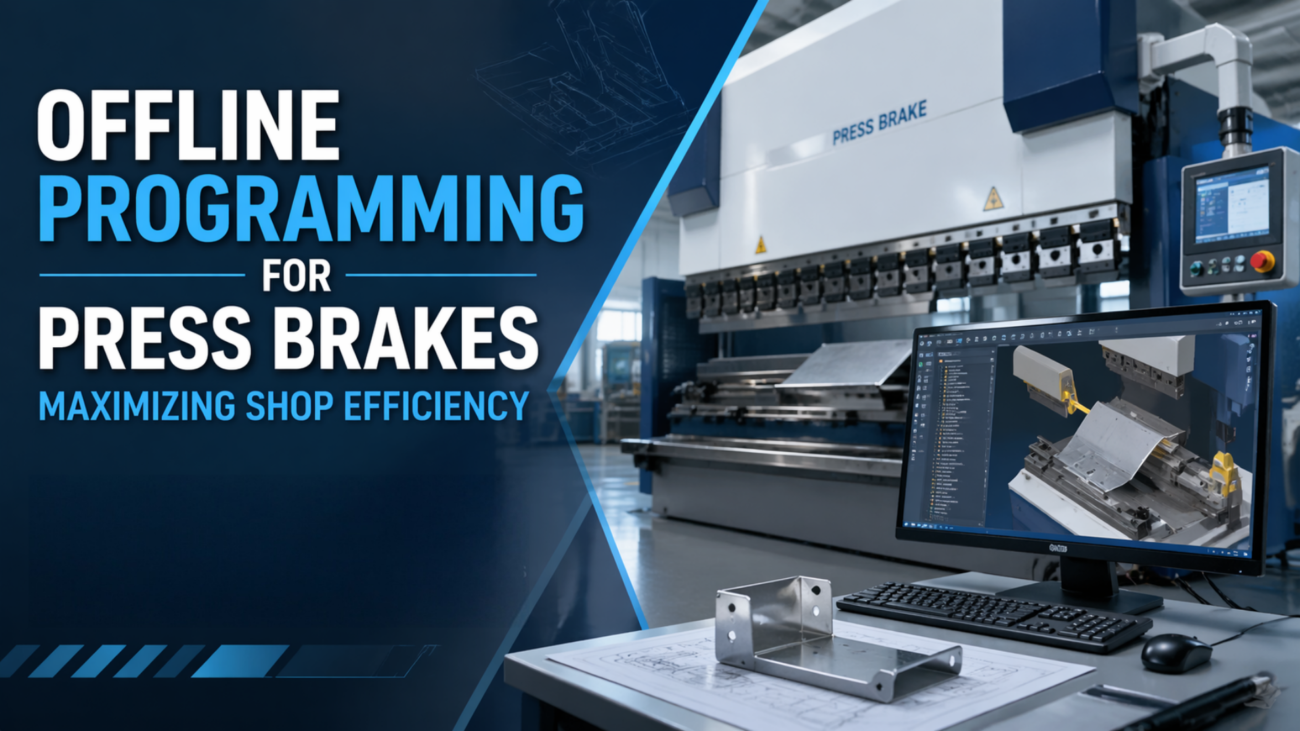
- Determine the Bend Sequence: Sequence the bends to avoid collisions between the part and the tooling or the machine frame. This is usually done using offline 3D simulation software.
- Select Compatible Tooling: Choose punches and dies that share a common shut height. Check that the die openings (V-widths) are appropriate for the material thickness and desired bending radius.
- Map the Tool Positions: Layout the tools on the machine bed. Ensure there is enough space between stations for the part to swing or rotate without hitting the adjacent tool.
- Program the Backgauge: Define the X, R, and Z positions for every step. In multi-station setups, the Z-axis (lateral position of the fingers) is critical to ensure the part is supported correctly at each station.
- Verify with Simulation: Run a full collision detection simulation. This check should look for part-to-tool, part-to-ram, and part-to-backgauge interference.
- Physical Setup and First Article: Install the tools and perform a test bend. Measure the results and make fine adjustments to the Y-axis (depth) for each specific station if the controller allows.
Common Mistakes to Avoid
Even experienced engineers can run into trouble with complex staged setups. Avoiding these common pitfalls will save time and prevent equipment damage:
- Ignoring Part Interference: The most common error is forgetting that as the part is bent at Station 2, the edges of the part might hit the tools at Station 1 or Station 3.
- Neglecting Tonnage Limits: Concentrating high-tonnage bends on the ends of the press brake can cause permanent deflection in the ram (crowning issues).
- Improper Backgauge Finger Selection: Using a finger that is too wide can lead to collisions with the dies when the backgauge moves into a tight position.
- Mismatching Tooling Grades: Mixing precision-ground tooling with older, planed tooling. This leads to inconsistent bending angles across the stations due to height variances.
Industry Applications
Multi-station setups are particularly prevalent in industries where precision and part complexity are high. In the aerospace industry, brackets with multiple return flanges are often formed this way to ensure the strict tolerances required for flight hardware. The medical equipment sector utilizes staged bending for stainless steel enclosures and cabinetry where aesthetic quality and dimensional accuracy are paramount. Additionally, telecommunications manufacturers use these setups for complex server chassis and heat sinks, where multiple small bends must be executed in rapid succession to maintain high throughput.
The transition to multi-station tooling represents a shift from ‘operator-dependent’ quality to ‘process-dependent’ quality. By engineering the complexity into the setup, you ensure a consistent result regardless of who is running the machine.
Conclusion
Multi-station tooling setups are a powerful tool for any fabrication facility aiming to optimize the production of complex parts. While the initial engineering and tooling investment may be higher than traditional methods, the returns in terms of reduced handling, improved accuracy, and massive gains in throughput are undeniable. By carefully considering shut heights, tonnage distribution, and utilizing advanced offline simulation, manufacturers can master the art of staged bending and significantly enhance their competitive edge in the global market.
FAQ
What is ‘Common Shut Height’ (CSH) in multi-station tooling?
CSH refers to different tools—such as various punches or dies—that are manufactured to have the same overall height. This allows them to be used together in a single setup without the ram crashing into the taller tools before the shorter ones engage.
Do I need a specific type of press brake for multi-station setups?
While any press brake can technically hold multiple tools, a CNC press brake with at least 4 to 6 axes of backgauge control and a modern crowning system is highly recommended to manage the complex positioning and tonnage distribution.
How do I prevent ‘Ram Tilt’ during off-center multi-station bending?
To prevent ram tilt, try to balance the tonnage load across the center of the machine. If an off-center load is unavoidable, ensure your machine has an electronic or hydraulic pressure monitoring system that can compensate for the imbalance.
Can I mix tools from different manufacturers in one staged setup?
It is generally discouraged unless you have precisely measured the shut heights. Even a 0.05mm difference can result in significant bending angle variations. If you must mix, use precision shims to equalize the heights.
Is offline software necessary for multi-station planning?
While not strictly mandatory, offline simulation software is vital for complex setups. It allows engineers to detect potential collisions between the part and the tooling before the first piece of metal is ever bent, preventing costly tool damage.