Mechanical vs. Hydraulic Crowning: Understanding the Mechanics


Mechanical vs. Hydraulic Crowning is a critical decision in precision sheet metal fabrication, especially when aiming for consistent bending across the entire workpiece. As the press brake applies tonnage, the upper ram and lower bed naturally deflect due to structural forces, causing the “banana effect”—where the ends of the workpiece are bent correctly, but the center remains under-bent. To mitigate this, crowning systems were developed. Mechanical crowning uses a set of springs or wedges to compensate for deflection, while hydraulic crowning adjusts pressure to ensure uniform bending. Choosing between these two systems depends on factors like material type, machine capacity, and desired bending precision, which are essential for optimizing production.
Understanding the Basics of Beam Deflection
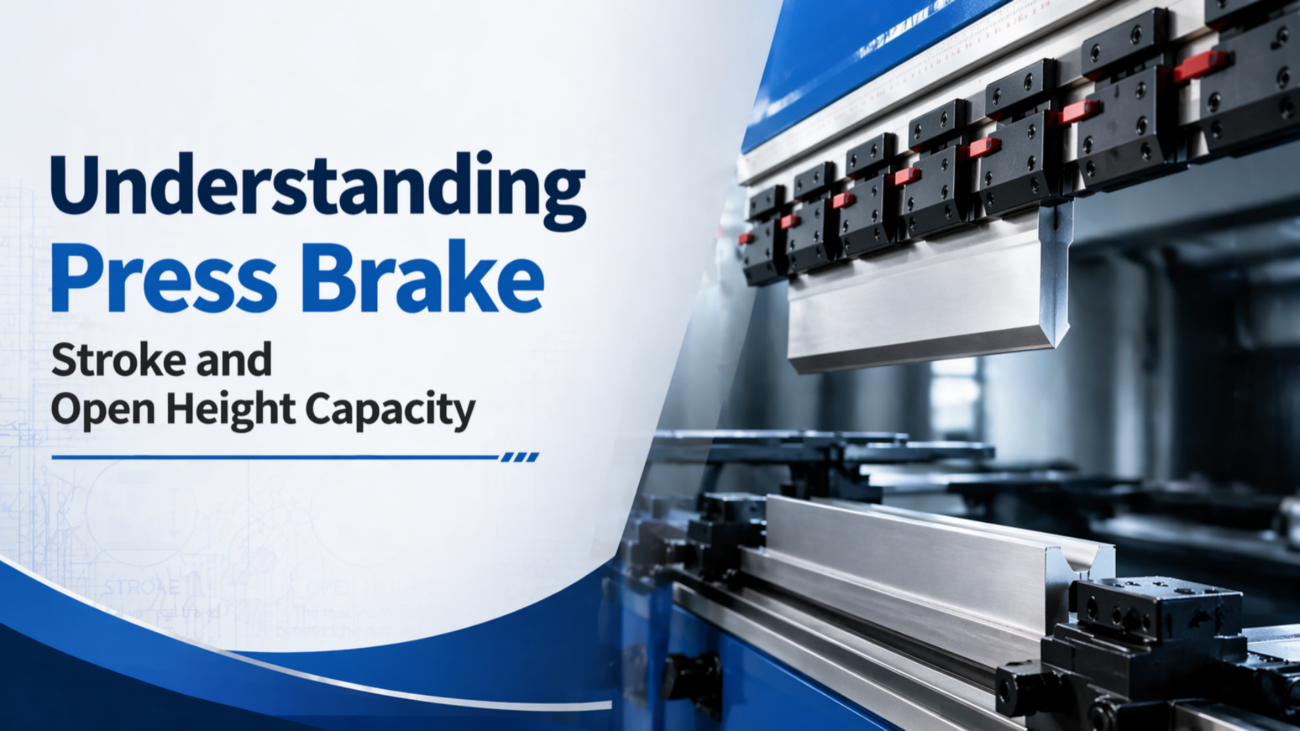
Before comparing crowning methods, we must understand why they are necessary. A press brake is essentially a large frame designed to withstand massive forces, yet no material is infinitely rigid. When the cylinders at the ends of the ram push down to perform a bend, the center of the ram and the center of the bed tend to bow away from each other. The magnitude of this deflection is influenced by the sheet thickness, the material tensile strength, the length of the bend, and the die opening width.
Crowning is the process of intentionally introducing a compensating curve into either the bed or the ram. This curve ensures that the punch and die maintain a perfectly parallel relationship throughout the entire stroke, regardless of the load. Without an effective compensation system, parts longer than 2 meters will almost certainly exhibit angular deviations, leading to rejected parts and wasted material in high-precision industries like aerospace or medical equipment manufacturing.
Why Mechanical vs. Hydraulic Crowning Matters in Sheet Metal Fabrication
The choice between Mechanical vs. Hydraulic Crowning directly impacts the repeatability, setup time, and maintenance overhead of a fabrication shop. In an era where ‘Industry 4.0’ and ‘Right First Time’ manufacturing are standard, understanding these mechanics is vital for maintaining a competitive edge. A machine with inadequate crowning compensation will require operators to manually shim dies—a time-consuming process that relies on trial and error and reduces overall equipment effectiveness (OEE).
Beam deflection is not a sign of machine failure; it is a predictable physical reaction to high-pressure loads that must be engineered for with precision compensation.
Modern CNC press brakes integrate crowning control into the machine’s software, but the physical execution—whether through fluid power or mechanical wedges—determines how accurately the machine can adapt to varying material conditions. For instance, high-strength steels like Hardox or stainless steel require significantly higher tonnage, which in turn creates more deflection, making the crowning system’s efficiency paramount.
Key Factors in Mechanical vs. Hydraulic Crowning Selection

Several technical parameters must be evaluated when deciding which system fits a specific production profile. These include the total tonnage capacity of the machine, the frequency of material changes, and the required angular tolerance. Mechanical systems are often praised for their consistency and ‘point-to-point’ accuracy, while hydraulic systems are known for their ease of integration and real-time adjustment capabilities.
- Length of the Bed: Longer machines (over 3 meters) experience more significant deflection and require more sophisticated crowning.
- Material Variability: If you frequently switch between aluminum and high-tensile steel, your crowning system must be highly adaptable.
- Tonnage Density: Concentrated loads in the center of the machine create different deflection profiles than distributed loads.
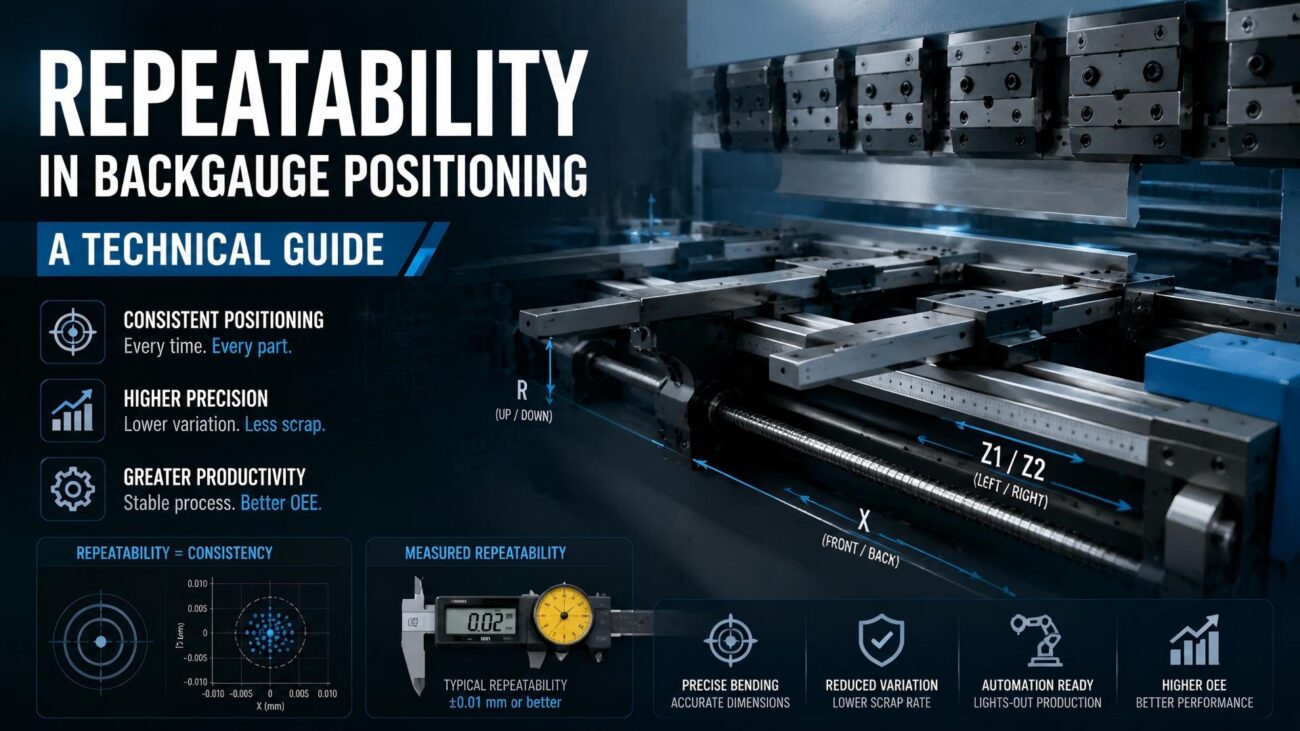
- Control Integration: How well the crowning system communicates with the CNC backgauge system and angle measurement sensors.
Technical Explanation and Calculation of Deflection
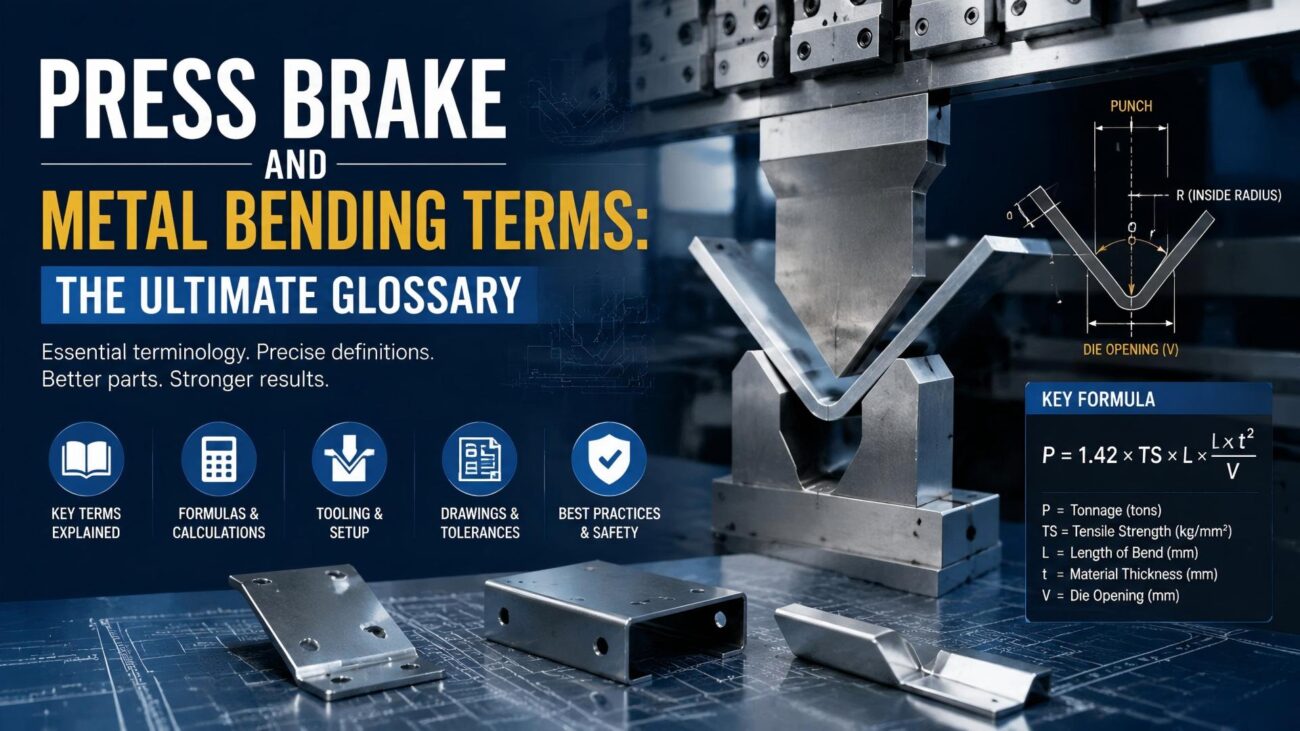
To quantify the need for crowning, we look at the standard structural engineering formula for a beam supported at both ends with a distributed load. While a press brake is more complex, the simplified deflection (delta) can be modeled as follows:
Deflection (delta) = (5 * w * L^4) / (384 * E * I)
Where:
- w: The load per unit length (related to bending tonnage).
- L: The distance between the side frames (bed length).
- E: Young’s Modulus of the beam material (usually steel).
- I: The Area Moment of Inertia of the beam cross-section.
In practice, the CNC controller calculates the required crowning value based on the material tensile strength, sheet thickness, and die opening. For a standard 100-ton press brake bending 3mm mild steel over a 3-meter length, the deflection might be as much as 0.5mm. The crowning system must precisely lift the center of the bed by this exact amount to ensure a uniform 90-degree angle.
Comparing Mechanical vs. Hydraulic Crowning Performance
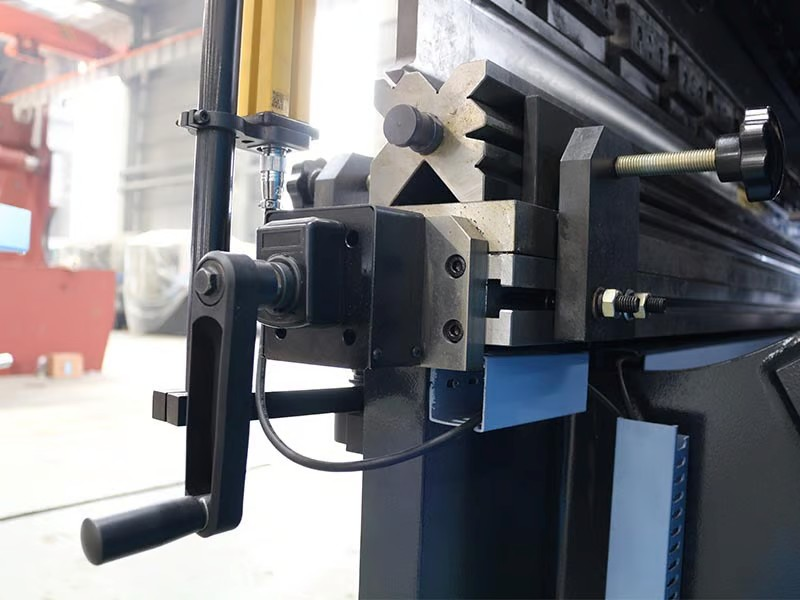
The fundamental difference lies in how the compensating curve is generated. Hydraulic crowning uses a series of cylinders embedded within the lower beam. When the machine’s main cylinders apply pressure, the crowning cylinders also engage, pushing the center of the bed upward. Mechanical crowning, on the other hand, utilizes a series of opposing wedges (often called a crowning table) that move horizontally to create a vertical curve.
| Feature | Hydraulic Crowning | Mechanical Crowning (Wedge-style) |
|---|---|---|
| Adjustment Method | Pressure-based via CNC valves | Mechanical movement of wedges |
| Precision / Resolution | High (Limited by valve steps) | Extremely High (Micron-level) |
| Durability | Requires seal/oil maintenance | Low maintenance, high wear resistance |
| Symmetry | Naturally symmetrical | Can be adjusted for asymmetrical wear |
| Response Time | Instantaneous during the stroke | Pre-set before the stroke begins |
Mechanical systems, such as the Wila-style wave system, are often preferred for high-end precision work because they provide a more ‘natural’ curve that matches the deflection of the ram more accurately than a few discrete hydraulic cylinders can. However, hydraulic systems are often more cost-effective for mid-range machines and are very effective for heavy-duty applications where extreme precision (under 0.5 degrees) is not the primary concern.
Step-by-Step Guide: Selecting the Right System
- Analyze Your Part Portfolio: If 80% of your work involves short parts (under 1 meter), crowning is less critical. If you bend long panels, it is mandatory.
- Evaluate Material Consistency: Mechanical crowning is excellent for consistent material. If your material thickness fluctuates significantly, the real-time pressure adjustments of hydraulic crowning can be advantageous.
- Check Tolerance Requirements: For parts requiring +/- 0.3 degrees or better, a high-quality mechanical crowning table with localized adjustments is the industry standard.
- Assess Maintenance Capabilities: If your shop lacks hydraulic technicians, a mechanical system is more ‘set and forget,’ requiring only occasional cleaning and lubrication.
- Verify CNC Compatibility: Ensure the press brake controller can automatically calculate and command the crowning value based on the material database.
Common Mistakes to Avoid
One of the most frequent errors engineers make is over-relying on crowning to fix issues caused by worn tooling or misaligned frames. Crowning is designed to compensate for elastic deflection, not to hide mechanical wear. Another mistake is failing to calibrate the crowning system. Over time, the ‘zero point’ of a crowning table can shift; without periodic verification using a dial indicator or laser level, the CNC’s calculations will be fundamentally flawed.
Do not confuse crowning with ‘shimming.’ Shimming is a reactive fix for poor tool quality; crowning is a proactive engineering solution for structural physics.
Furthermore, many buyers ignore the ‘asymmetrical’ crowning capability. In some cases, a press brake frame might wear unevenly. Higher-end mechanical crowning systems allow for localized adjustment of specific wedges to compensate for this unevenness, a feature generally unavailable in standard hydraulic systems.
Industry Applications
Mechanical vs. Hydraulic Crowning choices are often dictated by the sector. In the Telecommunications and Electronics sector, where enclosures are made from thin-gauge aluminum with very tight tolerances, mechanical crowning is the gold standard. The ability to fine-tune the curve ensures that long flanges remain perfectly straight for assembly.
In contrast, Heavy Infrastructure and Shipbuilding often utilize hydraulic crowning. When bending 20mm plate for a bridge girder, the sheer volume of force makes hydraulic systems more practical and durable. The slight reduction in ‘curve smoothness’ compared to mechanical wedges is negligible when the material thickness and bend radius are large.
Conclusion
The debate of Mechanical vs. Hydraulic Crowning does not have a single winner; rather, it has a ‘correct’ choice for specific engineering needs. Hydraulic crowning offers simplicity and cost-effectiveness for general-purpose fabrication, while mechanical crowning provides the superior precision and repeatability required for high-tolerance, high-value components. For most modern CNC operations focusing on a mix of sheet thicknesses and lengths, a high-quality mechanical crowning system provides the most consistent long-term ROI. When purchasing your next press brake, prioritize the crowning system as much as you do the tonnage and the backgauge—it is the silent partner in every successful bend.
FAQ
Can I retrofit a crowning system to an old press brake?
Yes, mechanical crowning tables (like those from Wila or Rolleri) are frequently retrofitted to older machines by mounting them directly onto the existing bed. This is a common way to extend the life and precision of older equipment.
Does crowning affect the bending radius?
Crowning itself does not change the intended bending radius, but it ensures the radius is consistent across the length. Without proper crowning, the radius in the center of the part may be slightly larger than at the ends due to the punch not fully seating in the die.
Is mechanical crowning more expensive than hydraulic?
Generally, yes. High-precision mechanical crowning tables involve complex machining of wedges and specialized drive motors, which carries a higher initial investment compared to integrated hydraulic cylinders.
How often should a crowning system be calibrated?
For high-precision shops, calibration should be checked every 6 to 12 months using a precision-ground test bar and a dial indicator to ensure the CNC-commanded value matches the physical lift of the bed.
Which system is better for stainless steel?
Mechanical crowning is typically preferred for stainless steel. Stainless has high springback and requires high tonnage; the precise, localized adjustment of mechanical wedges helps manage these factors more effectively than hydraulic pressure alone.