Punching Machine Buying Guide: How to Choose the Right Model for Your Fabrication Shop


Introduction to Punching Machine Acquisition
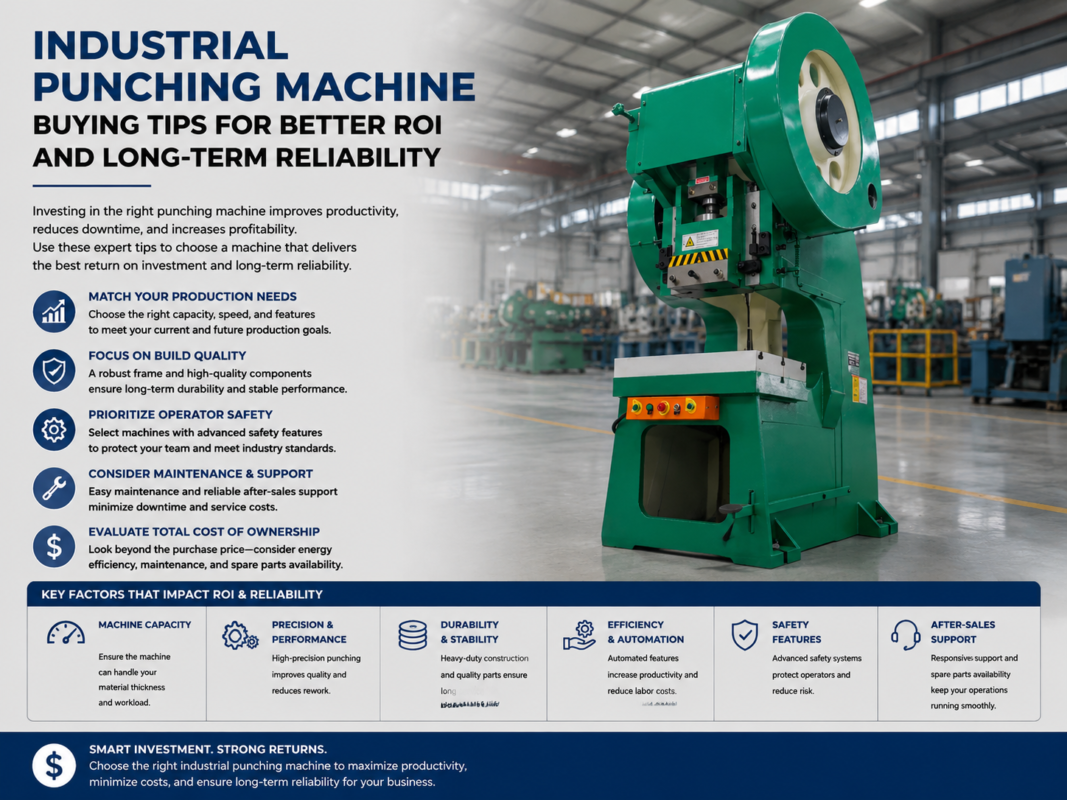
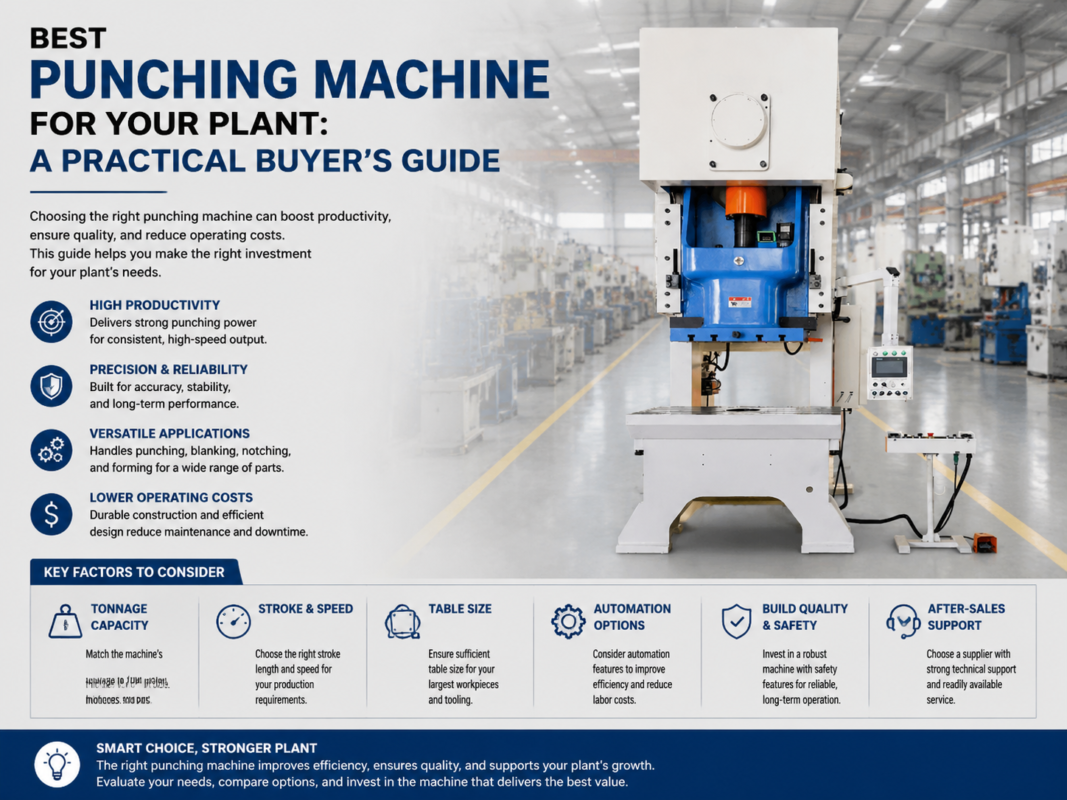
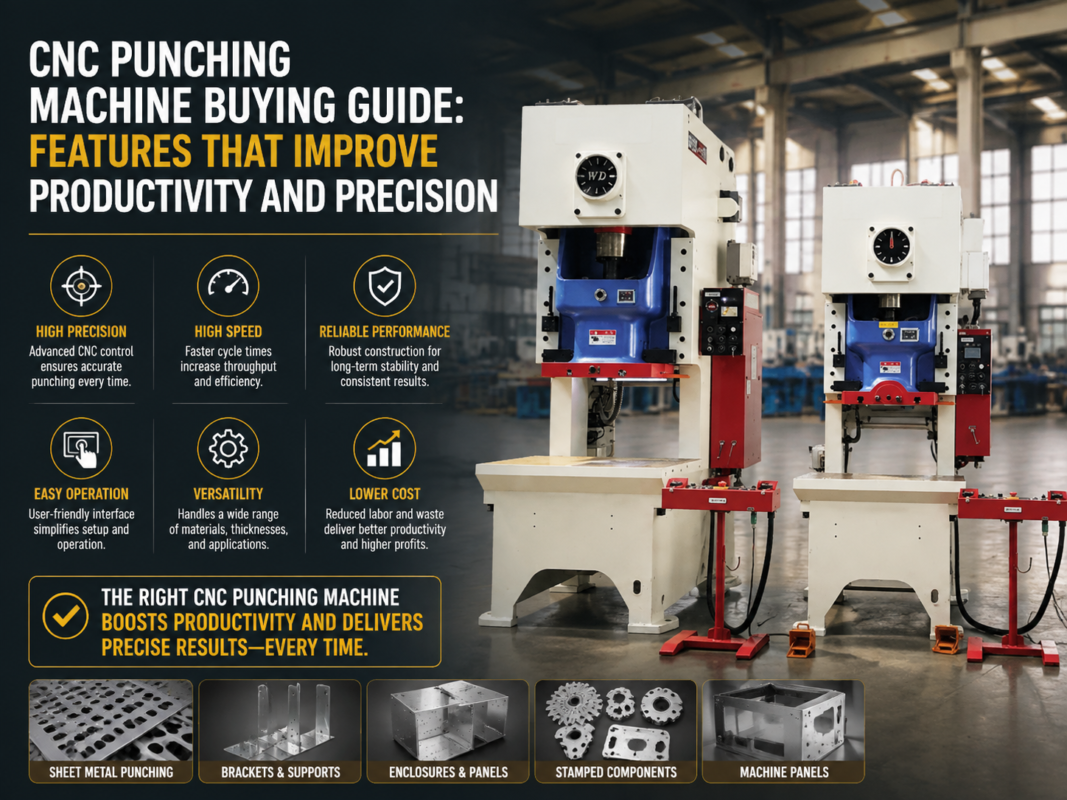
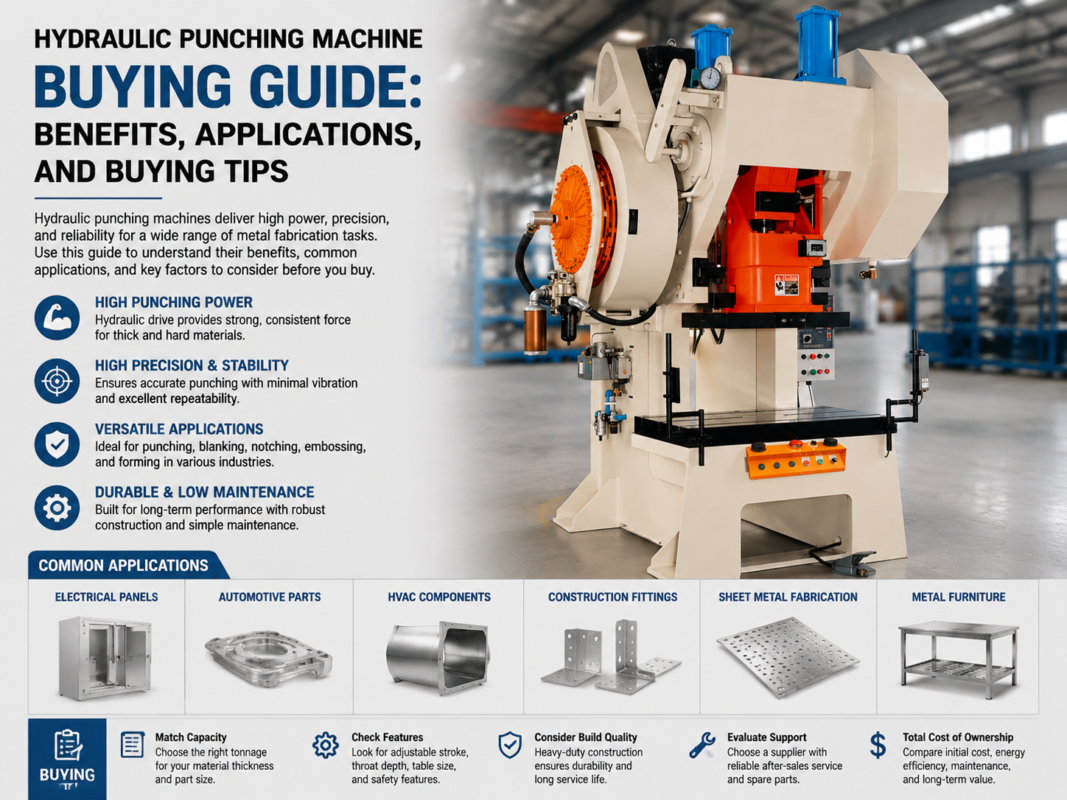
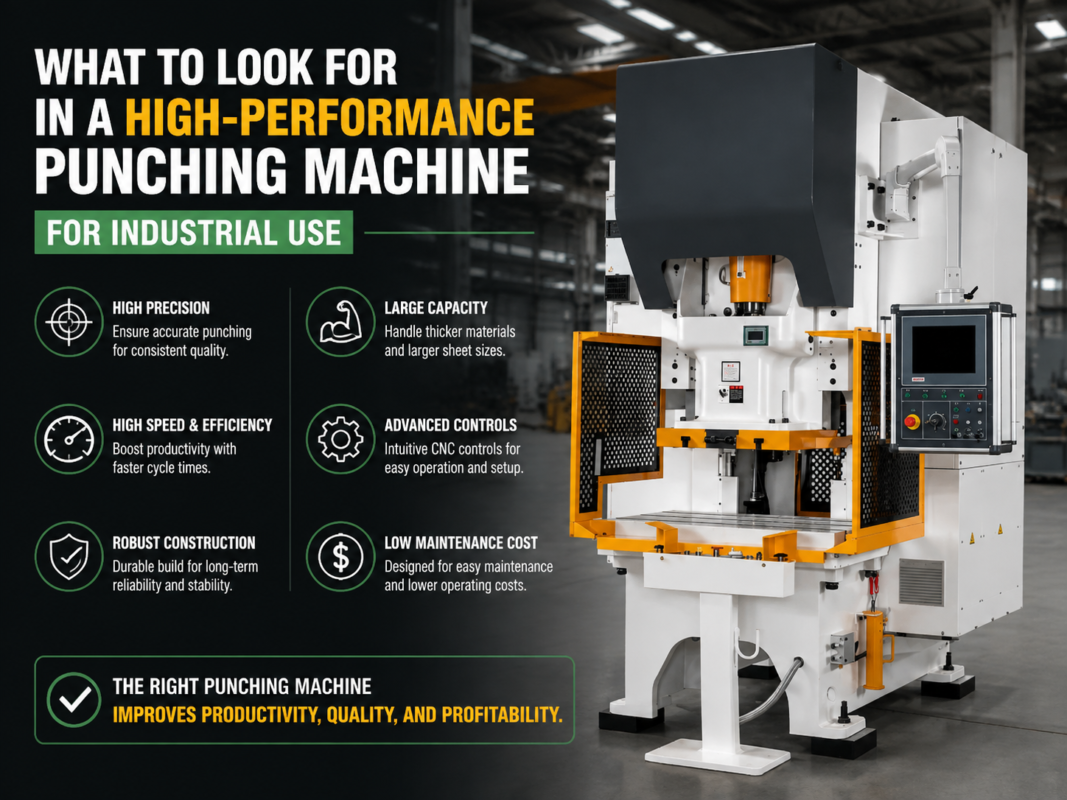
In the competitive landscape of modern metalworking, the efficiency of your punching operations can make or break your profit margins. Whether you are a small job shop or a high-volume industrial manufacturer, the decision to invest in a new punching machine is a pivotal moment. This guide is designed to navigate the complexities of Punching Machine Buying : Choose Model Fabrication Shop requirements, ensuring that your investment aligns with both your current production needs and your future growth trajectories.
HARSLE has long been at the forefront of providing high-performance fabrication machinery. We understand that a punching machine is more than just a tool; it is the heartbeat of your production line. From simple hole-punching to complex forming and nesting, the right machine reduces lead times and enhances precision. In the following sections, we will break down the financial, technical, and operational aspects of selecting the perfect punching model for your specific environment.
Price Range Overview: Setting Your Budget
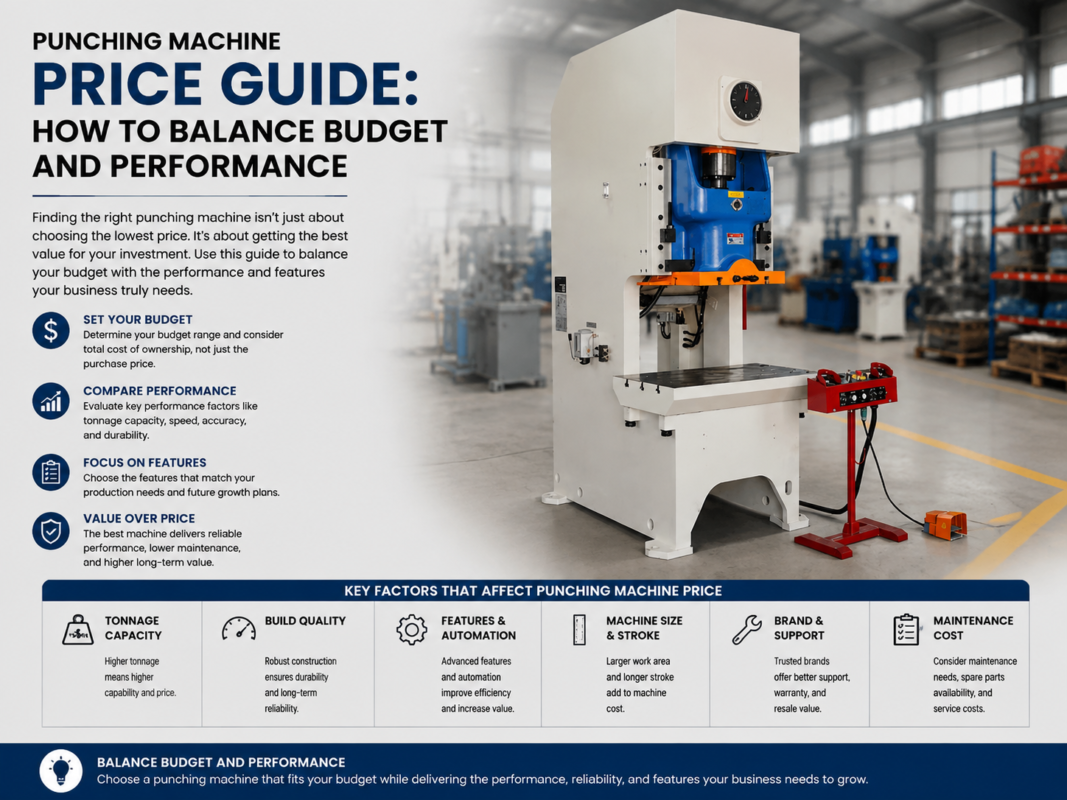
The market for punching machines is diverse, with price points reflecting the technology, capacity, and automation levels of the equipment. Understanding these ranges is the first step in the Punching Machine Buying : Choose Model Fabrication Shop process. Generally, the market is divided into three primary tiers: entry-level manual or single-station machines, mid-range hydraulic CNC machines, and high-end servo-electric turret punching centers.
Entry-level machines, often manual or semi-automatic hydraulic punches, typically range from $5,000 to $20,000. These are ideal for small shops focusing on low-volume, thick-plate punching where high speed is not a priority. Mid-range CNC punching machines, which offer automated positioning and basic turret capabilities, usually fall between $40,000 and $90,000. These machines provide a significant jump in productivity and are the workhorses of medium-sized fabrication businesses.
At the top of the spectrum are high-speed CNC turret punching machines and servo-electric models, which can cost anywhere from $120,000 to over $300,000. These units are designed for 24/7 operation, featuring high hit rates, massive tool capacities, and advanced software integration. While the initial capital expenditure is high, the cost per part in high-volume environments is significantly lower than with entry-level equipment.
Main Cost Drivers in Punching Machinery
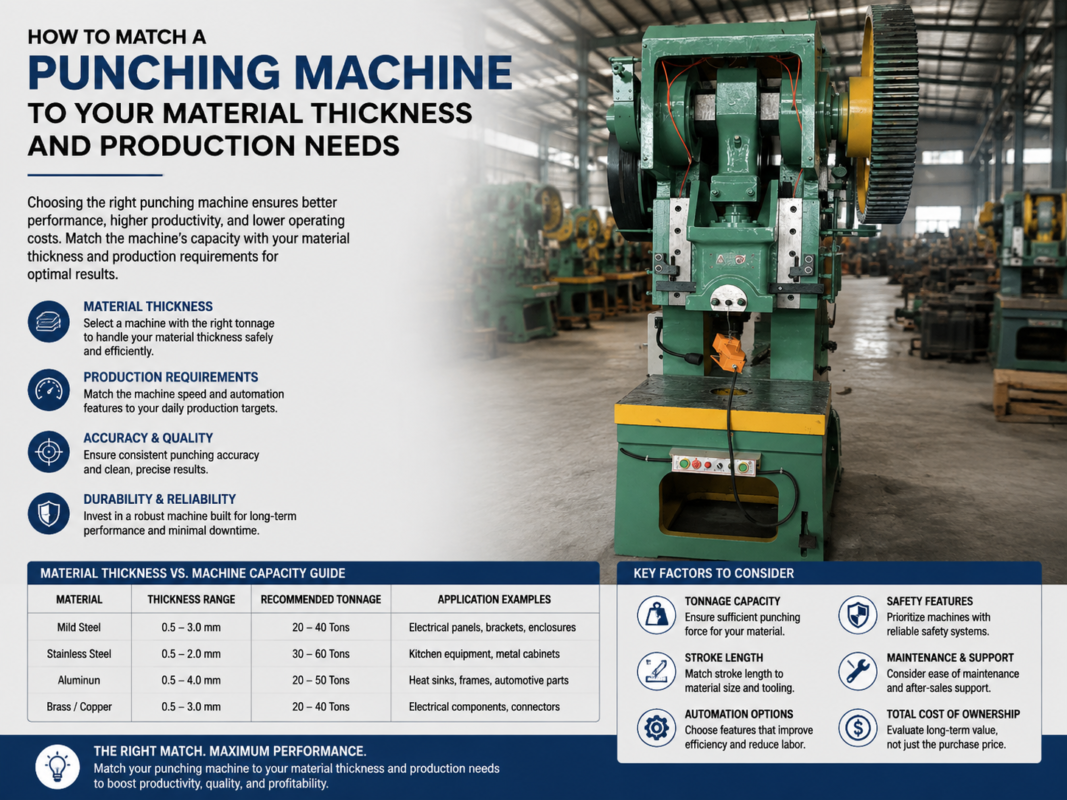
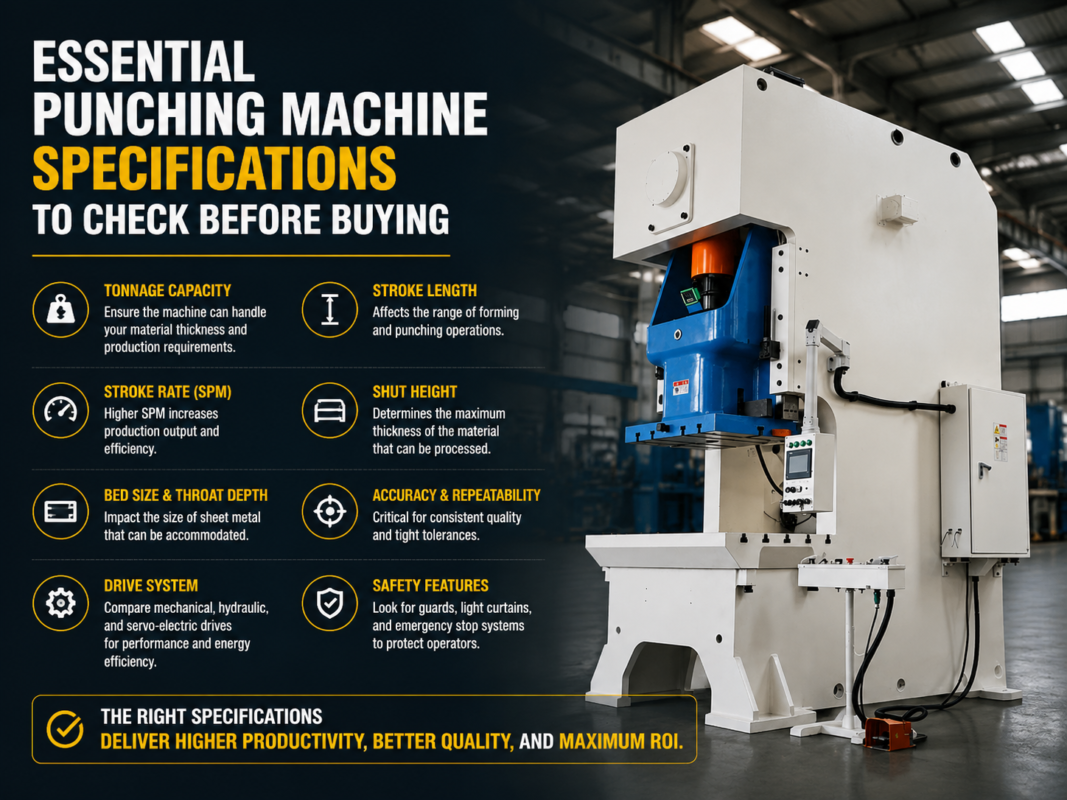
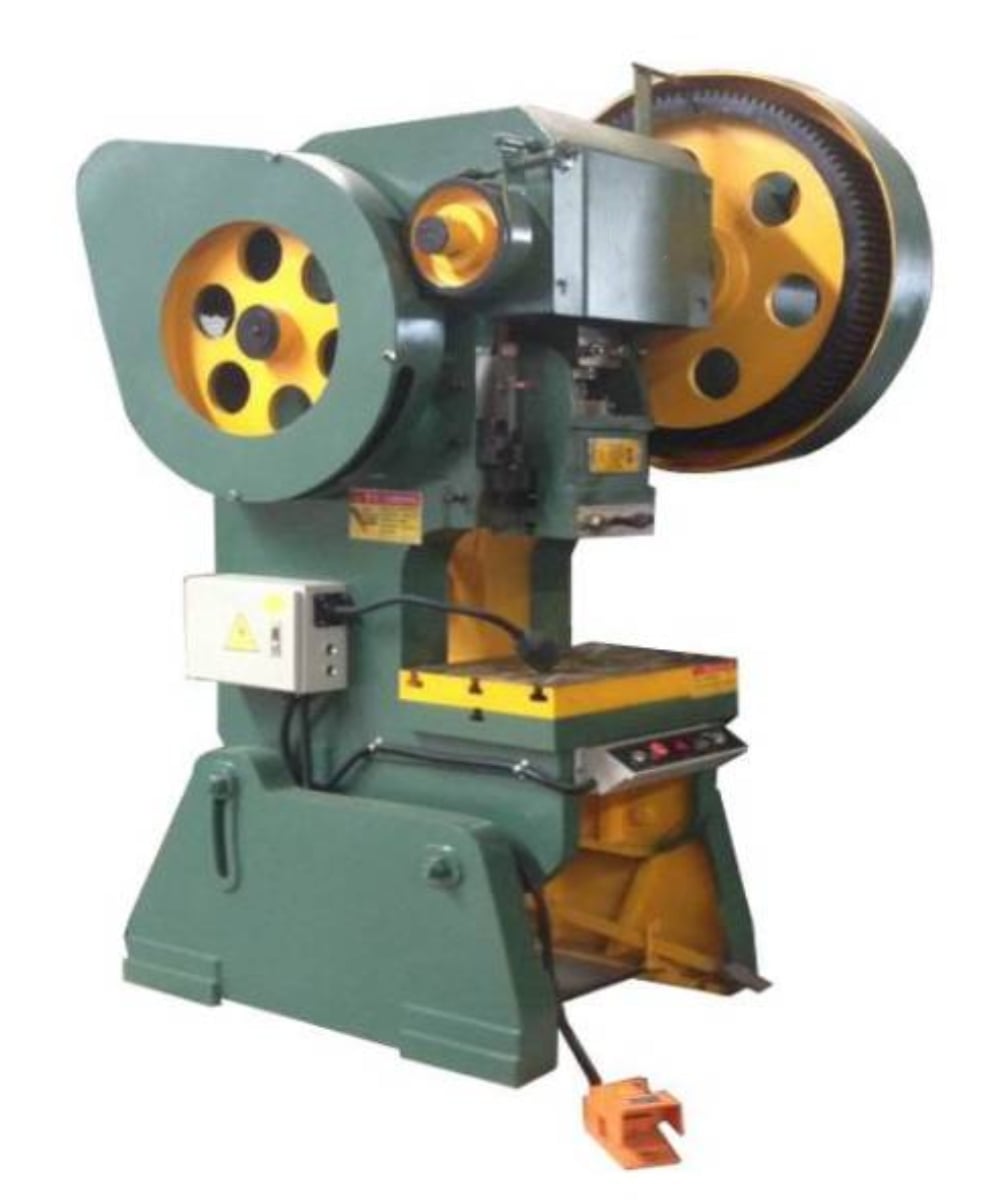
When evaluating the price of a machine, it is essential to understand what drives those numbers. The most significant cost driver is Tonnage. A 30-ton machine will naturally be more affordable than a 50-ton or 100-ton model. Tonnage determines the maximum thickness and hole diameter you can punch. If your shop primarily handles 10-gauge mild steel, a 30-ton machine is sufficient, but for heavy plate work, the cost will rise with the required force.
Another critical factor is Throat Depth. This is the distance from the center of the punch to the back frame of the machine. A larger throat depth allows you to process larger sheets without repositioning, which increases the machine’s physical footprint and the amount of steel required to build its frame, thus increasing the price. Common depths range from 500mm to 1500mm or more.
The Control System also plays a major role. Machines equipped with industry-standard controllers like Fanuc or Siemens often command a premium due to their reliability, ease of finding trained operators, and long-term support. Proprietary systems may be cheaper initially but can lead to higher costs if parts or specialized technicians are difficult to source later.
Configuration Impact: Customizing for Efficiency
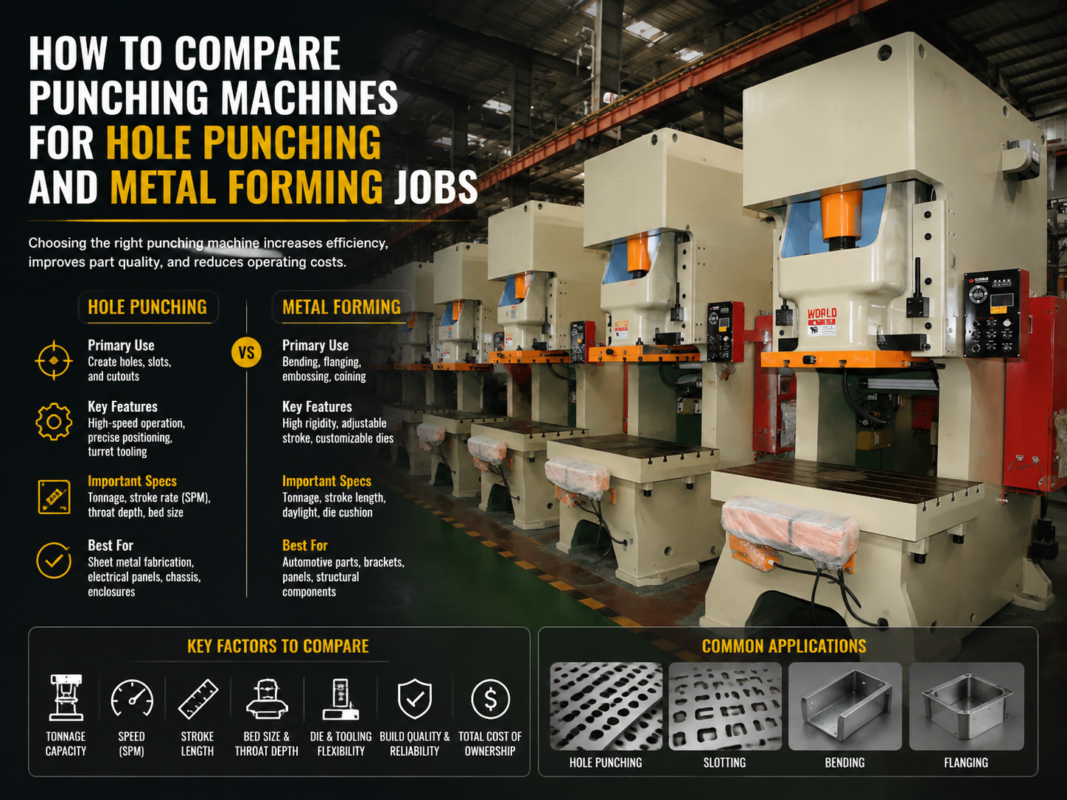
The configuration of your punching machine directly impacts its versatility. One of the most important choices in the Punching Machine Buying : Choose Model Fabrication Shop journey is the turret configuration. A turret with 12 stations is significantly cheaper than one with 32 or 50 stations. However, more stations mean fewer tool changes, which translates to higher machine uptime. If your product mix is diverse, investing in a larger turret is almost always worth the extra cost.
Auto-Index Stations are another configuration variable. These stations allow the tool to rotate to any angle, which is essential for complex geometries and nesting efficiency. A machine with two auto-index stations is standard, but high-end models may offer four or more. This reduces the number of specialized tools you need to buy, as a single rectangular tool can be rotated to any orientation.
Furthermore, the choice between Hydraulic and Servo-Electric drive systems is a major configuration decision. Hydraulic systems are robust and traditional, often better for very heavy-duty punching. Servo-electric systems, however, offer superior energy efficiency, lower noise levels, and higher precision in ram control, which is vital for forming operations like louvers or countersinks. While servo systems have a higher upfront cost, their lower operational costs often make them the smarter long-term choice.
Hidden Costs of Ownership
The sticker price of a punching machine is only part of the total investment. To accurately Choose Model Fabrication Shop equipment, you must account for hidden costs. Tooling is perhaps the most significant ongoing expense. A full set of high-quality turret tools can easily cost $10,000 to $30,000. Furthermore, tools are consumables; they require regular sharpening and eventual replacement.
Software and Licensing are also frequently overlooked. To run a CNC punching machine efficiently, you need CAD/CAM software with nesting capabilities. Some manufacturers include basic software, but advanced packages that optimize material usage and tool paths often require annual subscription fees or high one-time licensing costs.
Installation and infrastructure requirements can also add up. A large turret punch requires a reinforced concrete foundation to handle the vibration and weight. You may also need to upgrade your shop’s electrical service or install dedicated air compressors for pneumatic clamps and tool lubrication systems. Finally, don’t forget Training. Even the best machine is useless if your staff doesn’t know how to program and maintain it correctly.
ROI Calculation: When Will the Machine Pay for Itself?
Calculating the Return on Investment (ROI) is crucial for any business owner. To do this, you must compare your current production costs against the projected costs with the new machine. If you are currently outsourcing your punching work, the ROI calculation is straightforward: subtract the new machine’s monthly payment and operating costs from your current monthly outsourcing bills.
If you are upgrading from an older machine, the ROI comes from Productivity Gains. A modern CNC turret punch can often replace two or three manual machines. Calculate the labor savings from reduced handling and the material savings from better nesting software. For example, if a new machine improves material utilization by just 5%, and you spend $200,000 a year on sheet metal, that’s a $10,000 annual saving right there.
Another factor in ROI is Secondary Operation Elimination. Modern punching machines can perform forming, tapping, and deburring. If the machine can eliminate a secondary tapping station or a manual deburring process, the labor savings can be massive. Most HARSLE customers find that a well-chosen punching machine pays for itself within 18 to 36 months, depending on shift patterns and workload.
Buying Advice: Making the Final Decision
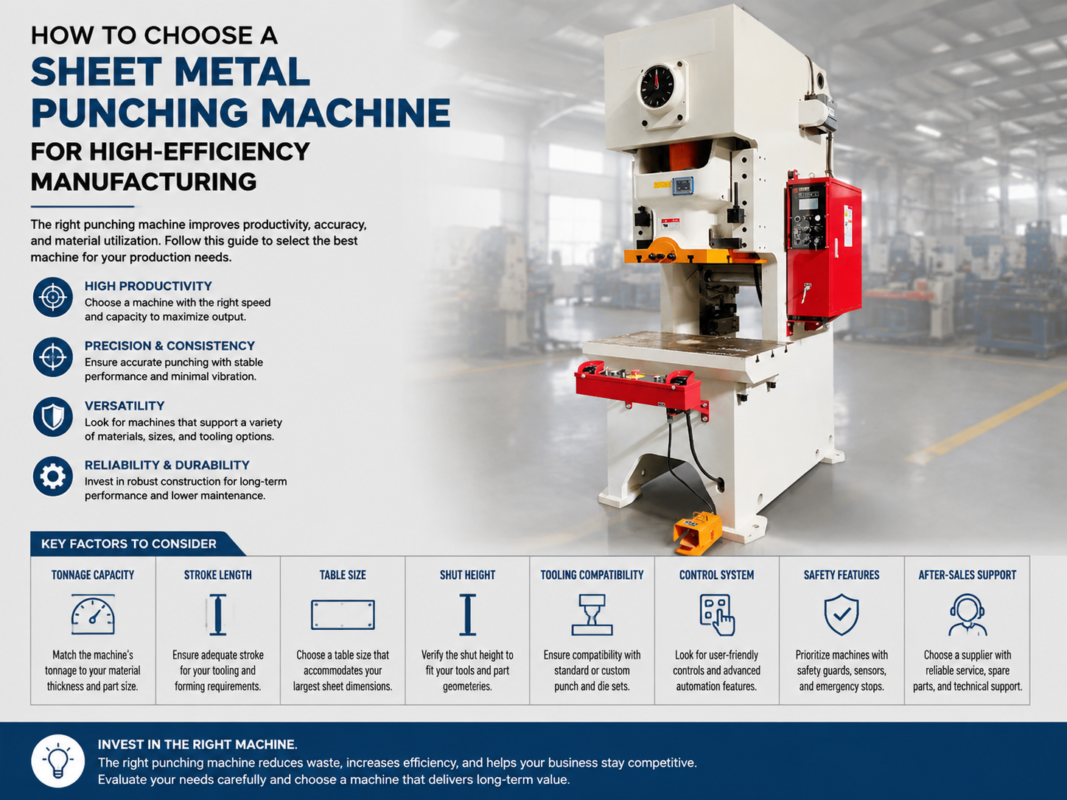
When you are ready to Punching Machine Buying : Choose Model Fabrication Shop, start by auditing your current and future parts. Look at your thickest material, your largest sheet size, and your most complex part. Ensure the machine you choose can handle these without being constantly pushed to its mechanical limits. It is always better to have 20% more capacity than you think you need.
Research the manufacturer’s reputation for service and parts availability. A machine that is down for three weeks waiting for a proprietary sensor from overseas is a liability, no matter how cheap it was to buy. HARSLE prides itself on global support and the use of standardized components where possible to ensure our clients stay operational. Ask for references and, if possible, visit a shop that is already running the model you are considering.
Finally, consider the resale value. High-quality brands hold their value much better on the used market. If you decide to upgrade again in five years, a well-maintained, reputable machine will provide a significant down payment for your next piece of equipment. Don’t just buy for today; buy for the shop you want to be in five years.
Frequently Asked Questions (FAQ)
1. What is the difference between a thick turret and a thin turret?
Thick turret tooling is the industry standard for most modern CNC machines. It offers better tool guidance and longer tool life because the punch is supported over a longer distance. Thin turret tooling is older technology, often found on smaller or legacy machines; while the tools are cheaper, they are less durable and less precise for high-speed operations.
2. How often does a punching machine require maintenance?
Daily maintenance involves cleaning and lubrication of the ram and turret. Weekly checks should include inspecting hydraulic fluid levels and air filters. A comprehensive professional service should be performed annually. Proper maintenance is the key to ensuring the machine reaches its 15-20 year expected lifespan.
3. Can a punching machine replace a laser cutter?
It depends on the application. Punching machines are significantly faster for creating multiple identical holes and can perform forming operations (like louvers) that lasers cannot. However, lasers are better for complex, organic shapes and very thick materials where a punch might struggle with edge quality. Many modern shops use both in tandem.
4. Is CNC training difficult for manual operators?
Most modern CNC interfaces are very user-friendly and icon-driven. A manual operator can usually learn the basics of machine operation in a few days. However, mastering the CAM software for nesting and tool path optimization may take a few weeks of dedicated training.
5. What safety features should I look for?
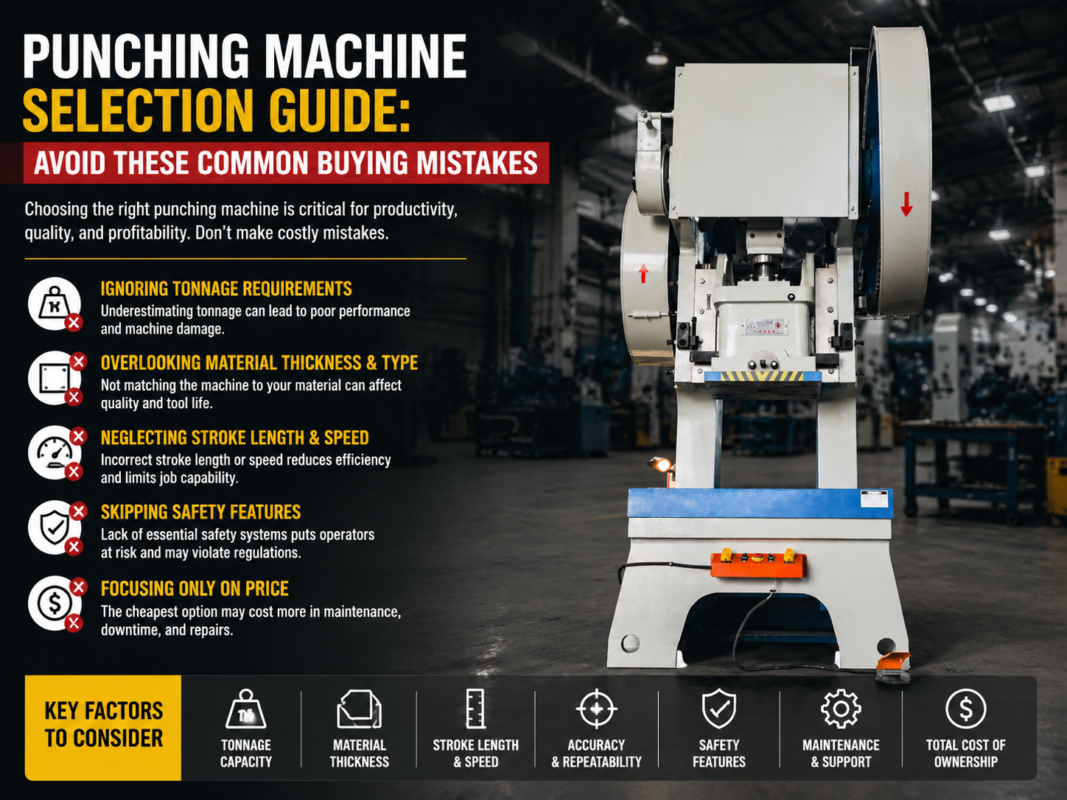
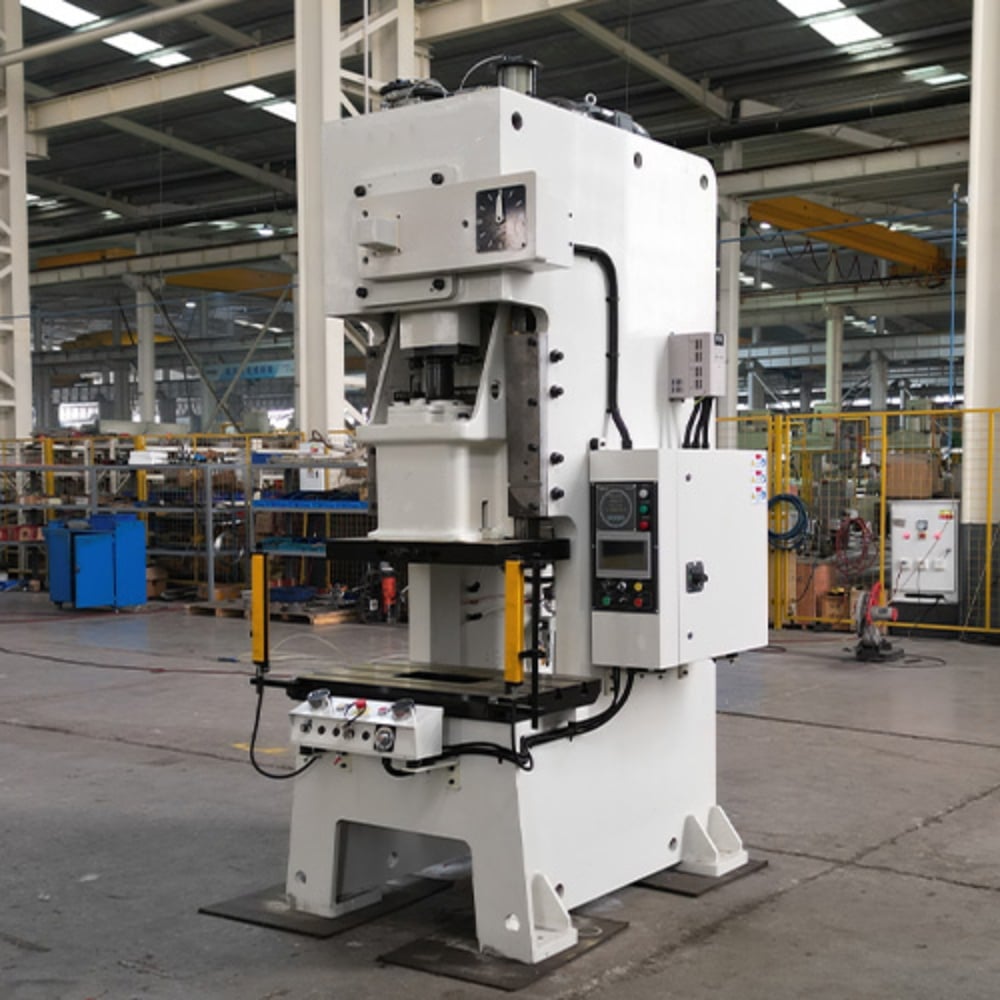
Look for light curtains that stop the machine if someone enters the work zone, emergency stop buttons at multiple locations, and interlocked guarding. Safety is not just about protecting workers; it also prevents expensive machine crashes caused by human error.
6. Should I buy new or used?
New machines come with warranties, the latest software, and better energy efficiency. Used machines are cheaper but carry the risk of hidden wear and obsolete electronics. For a primary production machine, new is usually the safer bet for a fabrication shop’s reliability.