Hydraulic Press Case Study: Better Forming Results for Stainless Steel Components


Introduction to Stainless Steel Forming Challenges
In the modern manufacturing landscape, stainless steel has become a cornerstone material for industries ranging from aerospace and automotive to kitchenware and medical devices. Its corrosion resistance, aesthetic appeal, and high strength-to-weight ratio make it indispensable. However, forming stainless steel components presents a unique set of challenges that differ significantly from working with mild steel or aluminum. The material’s high yield strength and rapid work-hardening rate require specialized machinery and precise control to achieve high-quality results without excessive scrap rates.
This Hydraulic Press Case Study: Better Forming Results Stainless Steel Components examines how advanced hydraulic technology addresses these challenges. Unlike mechanical presses, which have a fixed stroke and energy delivery, hydraulic presses offer variable pressure and speed throughout the entire cycle. This flexibility is crucial when dealing with the unpredictable nature of stainless steel alloys like 304, 316, and 430. By understanding the interaction between the machine’s hydraulic circuit and the material’s metallurgical properties, manufacturers can significantly improve their production efficiency.
HARSLE has been at the forefront of developing hydraulic solutions tailored for difficult-to-form materials. In this article, we will delve into the technical nuances of stainless steel forming, provide a detailed case study of a successful implementation, and offer professional advice on selecting the right equipment for your specific fabrication needs. Whether you are producing deep-drawn sinks or complex automotive exhaust components, the principles of hydraulic control remain the key to success.
Key Considerations for Stainless Steel Forming
Understanding Work Hardening and Springback
One of the primary considerations in any Hydraulic Press Case Study: Better Forming Results Stainless Steel Components is the phenomenon of work hardening. Stainless steel, particularly the austenitic 300-series, hardens rapidly as it is deformed. This means that the force required to continue the forming process increases as the part takes shape. If the press cannot maintain consistent pressure or if the speed is too high, the material may crack or tear.
Springback is another critical factor. Because stainless steel has a high modulus of elasticity, it tends to return toward its original shape once the forming pressure is released. Hydraulic presses allow for a “dwell time” at the bottom of the stroke, where the pressure is held for a specific duration. This helps the material set into its new shape, significantly reducing the degree of springback and ensuring tighter dimensional tolerances.
The Role of Lubrication and Surface Finish
Stainless steel is prone to galling—a form of wear caused by adhesion between sliding surfaces. During the forming process, the friction between the die and the workpiece can cause the material to stick to the tooling, resulting in surface scratches or even tool failure. Selecting the right lubricant is essential. High-pressure lubricants with extreme pressure (EP) additives are often required to create a barrier between the stainless steel and the hardened steel dies.
Furthermore, the surface finish of the hydraulic press’s bolster and ram must be maintained to prevent any transfer of imperfections to the workpiece. In high-end applications, such as decorative architectural panels or medical equipment, the hydraulic press must operate with extreme smoothness to avoid “chatter marks” that can occur if the hydraulic valves do not modulate the flow of oil precisely.
Tooling Design and Material Selection
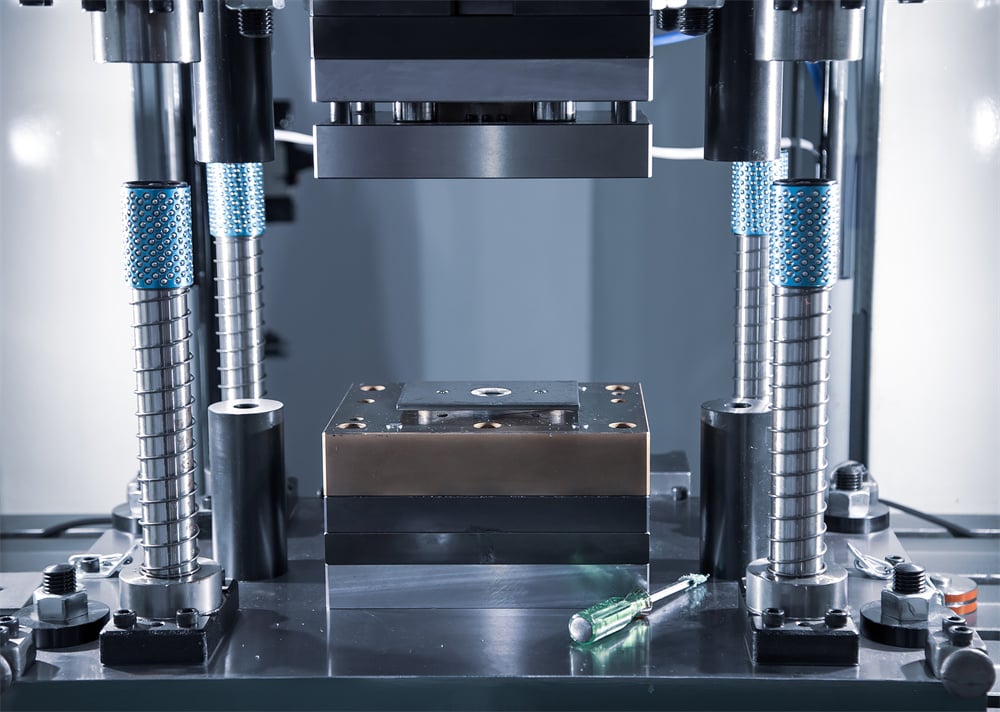
The success of a forming operation is as much about the tooling as it is about the press. For stainless steel, dies are typically made from high-carbon, high-chromium tool steels or even tungsten carbide for high-volume runs. The radii of the dies must be carefully calculated; if the radius is too sharp, the stainless steel will thin out and fail. If it is too large, the part may wrinkle. A hydraulic press with a programmable cushion allows for fine-tuning the blank holder pressure, which is vital for controlling the flow of material into the die cavity.
Technical Details: Optimizing the Hydraulic Cycle
Variable Speed and Pressure Control
Modern hydraulic presses utilize proportional valve technology to control the speed of the ram with millimetric precision. In a typical stainless steel forming cycle, the ram approaches the workpiece at high speed to minimize cycle time. However, just before contact, the press transitions to a slower “forming speed.” This slow entry prevents shock loading on the material and allows the lubricant to distribute evenly. As the draw deepens, the press can be programmed to increase or decrease pressure based on the part’s geometry.
This level of control is a recurring theme in any Hydraulic Press Case Study: Better Forming Results Stainless Steel Components. By using CNC-integrated hydraulic systems, operators can store specific profiles for different grades of stainless steel. For instance, a 316-grade component might require a slower draw speed than a 430-grade component due to its higher nickel content and different hardening characteristics.
The Importance of the Hydraulic Cushion
In deep drawing operations, the hydraulic cushion (or die cushion) located in the bed of the press is indispensable. The cushion provides upward resistance against the blank holder, ensuring that the material is held firmly but allowed to slide into the die without wrinkling. Advanced HARSLE presses feature multi-point cushions where the pressure can be adjusted independently at different zones of the blank. This is particularly useful for asymmetrical parts where the material flow needs to be restricted in some areas and encouraged in others.
| Feature | Impact on Stainless Steel Forming | Benefit |
|---|---|---|
| Proportional Valves | Precise flow control of hydraulic oil | Eliminates shock and reduces material tearing |
| Programmable Dwell | Maintains pressure at the end of the stroke | Reduces springback and improves accuracy |
| Active Cushioning | Dynamic blank holder pressure | Prevents wrinkles and controls material thinning |
| Energy-Efficient Motors | Variable frequency drives (VFD) | Reduces heat generation and operational costs |
Case Study: Improving Yield in Kitchenware Production
The Challenge
A leading manufacturer of industrial kitchen sinks was facing a 15% rejection rate when forming deep-drawn basins from 304-grade stainless steel. They were using an older mechanical press that lacked the ability to control speed during the draw. The high impact speed was causing frequent “necking” (localized thinning) at the corners of the sinks, leading to leaks and structural weaknesses. Additionally, the mechanical press’s inability to hold pressure at the bottom of the stroke resulted in inconsistent flange dimensions due to springback.
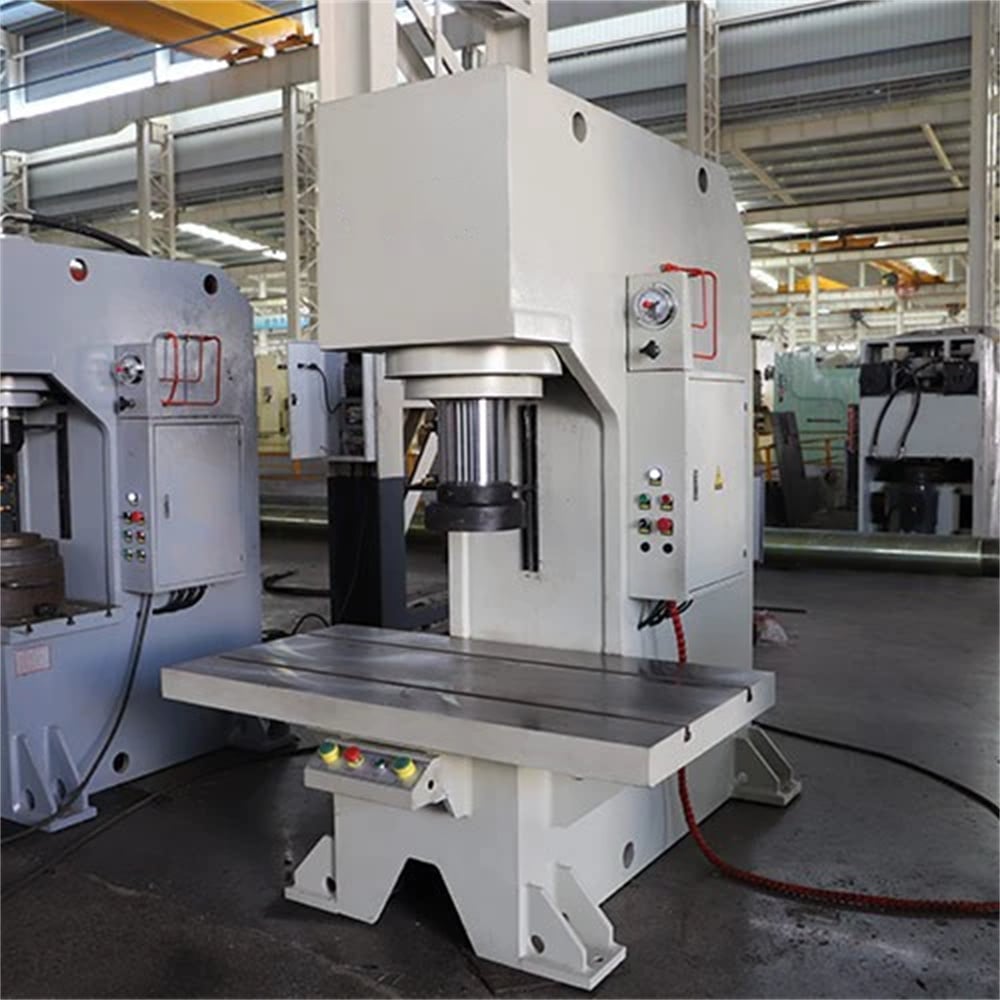
The Solution: HARSLE Deep Drawing Hydraulic Press
The manufacturer replaced their mechanical system with a HARSLE 500-ton triple-action hydraulic press. This machine was equipped with a high-performance hydraulic cushion and a PLC-based control system. The technical team programmed a multi-stage forming cycle: a fast approach, a slow-speed draw at 10mm/s, and a 3-second dwell time at maximum tonnage. They also utilized the programmable cushion to apply higher pressure at the corners of the blank where the material flow was most aggressive.
The Results
The results were immediate and significant. The rejection rate dropped from 15% to less than 1%. The consistent speed of the hydraulic ram allowed the stainless steel to flow smoothly into the die, eliminating the necking issues. The dwell time successfully managed the springback, resulting in parts that met dimensional specifications every time. Furthermore, the manufacturer noted that their tool life increased by 30% because the hydraulic press eliminated the violent “snap-through” shock associated with mechanical presses.
Selection Advice: Choosing the Right Hydraulic Press
Determining Tonnage Requirements
When selecting a press for stainless steel, you cannot use the same tonnage calculations as you would for mild steel. As a general rule of thumb, stainless steel requires approximately 40% to 50% more pressure to form than carbon steel of the same thickness. It is always advisable to select a press with a capacity that exceeds your maximum calculated requirement by at least 20%. This ensures the machine is not constantly running at its limit, which extends the life of the hydraulic seals and pumps.
Frame Rigidity and Bed Size
For high-precision stainless steel work, frame rigidity is paramount. An H-frame (or four-column) press is generally preferred over a C-frame press for heavy forming tasks. The H-frame design minimizes “yaw” or deflection under load, ensuring that the upper and lower dies remain perfectly aligned. If the frame flexes, the clearance between the punch and die will become uneven, leading to premature tool wear and asymmetrical parts. Ensure the bed size is large enough to accommodate not only the current dies but also any potential future projects that might require larger blanks.
Automation and Integration
In today’s competitive market, the ability to integrate the hydraulic press into an automated production line is a major advantage. Look for presses that offer industry-standard communication protocols (such as Ethernet/IP or Modbus). This allows the press to synchronize with robotic loaders, scrap conveyors, and lubrication systems. A well-integrated system reduces labor costs and ensures a consistent cycle time, which is vital for maintaining the thermal stability of the hydraulic oil and the tooling.
Maintenance Tips for Long-Term Performance
To maintain the “better forming results” highlighted in this Hydraulic Press Case Study: Better Forming Results Stainless Steel Components, a rigorous maintenance schedule is required. Hydraulic oil is the lifeblood of the machine; it must be kept clean and cool. Contaminated oil can damage proportional valves, leading to erratic ram movement. We recommend installing high-efficiency filtration systems and monitoring the oil’s temperature during long production runs.
Regularly inspect the hydraulic hoses for signs of wear or leaks. Even a small drop in pressure can affect the quality of a stainless steel draw. Additionally, ensure that the ram’s gibs (the guides that keep the ram straight) are properly lubricated and adjusted. Any play in the guides will translate directly into inaccuracies in the finished component.
Frequently Asked Questions (FAQ)
Why is a hydraulic press better than a mechanical press for stainless steel?
Hydraulic presses offer full tonnage throughout the entire stroke and allow for variable speed control. This is essential for stainless steel, which requires a slow, steady draw to manage work hardening. Mechanical presses have a fixed energy curve and can hit the material too hard, causing cracks.
What grade of stainless steel is hardest to form?
Austenitic grades like 316 are generally more difficult to form than 304 because they work-harden more quickly. Ferritic grades like 430 are easier to form but have less corrosion resistance. The choice of hydraulic press settings must be adjusted based on the specific grade being used.
How do I prevent wrinkling in deep-drawn stainless steel parts?
Wrinkling is usually caused by insufficient blank holder pressure. Using a hydraulic press with a programmable die cushion allows you to apply the exact amount of pressure needed to hold the material flat while it is drawn into the die.
Does the thickness of the stainless steel affect the press selection?
Absolutely. Thicker material requires significantly more tonnage. Additionally, thicker stainless steel generates more heat during forming, which may require the hydraulic press to have an enhanced oil cooling system to maintain consistent performance.
Can I use a hydraulic press for both stamping and deep drawing?
Yes, one of the main advantages of a hydraulic press is its versatility. By adjusting the stroke length, pressure, and speed, the same machine can be used for shallow stamping, heavy-duty blanking, or complex deep drawing of stainless steel components.
Conclusion: Achieving Excellence in Metal Fabrication
As demonstrated in this Hydraulic Press Case Study: Better Forming Results Stainless Steel Components, the key to mastering stainless steel fabrication lies in the marriage of metallurgical knowledge and advanced hydraulic technology. The challenges of work hardening, springback, and surface sensitivity are not insurmountable; they simply require a machine that offers the precision and flexibility to adapt to the material’s behavior.
By investing in a high-quality hydraulic press from HARSLE, manufacturers can reduce their scrap rates, extend their tool life, and produce components that meet the highest standards of quality. Whether you are a small job shop or a large-scale industrial manufacturer, understanding the technical details of hydraulic control will empower you to take on more complex projects and achieve better forming results. The future of metal fabrication is one of precision, and the hydraulic press remains the most versatile tool in achieving that goal.