Hydraulic Press Case Study: Cost Savings in High-Volume Production


Hydraulic Press Case Study: Cost Savings in High-Volume Production
In the competitive landscape of modern manufacturing, the ability to produce high-quality components at scale while minimizing operational costs is the hallmark of a successful enterprise. Metal fabrication, particularly in sectors like automotive, aerospace, and appliance manufacturing, relies heavily on the efficiency of forming equipment. This Hydraulic Press Case Study: Cost Savings In High-Volume Production examines how the strategic implementation of advanced hydraulic press technology can transform a production line from a cost center into a profit engine. By analyzing the technical advantages, energy efficiencies, and long-term maintenance benefits, we can see why industry leaders are increasingly moving toward high-precision hydraulic solutions.
The shift from traditional mechanical presses to modern hydraulic systems is driven by the need for versatility and control. Unlike mechanical presses, which have a fixed stroke and force curve, hydraulic presses offer full pressure throughout the entire stroke. This capability is critical for complex deep drawing and forming operations where material flow must be precisely managed to prevent thinning or tearing. In high-volume environments, even a 1% reduction in scrap rates can translate into tens of thousands of dollars in annual savings. This article explores the multifaceted ways in which hydraulic presses contribute to a leaner, more profitable manufacturing process.
Key Considerations for High-Volume Production Efficiency
When evaluating the cost-effectiveness of a hydraulic press in a high-volume setting, several factors beyond the initial purchase price must be considered. The Total Cost of Ownership (TCO) includes energy consumption, labor, maintenance, and the cost of raw material waste. In a high-volume scenario, the machine is often running 24/7, meaning that even minor inefficiencies are magnified over time. Therefore, the first consideration is the integration of servo-motor technology. Modern servo-hydraulic presses only consume energy when the ram is moving, unlike traditional systems where the pump runs continuously. This can lead to energy savings of up to 50-70%.
Another critical factor is cycle time. While mechanical presses are traditionally faster for simple blanking, modern hydraulic presses have closed the gap with high-speed valves and advanced PLC (Programmable Logic Controller) integration. The ability to program the approach, pressing, and return speeds allows manufacturers to optimize the cycle for each specific part. This optimization ensures that the machine is not moving faster than the material can flow, which reduces the risk of defects and subsequent rework. In high-volume production, consistency is the key to maintaining a steady flow of parts to the assembly line.
Labor costs also play a significant role in the cost-saving equation. Modern hydraulic presses are designed for easy integration with automated material handling systems, such as robotic arms, decoilers, and transfer systems. By automating the loading and unloading process, a single operator can oversee multiple machines, significantly reducing the labor cost per part. Furthermore, the intuitive touch-screen interfaces of modern HARSLE hydraulic presses reduce the training time required for new operators, allowing for faster onboarding and fewer operational errors.
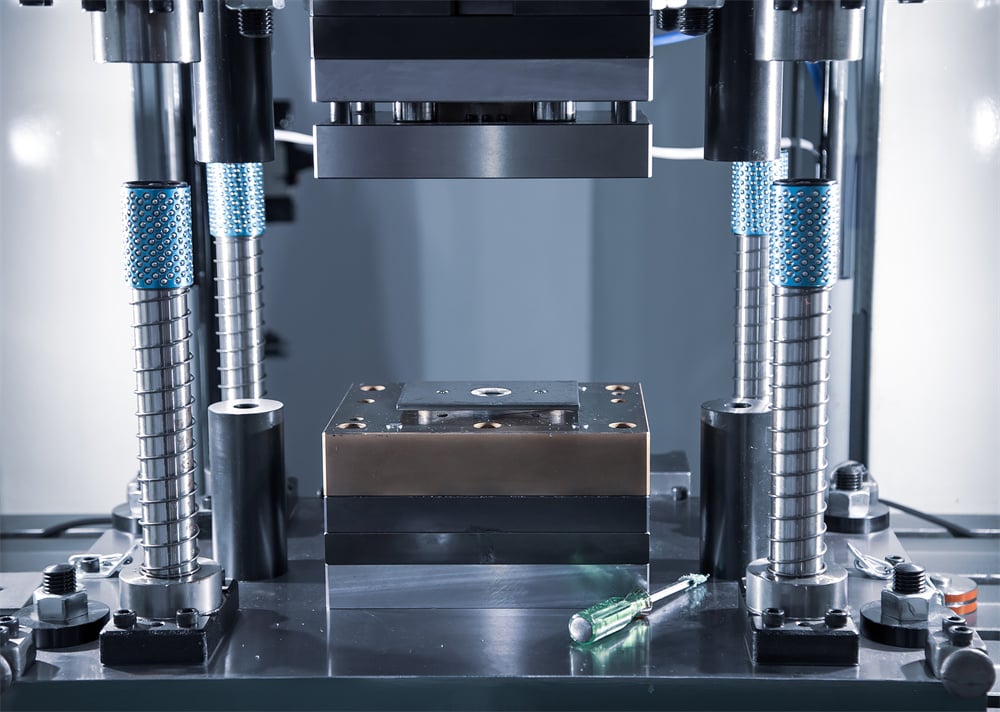
Finally, tool and die longevity must be considered. Hydraulic presses provide a “soft” contact with the material, as the pressure builds up controlled rather than hitting with the sudden impact of a mechanical flywheel. This controlled application of force reduces the wear and tear on expensive dies. In high-volume production, where dies may produce millions of parts, extending the life of the tooling by even 20% results in massive capital expenditure savings over the life of the project.
Technical Details of Modern Hydraulic Press Systems
The technical superiority of a hydraulic press in high-volume production stems from its sophisticated hydraulic circuit and control systems. At the heart of the machine is the hydraulic manifold block, which directs the flow of oil to the cylinders. High-quality manifolds are designed to minimize pressure drops and heat generation. Heat is the enemy of hydraulic systems, as it degrades the oil and wears out seals. Therefore, an efficient cooling system—often utilizing an industrial chiller or a large-capacity heat exchanger—is essential for maintaining consistent performance during long production runs.
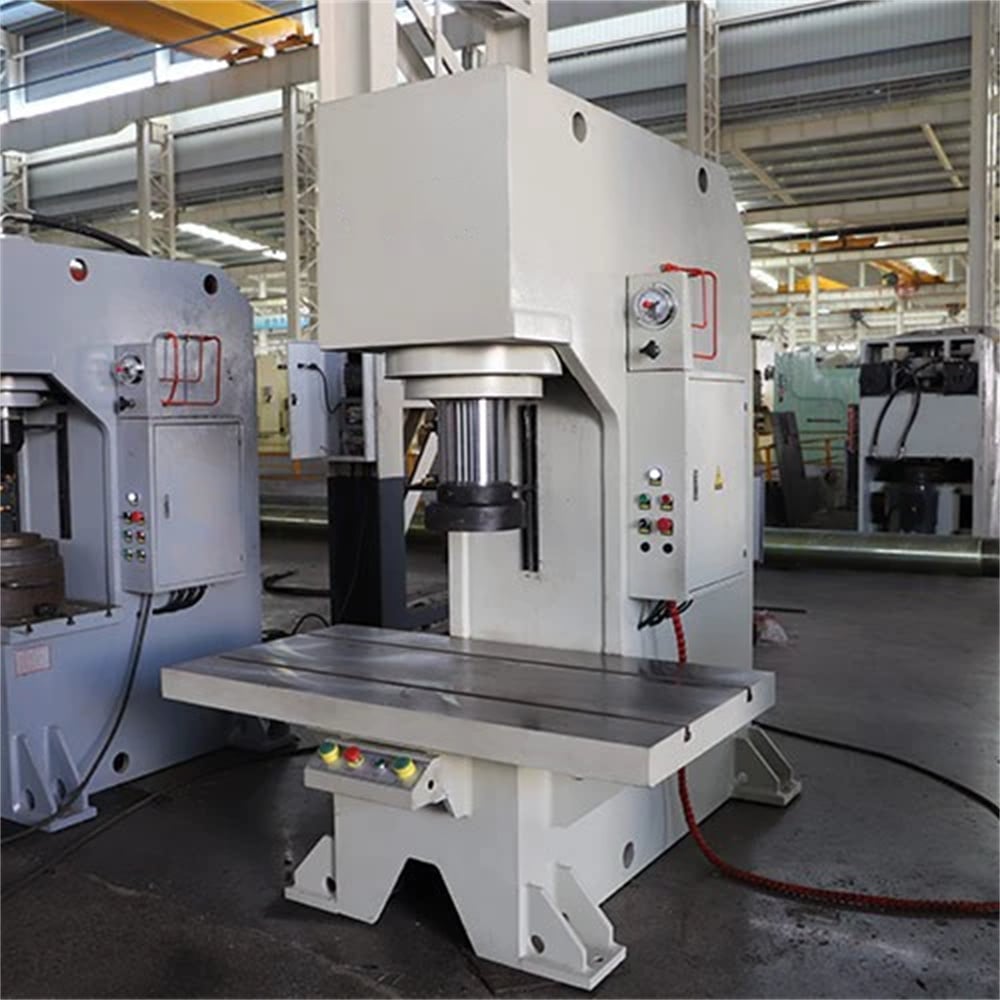
The frame design is another technical aspect that impacts cost savings. H-frame (or four-column) hydraulic presses offer superior rigidity compared to C-frame models. In high-volume stamping, frame deflection can lead to uneven pressure distribution across the die, causing premature wear and part inaccuracies. A rigid H-frame ensures that the bolster and the slide remain perfectly parallel, even under maximum tonnage. This precision is what allows for the production of high-tolerance components required in the automotive and electronics industries.
Comparison of Press Technologies
| Feature | Traditional Mechanical Press | Standard Hydraulic Press | Servo-Hydraulic Press |
|---|---|---|---|
| Energy Efficiency | Low (Constant Motor Run) | Medium | High (On-demand Power) |
| Pressure Control | Fixed Curve | Adjustable | Highly Precise/Programmable |
| Tooling Wear | High (Impact Force) | Low (Controlled Force) | Very Low (Optimized Profiles) |
| Setup Time | Long (Manual Adjustments) | Medium | Short (Digital Recipes) |
| Maintenance | High (Mechanical Linkages) | Medium (Hydraulic Seals) | Low (Simplified Hydraulics) |
The integration of sensors is a technical leap that has revolutionized high-volume production. Pressure transducers, linear encoders, and temperature sensors provide real-time data to the PLC. This data allows for “active” monitoring of the pressing process. If the pressure exceeds a certain threshold or the stroke length varies by a fraction of a millimeter, the system can automatically stop the cycle or alert the operator. This prevents the production of a large batch of defective parts, which is a common risk in high-speed, high-volume environments.
Furthermore, the use of proportional valves allows for the fine-tuning of the ram’s speed and pressure. Unlike standard on/off valves, proportional valves can vary the flow rate based on electrical signals from the controller. This allows for a smooth transition between the rapid approach phase and the slow pressing phase, preventing hydraulic shock within the system. Reducing hydraulic shock not only extends the life of the pipes and fittings but also contributes to a quieter working environment, which is an often-overlooked aspect of industrial ergonomics.
Selection Advice for Industrial Buyers
Choosing the right hydraulic press for high-volume production requires a deep understanding of your specific application requirements. The first step is determining the required tonnage. It is a common mistake to buy a press that is exactly at the required tonnage for the part. For high-volume work, it is advisable to select a press with a capacity 20-30% higher than the maximum required force. This ensures that the machine is not constantly operating at its limit, which reduces stress on the hydraulic components and extends the machine’s service life.
Next, consider the bed size and daylight. The bed size must accommodate the largest die you plan to use, plus any additional space required for automation equipment or scrap chutes. The “daylight” (the distance between the bolster and the slide when the ram is fully retracted) must be sufficient to allow for easy die changes and part removal. In high-volume environments, die changeover time is a critical metric. Look for presses that support Quick Die Change (QDC) systems, such as hydraulic die clamps and bolster extensions, which can reduce changeover time from hours to minutes.
Automation compatibility is perhaps the most important factor for modern high-volume production. Ensure the press controller has the necessary I/O ports and communication protocols (such as Profinet or Ethernet/IP) to interface with robots and feeders. A press that cannot “talk” to the rest of the production line will become a bottleneck. HARSLE provides customized control solutions that allow for seamless integration into existing smart factory ecosystems, enabling remote monitoring and data collection for predictive maintenance.
Buyer’s Checklist for High-Volume Hydraulic Presses
- Tonnage Capacity: Does it exceed your maximum requirement by a safe margin?
- Cycle Speed: Are the rapid approach and return speeds sufficient for your target output?
- Energy System: Is it a servo-driven system to minimize electricity costs?
- Frame Rigidity: Is the frame designed to minimize deflection under full load?
- Control System: Does the PLC support recipe storage and automation integration?
- Safety Features: Are light curtains, safety blocks, and dual-hand controls included?
- Maintenance Access: Are the hydraulic pumps and filters easily accessible for servicing?
Frequently Asked Questions (FAQ)
1. How does a hydraulic press save money compared to a mechanical press?
While mechanical presses can be faster for simple tasks, hydraulic presses save money through reduced scrap rates, longer tool life, and lower energy consumption (especially with servo models). Their ability to provide full tonnage throughout the stroke makes them more versatile, often allowing one hydraulic press to do the work of multiple specialized mechanical machines.
2. What is the typical ROI for a high-volume hydraulic press?
The Return on Investment (ROI) typically ranges from 18 to 36 months, depending on the volume of production and the complexity of the parts. Savings are realized through energy efficiency, reduced labor costs via automation, and significantly lower material waste. In high-precision industries, the reduction in quality-related rejections is often the fastest driver of ROI.
3. Can hydraulic presses handle the speed required for high-volume production?
Yes. Modern high-speed hydraulic presses utilize advanced valves and accumulators to achieve cycle times that rival mechanical presses. For many deep-drawing applications, the controlled speed of a hydraulic press is actually superior because it allows the metal to flow properly, which a high-speed mechanical impact cannot achieve without tearing the material.
4. What maintenance is required to keep costs low?
Regular oil analysis, filter changes, and seal inspections are vital. Keeping the hydraulic oil clean and cool is the single most important factor in preventing expensive pump failures. Modern presses often include self-diagnostic tools that alert operators to maintenance needs before they result in unplanned downtime.
5. Is it worth investing in a servo-hydraulic system?
For high-volume production, the answer is almost always yes. The energy savings alone often cover the price difference within the first two years of operation. Additionally, servo systems offer better control over the pressing profile, leading to higher part quality and less mechanical wear on the machine itself.
Conclusion
As demonstrated in this Hydraulic Press Case Study: Cost Savings In High-Volume Production, the transition to advanced hydraulic technology is not merely an equipment upgrade; it is a strategic financial decision. By focusing on energy efficiency, precision control, and automation integration, manufacturers can significantly lower their cost per part while increasing their overall production capacity. The versatility of the hydraulic press allows it to adapt to changing market demands, ensuring that the investment remains productive for decades.
In the world of metal fabrication, HARSLE continues to lead the way by providing robust, high-performance hydraulic presses tailored for the rigors of high-volume industrial use. Whether you are producing automotive body panels, complex electronic enclosures, or household appliances, the right hydraulic press will provide the consistency and reliability needed to stay competitive. By prioritizing technical excellence and long-term value, businesses can ensure that their production lines are optimized for maximum profitability and minimal waste.