How a CNC Shearing Machine Helped a Fabricator Achieve Cleaner Edge Quality


Introduction: The Quest for Precision in Metal Shearing
In the competitive world of metal fabrication, the quality of the initial cut often dictates the success of the entire project. For years, many fabricators relied on manual or semi-automatic mechanical shears, which, while functional, often left much to be desired in terms of edge quality. Burrs, deformation, and inconsistent dimensions were common issues that required extensive secondary finishing, such as grinding or deburring. This case study explores how A CNC Shearing Machine Helped A Fabricator Achieve Cleaner Edge Quality, transforming their production line from a bottleneck of manual labor into a streamlined, high-precision operation.
The fabricator in question, a mid-sized shop specializing in stainless steel enclosures and architectural metalwork, faced a recurring problem: their traditional hydraulic swing beam shear was producing edges that were slightly rolled or heavily burred. When working with high-finish materials like brushed stainless steel, these defects were not just aesthetic issues; they compromised the fit-up for welding and increased the risk of coating failure. By transitioning to a modern CNC-controlled guillotine shearing machine, they were able to automate the most critical variables of the cutting process, ensuring that every piece met stringent quality standards without the need for manual intervention.

Achieving a clean edge is not merely about having a sharp blade. It involves a complex interplay of blade gap, rake angle, and material clamping pressure. In a manual environment, adjusting these settings for different material thicknesses is time-consuming and prone to human error. The implementation of CNC technology allows for these adjustments to be made instantaneously based on pre-programmed material libraries. This article delves into the technical reasons why a CNC shearing machine is the ultimate tool for fabricators seeking to eliminate secondary processing and improve their bottom line.
Key Considerations for Edge Quality in Shearing
When analyzing how A CNC Shearing Machine Helped A Fabricator Achieve Cleaner Edge Quality, it is essential to understand the factors that contribute to a “clean” cut. A clean edge is characterized by a minimal burr height, a straight vertical face, and a lack of deformation or “roll-over” at the top of the cut. To achieve this, several key considerations must be addressed by the machinery and the operator.
1. Automatic Blade Gap Adjustment
The blade gap, or the distance between the upper and lower blades as they pass each other, is perhaps the most critical factor in edge quality. If the gap is too wide, the material will bend between the blades rather than shear, resulting in a heavy burr and a rolled edge. If the gap is too tight, it can cause excessive wear on the blades and lead to a double-shear effect, which leaves a rough, stepped surface on the edge. A CNC shearing machine automates this adjustment. When the operator inputs the material type and thickness into the controller, the machine automatically moves the blade to the optimal clearance, ensuring a perfect shear every time.
2. Variable Rake Angle Control
The rake angle is the angle of the upper blade relative to the lower blade. A higher rake angle reduces the force required to cut thick materials but can cause “twist” or “bow” in narrow strips. Conversely, a lower rake angle provides a flatter cut but requires more hydraulic pressure. In traditional machines, the rake angle is often fixed or difficult to adjust. A CNC guillotine shear allows the operator to minimize the rake angle for thin materials, which significantly reduces distortion and ensures that the cut edge remains square and flat, a vital requirement for high-quality fabrication.
3. Precision Backgauge Positioning
Edge quality is not just about the smoothness of the cut; it is also about the accuracy of the dimensions. A CNC-driven backgauge ensures that the material is positioned perfectly before the cut begins. Modern systems use high-precision ball screws and AC servo motors to achieve tolerances within ±0.1mm. This precision prevents the material from shifting during the clamping process, which is a common cause of jagged or uneven edges in manual machines.
4. Hydraulic Clamping Pressure
To prevent the sheet from moving or tipping during the shearing stroke, the machine must use hydraulic hold-downs. In a CNC system, the pressure of these hold-downs can be synchronized with the cutting force. This ensures that even delicate materials are held firmly enough to prevent slipping but not so tightly that they suffer surface marking. For fabricators working with polished or coated materials, this balance is essential for maintaining a pristine finish right up to the edge of the cut.
Technical Details of CNC Shearing Systems
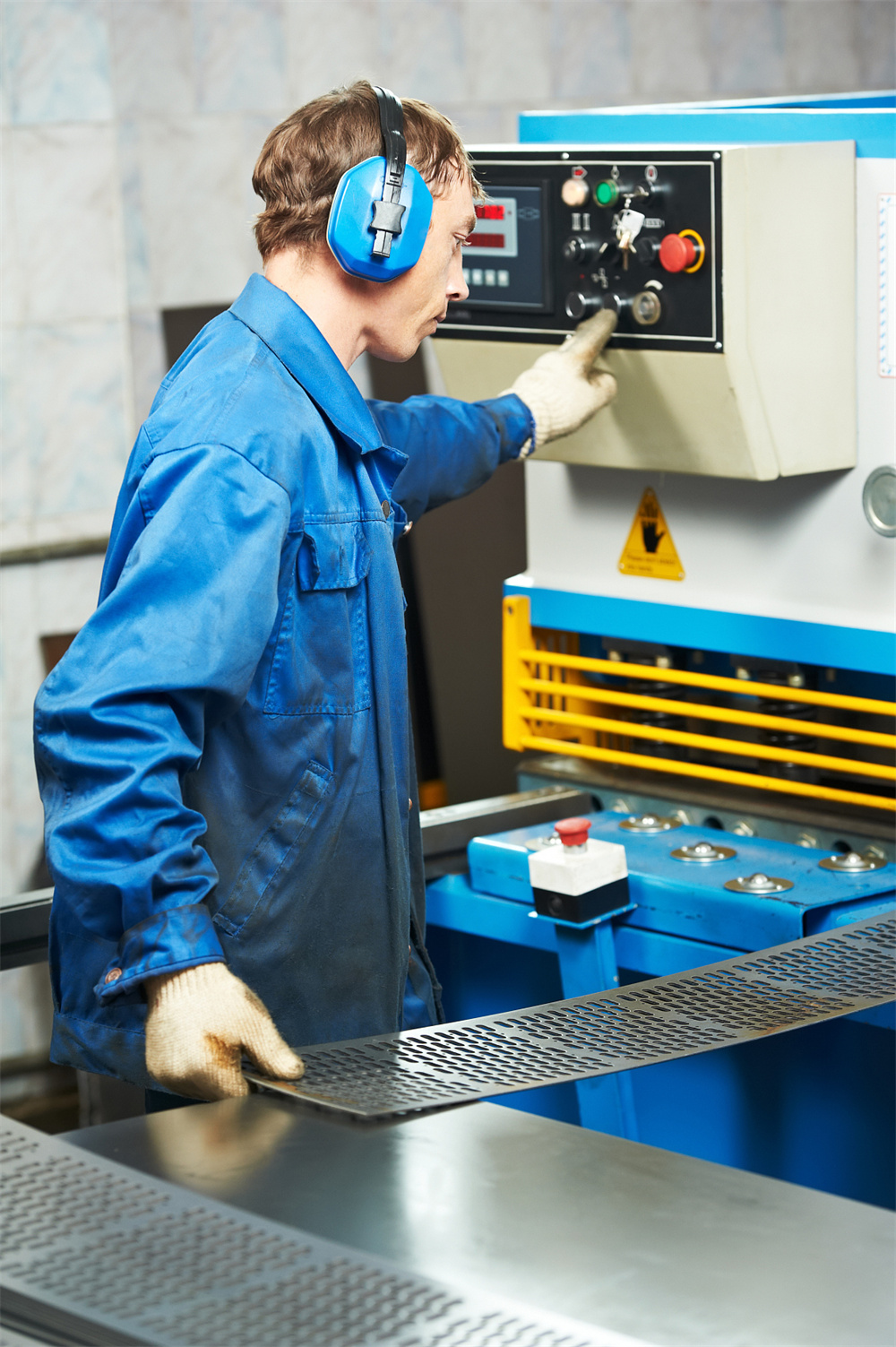
The transition to CNC technology represents a significant leap in engineering. To understand how A CNC Shearing Machine Helped A Fabricator Achieve Cleaner Edge Quality, we must look at the internal components and software that drive these machines. HARSLE’s range of CNC shears, for instance, integrates advanced hydraulics with intuitive software to provide a seamless user experience.
The Role of the CNC Controller
The “brain” of the machine is the CNC controller, such as the Delem DAC-360T or the Cybelec CybTouch series. These controllers feature high-bright LCD screens and user-friendly interfaces. The operator does not need to be a mathematics expert; they simply select the material (e.g., Mild Steel, Stainless Steel, Aluminum) and the thickness. The controller then calculates the required blade gap, rake angle, and stroke length. This automation eliminates the “guesswork” that often leads to poor edge quality in manual shops.
Guillotine vs. Swing Beam Design
While both designs have their merits, the guillotine shear is generally preferred for achieving the cleanest edge quality on thicker materials. In a guillotine shear, the upper blade moves in a strictly vertical path. This allows for a more consistent blade gap across the entire length of the cut. In contrast, a swing beam shear moves in an arc, which can cause slight variations in the gap as the blade descends. For the fabricator in our case study, switching to a CNC guillotine shear provided the rigidity and vertical precision necessary to eliminate the “burr-heavy” edges they were experiencing with their old swing beam model.
Blade Material and Maintenance
The quality of the blades themselves cannot be overlooked. High-quality CNC shears use blades made from high-carbon, high-chrome steel (such as Cr12MoV or D2). These blades are designed to maintain their sharpness over thousands of cycles. Furthermore, CNC machines often include a “stroke counter” and maintenance alerts, reminding the operator to rotate or sharpen the blades. Sharp blades are the first line of defense against poor edge quality; even the best CNC system cannot compensate for a dull or chipped cutting edge.
Shadow Line Lighting and Support Systems
To assist the operator in aligning the material, many CNC shears feature a “shadow line” or LED lighting system that projects a clear line exactly where the cut will occur. Additionally, for large or thin sheets, pneumatic rear support systems prevent the material from sagging before it reaches the backgauge. By keeping the sheet perfectly flat and aligned, these technical features contribute directly to the squareness and cleanliness of the final edge.
Selection Advice: Choosing the Right CNC Shear
If you are looking to replicate the success of the fabricator who achieved cleaner edge quality, selecting the right machine is paramount. Not all CNC shears are created equal, and your choice should be dictated by your specific production needs. Here is a guide to making an informed decision.
| Feature | Importance for Edge Quality | Recommended Specification |
|---|---|---|
| Controller Type | High – Automates all critical settings | Delem DAC-360T or equivalent |
| Blade Gap Adjustment | Critical – Prevents burrs and roll-over | Automatic CNC-controlled |
| Rake Angle | High – Reduces material distortion | Variable (0.5° to 2.5°) |
| Backgauge Drive | Medium – Ensures dimensional accuracy | Ball screw with Servo Motor |
| Blade Material | High – Longevity and sharpness | 9CrSi or Cr12MoV |
When evaluating a machine, consider the maximum thickness and length you intend to cut. It is always advisable to choose a machine with a capacity slightly higher than your thickest material to ensure the frame remains rigid during the cut. Frame deflection is a hidden enemy of edge quality; a machine operating at its absolute limit will flex, causing the blade gap to widen mid-cut and resulting in an inconsistent edge.
Furthermore, look for machines with a robust hydraulic system. Brands like HARSLE utilize valves from Bosch-Rexroth and pumps from Sunny or Marzocchi, which provide the smooth, consistent pressure required for high-quality shearing. Inconsistent hydraulic pressure can lead to “stuttering” during the cut, which leaves visible marks on the edge of the metal.
The Impact of Edge Quality on Downstream Operations
The benefits of achieving a cleaner edge extend far beyond the shearing department. When A CNC Shearing Machine Helped A Fabricator Achieve Cleaner Edge Quality, the ripple effects were felt throughout the entire factory. In welding, for example, a clean, square edge allows for much tighter fit-ups. This reduces the amount of filler metal required and minimizes the risk of burn-through, especially in thin-gauge stainless steel.
In the assembly and finishing stages, the elimination of burrs means that parts can move directly from the shear to the press brake or the welding station without stopping at a grinding bench. This saves hours of labor every week. For companies that perform powder coating or painting, a clean edge is vital because coatings tend to pull away from sharp burrs or irregular edges, leading to premature corrosion. By investing in a CNC shearing machine, the fabricator not only improved their product quality but also significantly reduced their total cost of goods sold (COGS).
FAQ: Common Questions About CNC Shearing and Edge Quality
Why is my shearing machine leaving a large burr?
A large burr is usually caused by an incorrect blade gap (too wide) or dull blades. If you are using a manual machine, ensure the gap is set according to the material thickness. If you have a CNC machine, check that the material parameters are entered correctly and that the blades are sharp and properly seated.
Can a CNC shearing machine cut plastic or non-metallic materials?
While primarily designed for metal, many CNC shears can cut certain plastics and composites. However, the blade geometry and gap settings must be specifically adjusted for these materials to prevent cracking or melting. Always consult with the manufacturer before cutting non-metallic materials.
How often should I rotate the blades on my CNC shear?
Most shearing blades have four cutting edges. You should rotate the blades when you notice a decrease in edge quality or an increase in the force required to cut. For a high-volume shop, this might be every 6 to 12 months, depending on the material being cut (stainless steel wears blades faster than mild steel).
What is the difference between a CNC and a NC shearing machine?
An NC (Numerical Control) machine typically only controls the backgauge position. A CNC (Computer Numerical Control) machine controls the backgauge, the blade gap, the rake angle, and the stroke length automatically. For the best edge quality, a full CNC system is highly recommended.
Does the rake angle affect the straightness of the cut?
Yes. A high rake angle can cause the sheared strip to twist or bow, especially if the strip is narrow. A CNC machine allows you to lower the rake angle for these specific cuts, ensuring the piece remains flat and straight.
Conclusion: Investing in Excellence
The story of how A CNC Shearing Machine Helped A Fabricator Achieve Cleaner Edge Quality is a testament to the power of modern manufacturing technology. By automating the critical variables of the shearing process, the fabricator was able to eliminate the inconsistencies of manual operation, reduce waste, and significantly lower their secondary processing costs. In today’s market, where customers demand perfection and lead times are shorter than ever, the ability to produce a clean, precise edge on the first pass is a major competitive advantage.
Whether you are a small job shop or a large-scale industrial manufacturer, upgrading to a CNC shearing machine from a reputable provider like HARSLE is an investment in the future of your business. The precision, efficiency, and quality improvements offered by these machines provide a rapid return on investment and set the foundation for a more productive and profitable fabrication environment. Don’t let poor edge quality hold your production back; embrace the precision of CNC shearing and see the difference it makes in every part you produce.