Laser Cutting Machine Case Study: Faster Turnaround for Custom Metal Parts


Introduction: The Evolution of Speed in Custom Metal Fabrication
In the modern industrial landscape, the demand for custom metal parts has reached an all-time high. Industries ranging from aerospace and automotive to interior design and medical equipment manufacturing require components that are not only precise but also delivered within increasingly tight deadlines. Traditional methods of metal fabrication, such as mechanical punching, plasma cutting, or older CO2 laser systems, often struggle to keep pace with the rapid prototyping and high-volume demands of today’s market. This Laser Cutting Machine Case Study: Faster Turnaround Custom Metal Parts explores how the transition to advanced fiber laser technology has revolutionized the production floor, enabling manufacturers to slash lead times while maintaining surgical precision.
For many fabrication shops, the bottleneck has historically been the setup time and the secondary processing required after a cut. Mechanical tools wear out, plasma leaves dross that requires grinding, and CO2 lasers involve complex mirror alignments and high maintenance costs. The introduction of high-power fiber laser cutting machines has fundamentally shifted this paradigm. By utilizing a solid-state laser source delivered through a flexible fiber optic cable, these machines offer unparalleled energy efficiency, cutting speeds, and reliability. This case study focuses on a mid-sized fabrication facility that integrated a HARSLE fiber laser system to address their growing backlog of custom orders.
The primary objective of upgrading to a modern laser cutting machine is often twofold: increasing throughput and reducing the cost per part. However, the secondary benefits—such as the ability to cut reflective materials like brass and copper, and the integration of intelligent nesting software—are what truly drive the “faster turnaround” promised in this study. As we delve into the specifics, we will see how technical superiority translates directly into business growth and customer satisfaction.
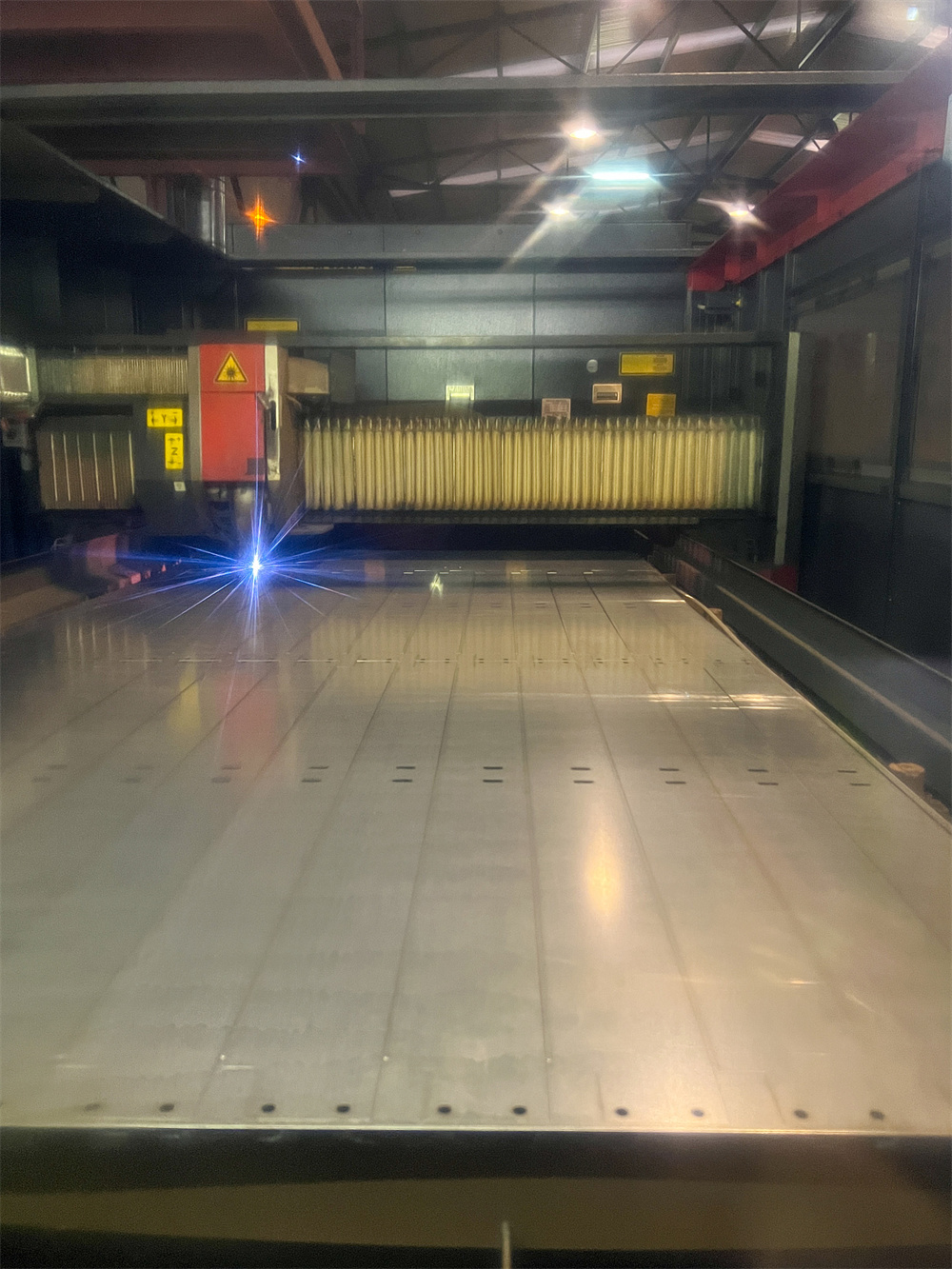
Key Considerations for Faster Turnaround in Custom Projects
When a fabrication shop aims to improve turnaround times for custom metal parts, several critical factors must be addressed. The first is the versatility of the machine. Custom jobs often involve a wide variety of materials, including stainless steel, carbon steel, aluminum, and galvanized sheets. A machine that can switch between these materials with minimal downtime for lens changes or gas adjustments is essential. Modern fiber lasers feature automatic nozzle changers and motorized focus adjustment, which significantly reduce the idle time between different jobs.
Another major consideration is the software integration. The journey from a CAD drawing to a finished part involves nesting—the process of arranging parts on a metal sheet to minimize waste. Advanced CNC controllers and nesting software can now automate this process, optimizing material usage in seconds. This not only saves money on raw materials but also ensures that the machine is cutting for the maximum amount of time possible during a shift. In our Laser Cutting Machine Case Study: Faster Turnaround Custom Metal Parts, the implementation of automated nesting reduced material preparation time by nearly 40%.
Power density and beam quality also play a pivotal role. A higher wattage laser doesn’t just cut thicker materials; it cuts thinner materials at exponentially higher speeds. For instance, a 6kW fiber laser can cut 3mm stainless steel significantly faster than a 3kW model, allowing a shop to clear its queue of thin-gauge parts much quicker. Furthermore, the quality of the beam determines the smoothness of the edge. If a part comes off the laser bed with a clean, burr-free edge, it can move directly to the next stage—such as bending or welding—without the need for time-consuming deburring or polishing.
Finally, the reliability of the machine’s motion system cannot be overlooked. High-speed cutting is only useful if the machine can maintain accuracy at those speeds. This requires a robust frame, high-precision linear guides, and powerful servo motors. A machine that vibrates or loses positioning at high speeds will produce scrap, which is the ultimate enemy of a fast turnaround. Therefore, choosing a machine with a heavy-duty, heat-treated bed is a fundamental consideration for long-term productivity.
Technical Details: The Engine of Productivity
The technical specifications of a fiber laser cutting machine are what define its performance limits. At the heart of the system is the laser source, typically from world-class manufacturers like Raycus or IPG. These sources are rated by their output power (measured in Watts or Kilowatts). For custom metal parts, a range of 3kW to 12kW is currently the industry sweet spot, providing a balance between initial investment and versatile cutting capability. The fiber laser source is known for its high wall-plug efficiency, meaning it converts more electricity into laser light and less into waste heat compared to CO2 lasers.
The cutting head is another masterpiece of engineering. Modern heads, such as those from Raytools or Precitec, are equipped with sensors that maintain a constant distance from the metal sheet, even if the material is slightly warped. This “follow-up” system prevents collisions and ensures a consistent cut quality across the entire work area. Additionally, the use of nitrogen as an assist gas for stainless steel and aluminum prevents oxidation, resulting in a bright, weld-ready edge that is crucial for high-end custom fabrication.
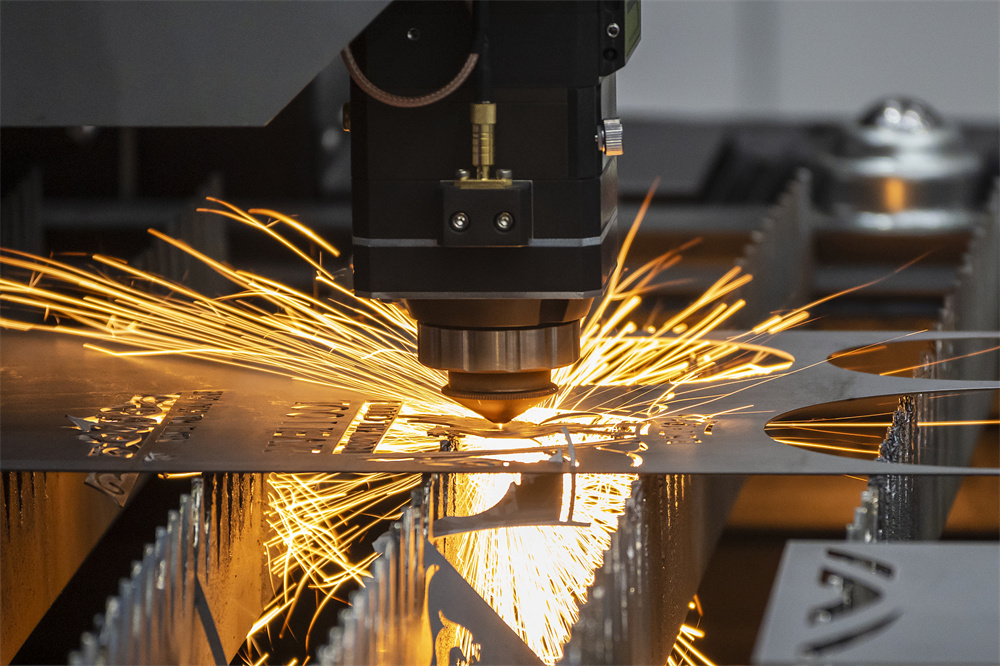
To understand the impact of these technical features, consider the following comparison table showing the performance gains of a modern fiber laser over traditional methods for a standard 5mm carbon steel part:
| Feature | Traditional Plasma/CO2 | Modern Fiber Laser (6kW) | Impact on Turnaround |
|---|---|---|---|
| Cutting Speed (5mm CS) | 1.5 – 2.5 m/min | 6.0 – 8.0 m/min | 3x Faster Production |
| Setup Time | 30 – 60 minutes | 5 – 10 minutes | More jobs per day |
| Edge Quality | Rough / Oxidized | Smooth / Clean | Zero secondary finishing |
| Maintenance Interval | Frequent (Mirrors/Gases) | Minimal (Solid State) | Higher machine uptime |
The CNC system acts as the brain of the machine. Systems like CypCut are designed specifically for fiber lasers, offering features like “FlyCut,” which allows the laser to cut a line of holes without stopping the cutting head’s motion. This might seem like a small detail, but over a sheet with hundreds of perforations, it can save minutes of production time. Furthermore, the integration of IoT (Internet of Things) allows managers to monitor machine performance and gas levels remotely, ensuring that the machine never stops due to preventable issues.
Selection Advice: Choosing the Right Machine for Your Shop
Selecting the right laser cutting machine is a strategic decision that requires a deep understanding of your current workload and future growth. The first step is to analyze your material mix. If your shop primarily handles thin sheets (under 5mm), a 3kW machine might be sufficient. However, if you are looking to expand into heavy machinery parts or thick structural plates, investing in a 12kW or 20kW system will provide the necessary “punch” to cut through 20mm+ steel with ease. This Laser Cutting Machine Case Study: Faster Turnaround Custom Metal Parts emphasizes that over-speccing slightly on power is often better than under-speccing, as it provides a buffer for future complex projects.
Bed size is another critical factor. The standard 3015 (3m x 1.5m) bed is the most common, but for larger custom parts like architectural panels or vehicle chassis components, a 4020 or even a 6025 bed may be required. Consider whether a shuttle table (dual exchange platform) is necessary. A shuttle table allows the operator to load a new sheet and unload finished parts while the machine is still cutting on the other platform. In high-volume custom shops, a shuttle table can increase productivity by up to 50% by eliminating the downtime associated with loading and unloading.
Don’t overlook the importance of local support and component brand names. While the machine frame might be manufactured by HARSLE, the internal components like the laser source, chillers, and motors should come from reputable global brands. This ensures that replacement parts are easily accessible and that the machine’s performance is predictable. Additionally, evaluate the software’s ease of use. A machine is only as fast as the person operating it; if the interface is intuitive, your team will reach peak productivity much faster.
Finally, consider the total cost of ownership (TCO). While the initial price tag of a fiber laser is significant, the low operating costs—due to high energy efficiency and minimal consumables—mean that the machine often pays for itself within 18 to 24 months in a busy shop. When calculating ROI, factor in the labor savings from reduced secondary processing and the ability to take on more complex, higher-margin custom work that was previously impossible to produce profitably.
FAQ: Common Questions About Laser Cutting Turnaround
How does a fiber laser improve turnaround compared to a CO2 laser?
Fiber lasers are significantly faster at cutting thin to medium-thickness materials because the wavelength of the fiber laser is more readily absorbed by metal. Additionally, fiber lasers have no moving parts or mirrors in the light-generating source, which means less maintenance and higher uptime. The absence of warm-up time also allows for immediate production starts.
Can one machine handle different types of metal in the same day?
Yes, modern fiber lasers are designed for versatility. By using different assist gases (Oxygen for carbon steel, Nitrogen for stainless and aluminum), the machine can switch between materials quickly. Advanced CNC controllers store “cutting libraries” or parameters for various materials and thicknesses, allowing the operator to change settings with just a few clicks.
What is the role of nesting software in speeding up delivery?
Nesting software automatically arranges parts on a sheet to maximize material yield and minimize the travel path of the cutting head. By reducing the distance the head travels between cuts and optimizing the sequence of cuts, the software can shave significant time off the total job duration. It also helps in accurate quoting and inventory management.
Is it difficult to train staff to operate these high-speed machines?
While the technology is sophisticated, the user interfaces (like CypCut) are designed to be user-friendly. Most operators with basic computer skills can learn the fundamentals of machine operation and maintenance within a week. However, mastering the nuances of gas pressure and focal positions for specialized materials may take more experience.
What maintenance is required to keep the machine running at peak speed?
Daily maintenance involves cleaning the protective lens, checking the nozzle for damage, and ensuring the work area is free of debris. Weekly tasks include lubricating the linear guides and checking the water level in the chiller. Because fiber lasers are solid-state, they require far less maintenance than older laser technologies, which is key to maintaining a fast turnaround.
Conclusion: The Competitive Edge of High-Speed Laser Cutting
As demonstrated in this Laser Cutting Machine Case Study: Faster Turnaround Custom Metal Parts, the integration of fiber laser technology is no longer a luxury for metal fabricators—it is a necessity for staying competitive. The ability to deliver high-quality, precision-cut parts in a fraction of the time required by traditional methods allows shops to take on more work, reduce overhead, and satisfy the most demanding clients. The transition from a bottleneck-prone workshop to a streamlined, high-throughput facility is the direct result of investing in the right machinery and software.
HARSLE continues to lead the way in providing accessible, high-performance laser solutions that empower manufacturers to push the boundaries of what is possible in metal fabrication. Whether you are a small shop looking to make your first leap into CNC laser cutting or a large-scale manufacturer seeking to optimize your production line, the principles of speed, precision, and efficiency remain the same. By focusing on technical excellence and operational flexibility, you can ensure that your business remains at the forefront of the industry, delivering custom metal parts faster and better than ever before.
In conclusion, the future of metal fabrication is bright, powered by the focused beam of the fiber laser. As technology continues to evolve, with even higher wattages and more advanced automation, the definition of “fast turnaround” will continue to be redefined. For those ready to invest, the rewards are clear: increased capacity, higher margins, and a reputation for excellence that only the latest technology can provide.