Case Study: Cutting Stainless Steel Faster with an Industrial Fiber Laser Machine


Introduction to High-Speed Stainless Steel Fabrication
In the modern landscape of metal fabrication, the demand for stainless steel components has surged across industries ranging from aerospace and medical devices to kitchenware and architectural structures. Stainless steel is prized for its corrosion resistance, aesthetic appeal, and structural integrity. However, these same properties—specifically its toughness and thermal characteristics—make it a challenging material to process efficiently using traditional mechanical methods. This Case Study: Cutting Stainless Steel Faster An Industrial Fiber Laser Machine examines how transitioning to advanced fiber laser technology allows manufacturers to overcome these hurdles, significantly increasing throughput while maintaining surgical precision.
For years, CO2 lasers and plasma cutters were the industry standards. While effective, they often struggled with the reflective nature of stainless steel or produced a large heat-affected zone (HAZ) that required extensive post-processing. The advent of the industrial fiber laser machine has fundamentally shifted this paradigm. By utilizing a solid-state laser source and fiber optic delivery, these machines offer a wavelength that is more readily absorbed by metals, particularly stainless steel. This results in faster cutting speeds, lower operating costs, and a level of detail that was previously unattainable at high volumes.
HARSLE has been at the forefront of this technological evolution, providing high-performance fiber laser solutions designed to meet the rigorous demands of 24/7 production environments. In this case study, we will delve into the technical nuances that make fiber lasers the superior choice for stainless steel, analyze the key considerations for optimizing cutting parameters, and provide a comprehensive guide for businesses looking to upgrade their fabrication capabilities.
Key Considerations for Cutting Stainless Steel
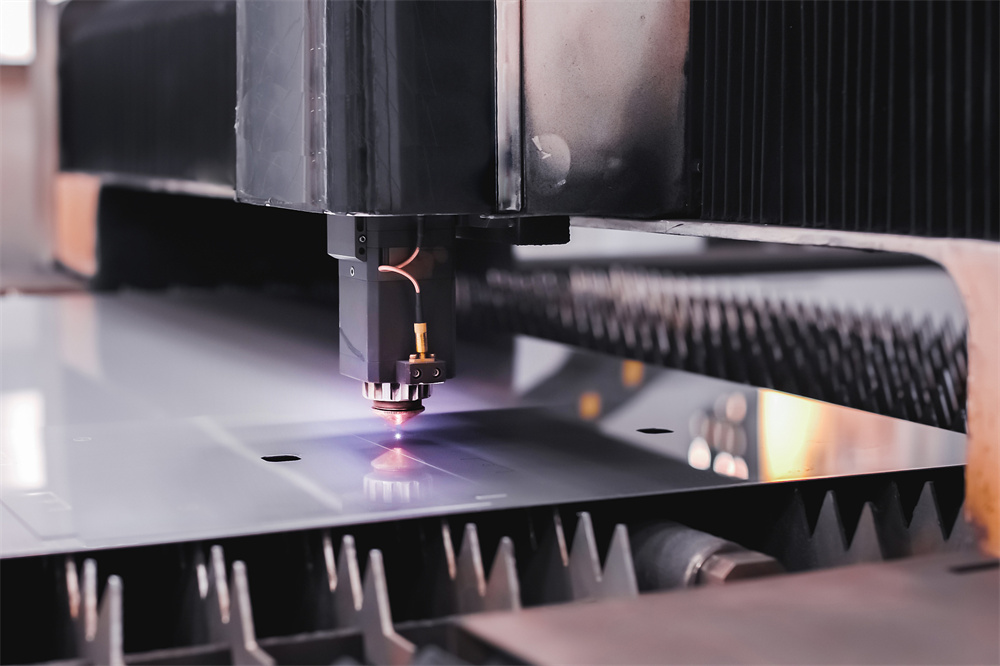
When aiming to cut stainless steel faster, one must understand the material’s unique physical properties. Stainless steel contains high levels of chromium and nickel, which affect how the laser beam interacts with the surface. Unlike carbon steel, which can be cut using oxygen to facilitate an exothermic reaction, stainless steel is typically cut using high-pressure nitrogen. This process, known as fusion cutting, relies entirely on the laser’s energy to melt the metal, while the nitrogen gas blows the molten material out of the kerf. Because there is no chemical reaction to assist the cut, the power of the fiber laser and the efficiency of the gas delivery system are paramount.
Another critical consideration is the reflectivity of the material. Polished stainless steel can act as a mirror, potentially reflecting the laser beam back into the cutting head and damaging the optics. Modern fiber laser machines, such as those developed by HARSLE, incorporate back-reflection protection and advanced optical coatings to mitigate this risk. This allows for the safe processing of highly reflective grades like 304 and 316 stainless steel without compromising the longevity of the machine’s internal components.
Heat management is also a vital factor. While fiber lasers have a very concentrated beam, cutting at high speeds requires a delicate balance of power and feed rate to prevent warping, especially in thinner gauges. If the speed is too slow, excess heat builds up, leading to dross (slag) on the bottom edge. If the speed is too fast, the laser may not penetrate the material fully. Achieving the “sweet spot” requires a sophisticated CNC control system that can adjust parameters in real-time based on the geometry of the part being cut.
Finally, the choice of auxiliary gas pressure and nozzle design cannot be overlooked. For stainless steel, high-pressure nitrogen (often exceeding 15-20 bar) is necessary to ensure a clean, oxide-free edge. This is particularly important for industries where the parts will be welded or painted later, as an oxidized edge can lead to poor weld quality or paint adhesion. The nozzle must be perfectly centered and at the correct standoff distance to maintain a stable gas column, which is essential for high-speed, high-quality results.
Technical Details: The Science of Fiber Laser Efficiency
The technical superiority of the fiber laser in this Case Study: Cutting Stainless Steel Faster An Industrial Fiber Laser Machine lies in its wavelength and beam quality. Fiber lasers typically operate at a wavelength of approximately 1.06 microns, which is ten times shorter than the wavelength of a CO2 laser. This shorter wavelength allows the beam to be focused into a much smaller spot size, resulting in a higher power density. For stainless steel, this means the energy is concentrated on a tiny area, melting the metal almost instantaneously and allowing the machine to move at significantly higher velocities.
The beam parameter product (BPP) of a fiber laser is also significantly better than that of older technologies. A lower BPP means the beam can be focused more tightly over a longer distance, providing a deeper depth of field. This is crucial when cutting thicker stainless steel plates, as it ensures the kerf remains narrow and the verticality of the cut edge is maintained. In our testing, a 6kW fiber laser can cut 3mm stainless steel at speeds exceeding 30 meters per minute, a feat that would require significantly more power from a CO2 system.
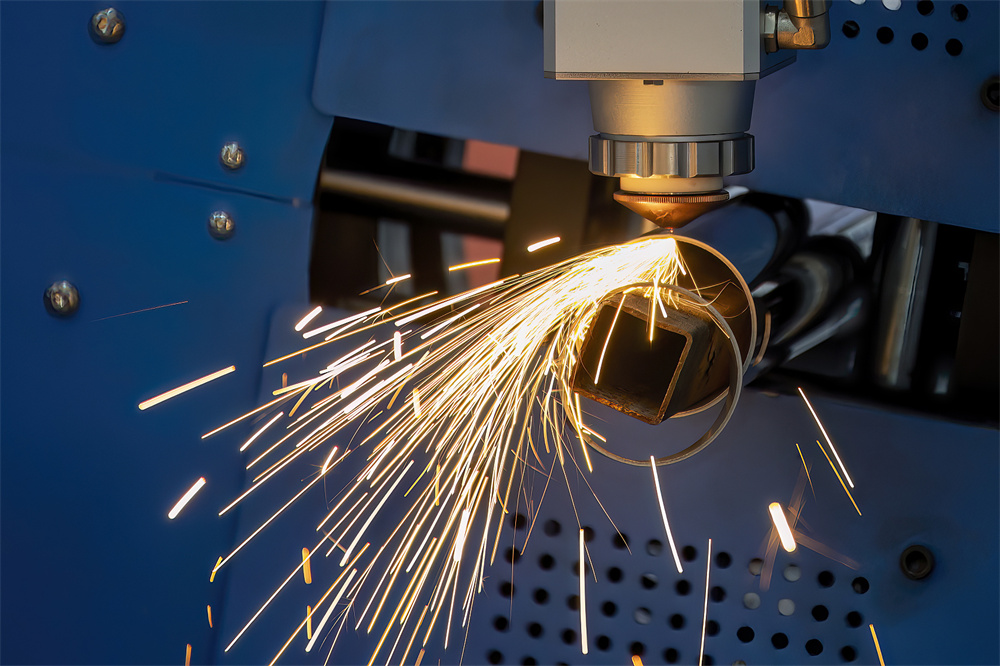
Furthermore, the integration of “FlyCut” technology and advanced motion control algorithms has revolutionized throughput. FlyCut allows the laser head to move in a continuous path, pulsing the laser only when it passes over the programmed cut lines, rather than stopping and starting at every hole or contour. This reduces the non-cutting time (idle time) by up to 50% in complex nestings. When combined with high-acceleration linear motors, the machine can reach its top cutting speed almost instantly, which is essential for small, intricate parts where the machine spends most of its time accelerating and decelerating.
Below is a technical comparison of cutting speeds for various thicknesses of 304 Stainless Steel using different power levels of a HARSLE Fiber Laser Machine:
| Material Thickness (mm) | Laser Power (kW) | Auxiliary Gas | Cutting Speed (m/min) | Edge Quality |
|---|---|---|---|---|
| 1.0 mm | 2.0 kW | Nitrogen | 45 – 55 | Excellent / Burr-free |
| 3.0 mm | 3.0 kW | Nitrogen | 12 – 18 | Excellent / Clean |
| 6.0 mm | 6.0 kW | Nitrogen | 6 – 9 | Very Good / Smooth |
| 10.0 mm | 12.0 kW | Nitrogen | 4 – 6 | Good / Minimal Dross |
| 20.0 mm | 20.0 kW | Nitrogen | 1.5 – 2.5 | Industrial Standard |
Selection Advice: Choosing the Right Machine for Your Shop
Selecting the right industrial fiber laser machine for stainless steel requires a strategic evaluation of your current production needs and future growth. The most common mistake is underestimating the power required for the desired speed. While a 2kW machine can technically cut 6mm stainless steel, it will do so slowly and with a lower edge quality than a 6kW machine. If your primary goal is to cut stainless steel faster, investing in higher wattage is the most direct path to success. Higher power not only increases speed but also broadens the “processing window,” making the machine more forgiving of slight variations in material quality or gas pressure.
Another critical factor is the machine’s bed size and automation capabilities. For high-volume stainless steel fabrication, a shuttle table (dual pallet changer) is almost mandatory. This allows the operator to load a new sheet and unload finished parts while the machine is still cutting, effectively doubling the machine’s duty cycle. For even higher efficiency, consider automated loading and unloading systems that can run unattended during “lights-out” shifts. This is where the true ROI of a fiber laser is realized—by maximizing the number of hours the beam is actually on and cutting.
Software integration is the third pillar of selection. The CNC system should be user-friendly yet powerful enough to handle complex nesting and lead-in/lead-out strategies. Look for software that includes a comprehensive material library with pre-set parameters for various grades and thicknesses of stainless steel. This reduces the learning curve for operators and ensures consistent quality from day one. HARSLE machines often utilize industry-leading software like CypCut, which provides advanced features like automatic edge seeking, leapfrog movement, and real-time monitoring of gas consumption.
Finally, consider the long-term maintenance and support. Fiber lasers are generally low-maintenance compared to CO2 lasers because they have no moving parts or mirrors in the light-generating source. However, the cutting head and the chiller system still require regular attention. Ensure your supplier offers robust technical support, readily available spare parts (like nozzles, protective windows, and ceramic rings), and comprehensive training for your staff. A machine is only an asset if it is running, and minimizing downtime is key to maintaining a competitive edge in the stainless steel market.
Buyer’s Checklist for Stainless Steel Laser Cutting
- Laser Source: Choose a reputable brand (e.g., Raycus, IPG) with a power rating that exceeds your average thickness requirements by at least 20%.
- Cutting Head: Ensure it has autofocus capabilities and high-pressure sealing to handle nitrogen cutting.
- Frame Stability: A heavy-duty, heat-treated gantry and bed are essential to maintain accuracy at high acceleration speeds.
- Gas Control: Look for electronic proportional valves that allow the CNC to precisely control nitrogen pressure for different thicknesses.
- Cooling System: A high-quality dual-circuit chiller is necessary to keep both the laser source and the cutting head at optimal temperatures.
Frequently Asked Questions (FAQ)
1. Why is nitrogen preferred over oxygen for cutting stainless steel?
Nitrogen is used as an inert shielding gas to prevent oxidation of the cut edge. When cutting stainless steel, maintaining the material’s corrosion resistance is vital. Oxygen cutting causes the edge to oxidize (turn black), which must be removed via grinding or pickling before welding or finishing. Nitrogen cutting leaves a bright, clean edge that is ready for immediate use.
2. How much faster is a fiber laser compared to a CO2 laser for stainless steel?
For thin to medium thicknesses (under 6mm), a fiber laser can be 2 to 5 times faster than a CO2 laser of equivalent power. This is due to the higher absorption rate of the 1.06um wavelength in metals. As the material gets thicker (above 12mm), the speed advantage narrows, but the fiber laser still maintains lower operating costs and higher reliability.
3. Can a fiber laser cut reflective stainless steel grades?
Yes, modern industrial fiber laser machines are equipped with back-reflection protection systems. These systems detect any reflected light and can shut down the laser or adjust parameters to prevent damage. Additionally, the high power density of the fiber laser quickly pierces the surface, reducing the window of time where reflection is a significant risk.
4. What maintenance is required for a fiber laser cutting stainless steel?
The primary maintenance tasks involve the cutting head. Operators must regularly check and replace the protective window (lens), clean the nozzle, and ensure the ceramic ring is intact. The chiller’s water should be changed periodically, and the machine’s rails and racks should be lubricated. Because there are no internal mirrors or gas tubes in the laser source, the overall maintenance burden is much lower than older laser types.
5. What is the maximum thickness of stainless steel a fiber laser can cut?
The maximum thickness depends on the laser power. A 3kW fiber laser can typically cut up to 10-12mm stainless steel, while a 12kW or 20kW machine can handle 40mm to 50mm or more. However, for thicknesses above 25mm, the edge quality and gas consumption become significant factors that must be weighed against the speed of the cut.
Conclusion: The Future of Stainless Steel Processing
As demonstrated in this Case Study: Cutting Stainless Steel Faster An Industrial Fiber Laser Machine, the transition to fiber laser technology is no longer just an option for ambitious fabrication shops—it is a necessity for remaining competitive. The combination of extreme speed, pinpoint accuracy, and reduced secondary processing makes the fiber laser the ultimate tool for stainless steel fabrication. By significantly lowering the cost per part and increasing the overall capacity of the shop, these machines provide a rapid return on investment that fuels business growth.
HARSLE continues to innovate in this space, offering machines that are not only powerful but also intelligent. With features like automated nozzle changing, real-time piercing monitoring, and cloud-based production tracking, the modern fiber laser is a cornerstone of the Industry 4.0 revolution. Whether you are producing intricate medical components or heavy-duty industrial tanks, the ability to cut stainless steel faster and cleaner will always be a decisive advantage. By choosing the right equipment and optimizing your technical parameters, you can unlock new levels of productivity and quality in your metal fabrication operations.