Hydraulic Press vs Pneumatic Press: Key Differences for Metal Fabrication


Comparison Summary: Understanding the Core Mechanics
In the world of metal fabrication, the choice between a hydraulic press and a pneumatic press is one of the most critical decisions a production manager or shop owner can make. Both machines are designed to deliver force to a workpiece to bend, punch, form, or assemble metal components, but they do so using fundamentally different physical principles. A hydraulic press utilizes incompressible liquid—typically oil—to generate massive amounts of force, while a pneumatic press uses compressed air to achieve high-speed, lighter-duty operations. Understanding the Hydraulic Press Vs Pneumatic Press: Key Differences Metal Fabrication professionals must consider involves looking beyond just the price tag; it requires a deep dive into force requirements, cycle times, precision, and long-term operational costs.
The primary distinction lies in the medium of power transmission. Hydraulics operate on Pascal’s Law, which states that pressure applied to a confined fluid is transmitted undiminished in every direction. This allows for the multiplication of force to incredible levels, often reaching thousands of tons. Conversely, pneumatics rely on the energy stored in compressed air. Because air is compressible, pneumatic systems are generally limited in the total force they can exert but excel in rapid movements and clean operation. For a fabrication shop, the choice often boils down to the thickness of the material being processed and the complexity of the forming operation.
When evaluating these two technologies, one must consider the specific needs of the production line. Are you performing deep drawing on heavy-gauge steel, or are you riveting small aluminum brackets? The hydraulic press is the workhorse of heavy industry, capable of sustained, high-pressure tasks that would stall a pneumatic system. Meanwhile, the pneumatic press is the king of high-volume, light-duty assembly where speed is the most valuable metric. This article provides a comprehensive breakdown of these two essential machines to help you determine which investment aligns with your manufacturing goals.
Hydraulic Press Overview: The Powerhouse of Fabrication
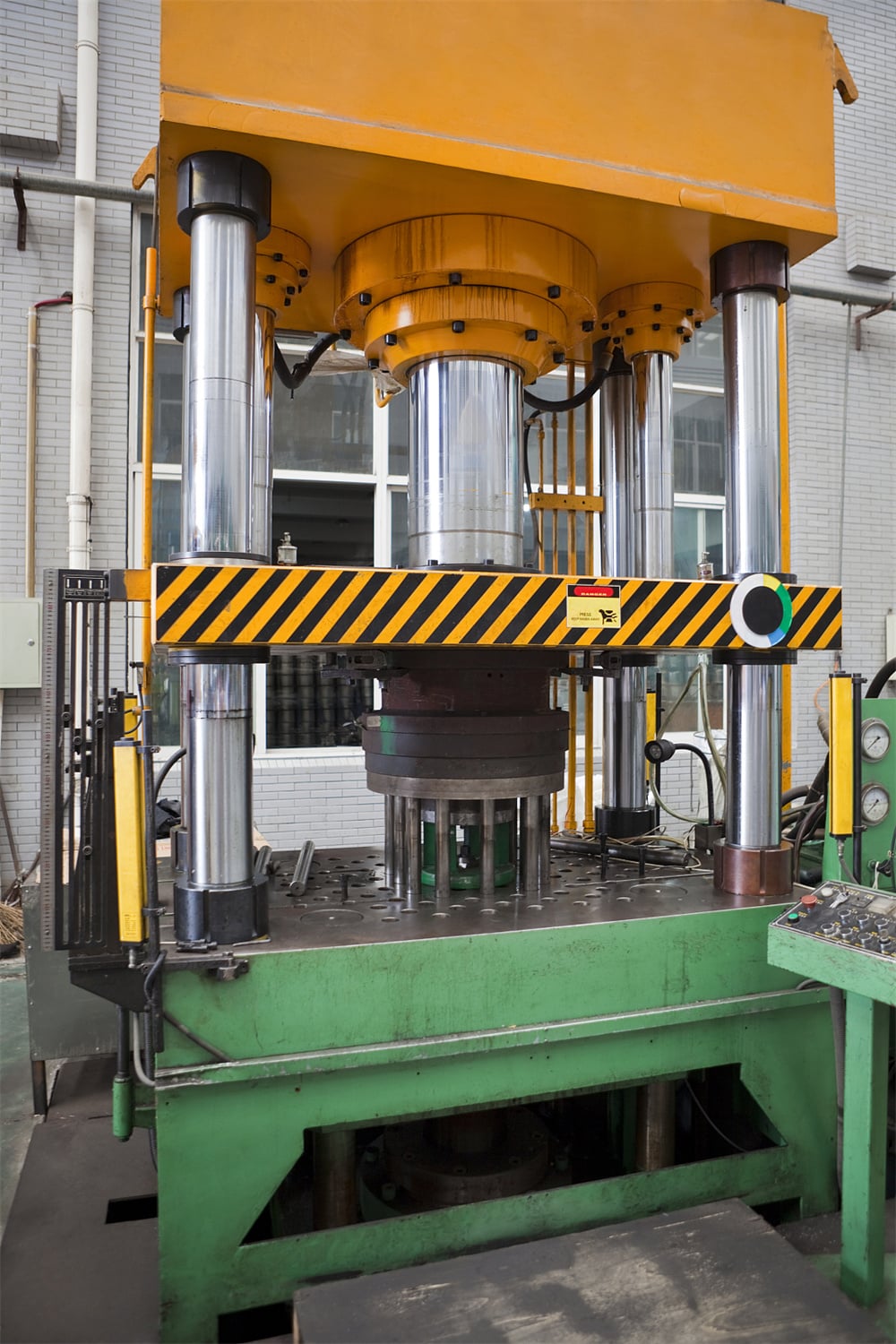
The hydraulic press is a staple in heavy-duty metal fabrication due to its unparalleled ability to generate high tonnage. At its core, a hydraulic press consists of a large cylinder filled with hydraulic oil, a pump to move that oil, and a series of valves to control the direction and pressure of the fluid. Because oil does not compress significantly under pressure, the force generated by the pump is transferred directly to the ram. This allows the operator to maintain full pressure throughout the entire stroke of the machine, a feature that is essential for processes like deep drawing or heavy plate bending.
One of the most significant advantages of the hydraulic press is its versatility in force control. Modern hydraulic systems allow for precise adjustment of the pressure, meaning a 500-ton press can be dialed down to perform a 50-ton job with extreme accuracy. Furthermore, hydraulic presses offer built-in overload protection. If the machine encounters a resistance higher than its set capacity, the relief valve opens, preventing damage to the frame or the tooling. This makes them inherently safer for complex dies that might otherwise be destroyed by the rigid stroke of a mechanical or pneumatic system.
Hydraulic presses come in various configurations, including H-frame, C-frame (gap frame), and four-column designs. The H-frame is known for its rigidity and ability to handle off-center loads, while the C-frame offers better access for operators to load and unload parts. The four-column press provides the highest level of precision and parallelism, making it the preferred choice for high-accuracy molding and stamping. Despite their power, hydraulic presses are generally slower than pneumatic ones, as moving large volumes of oil takes more time than moving air. However, for most heavy fabrication tasks, the trade-off of speed for sheer power is necessary.
Maintenance for hydraulic presses focuses heavily on fluid health. The hydraulic oil must be kept clean and cool to ensure the longevity of the pumps and seals. Over time, heat can degrade the oil, and contaminants can cause scoring in the cylinders. However, with a consistent maintenance schedule—including regular filter changes and oil analysis—a high-quality hydraulic press can remain in service for decades, providing a reliable backbone for any metalworking facility.
Pneumatic Press Overview: Speed and Efficiency
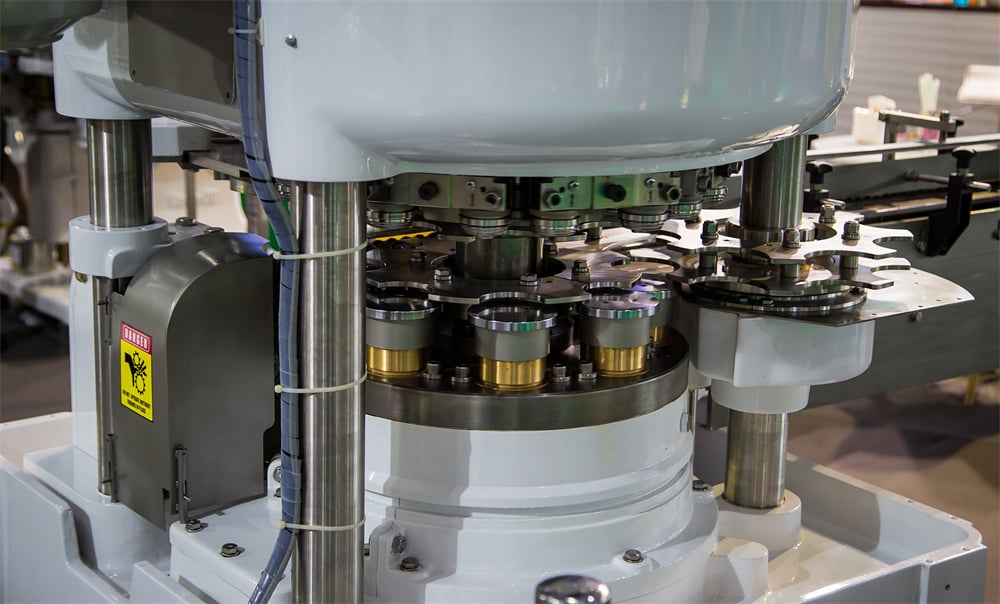
Pneumatic presses are the preferred solution for light-duty applications where speed, simplicity, and cleanliness are paramount. These machines use compressed air, typically sourced from a central shop compressor, to drive a piston. Because air can be moved and exhausted very quickly, pneumatic presses can achieve cycle rates that far exceed those of hydraulic systems. This makes them ideal for high-speed stamping, punching, riveting, and assembly tasks where the material is relatively thin and the required force is low (usually under 20 tons).
The mechanical simplicity of a pneumatic press is one of its greatest selling points. With fewer moving parts and no hydraulic oil to manage, these machines are generally easier to set up and maintain. There is no risk of oil leaks, which is a critical factor in industries like electronics or food-grade packaging where contamination must be avoided. Furthermore, pneumatic presses are typically more compact and have a lower initial purchase price compared to hydraulic presses of similar size, making them an attractive option for smaller shops or specific assembly line stations.
However, the compressibility of air introduces certain limitations. Unlike hydraulic fluid, air compresses when it meets resistance. This means that a pneumatic press may not provide a perfectly smooth or consistent force throughout the entire stroke. If the resistance increases suddenly, the ram may slow down or bounce, which can affect the quality of certain forming operations. To mitigate this, some advanced pneumatic presses use “air-over-oil” systems, which combine the speed of pneumatics with the smooth, controlled force of hydraulics for the final portion of the stroke.
In terms of operation, pneumatic presses are often quieter than the constant hum of a hydraulic power unit, though the sudden exhaust of air can create a loud “pop” if not properly muffled. They are also highly energy-efficient for short-stroke applications. Since they only consume energy when the air is compressed and moved, they don’t require a motor to run constantly to maintain pressure. For shops looking to optimize their throughput on small parts, the pneumatic press offers an unbeatable combination of speed and low operational overhead.
Specification Comparison Table
To better understand the Hydraulic Press Vs Pneumatic Press: Key Differences Metal Fabrication experts look for, the following table compares the technical specifications and performance metrics of both systems.
| Feature | Hydraulic Press | Pneumatic Press |
|---|---|---|
| Force Capacity | Very High (Up to 50,000+ Tons) | Low to Medium (Typically 0.5 to 30 Tons) |
| Operating Speed | Slower, controlled movement | Very High, rapid cycling |
| Pressure Control | Highly adjustable and constant | Variable, depends on air pressure |
| Stroke Length | Long and fully adjustable | Generally shorter |
| Maintenance | Moderate (Oil, filters, seals) | Low (Air lines, lubrication) |
| Initial Cost | Higher | Lower |
| Energy Source | Electric motor driving oil pump | Compressed air |
| Precision | High (Excellent for deep forming) | Moderate (Best for punching/assembly) |
Best-fit Applications in Metal Fabrication
Choosing between these two machines often depends on the specific application. The hydraulic press is the undisputed king of heavy metal forming. Because it can deliver full tonnage at any point in the stroke, it is the only viable option for deep drawing, where a flat sheet of metal is pulled into a die to create a cup or box shape. It is also essential for heavy-duty forging, straightening large steel beams, and molding thick composite materials. In the automotive and aerospace industries, hydraulic presses are used to form body panels and structural components that require immense pressure and precise dwell times.
On the other hand, pneumatic presses excel in high-volume assembly and light fabrication. If your shop produces thousands of small brackets, electrical connectors, or jewelry components daily, the speed of a pneumatic press will significantly outperform a hydraulic one. They are frequently used for punching holes in thin-gauge sheet metal, riveting components together, and crimping terminals onto wires. Because they are clean and fast, they are also common in the medical device and electronics industries where precision and speed are required without the risk of oil mist or leaks.
Another area where pneumatic presses shine is in “impact” applications. Because the ram can move so quickly, the kinetic energy generated can be used for marking or staking operations that require a sharp, quick blow rather than a slow, steady squeeze. Conversely, if your application requires the material to “flow” into a die—such as in plastic deformation of thick metals—the slow, steady pressure of a hydraulic press is required to prevent the material from cracking or tearing. Understanding these application nuances is key to selecting the right tool for your production floor.
Cost and Maintenance Comparison
When analyzing the Hydraulic Press Vs Pneumatic Press: Key Differences Metal Fabrication shops must account for, the total cost of ownership (TCO) is a major factor. The initial investment for a hydraulic press is almost always higher. This is due to the complexity of the hydraulic power unit (HPU), the high-pressure cylinders, and the sophisticated valving required to manage the oil flow. Additionally, the infrastructure for a hydraulic press may require more space and specialized electrical hookups to handle the large motors that drive the pumps.
Pneumatic presses are much more budget-friendly at the outset. They are simpler to manufacture and often run off the existing compressed air lines found in most industrial facilities. However, it is important to remember that compressed air is one of the most expensive utilities in a factory. While the press itself is cheap, the cost of running a large compressor to feed multiple pneumatic machines can add up over time. In contrast, a hydraulic press only uses significant energy when the pump is under load, though the motor often idles between cycles.
Maintenance requirements also differ significantly. A hydraulic press requires regular oil changes, filter replacements, and monitoring for leaks. If a seal fails in a hydraulic system, it can create a significant mess and potential safety hazard. However, hydraulic components are built for durability and can handle millions of cycles if the oil is kept clean. Pneumatic presses require very little maintenance beyond ensuring the air supply is dry and lubricated. Moisture in the air lines is the primary enemy of pneumatic systems, as it can lead to internal corrosion and valve failure. Installing a high-quality air dryer and FRL (Filter, Regulator, Lubricator) unit is essential for pneumatic longevity.
Recommendation: Which One Should You Choose?
The decision between a hydraulic and pneumatic press ultimately depends on your specific production requirements. If your work involves heavy-gauge materials, requires high tonnage (above 20-30 tons), or involves complex forming like deep drawing, a hydraulic press is the only logical choice. Its ability to provide constant pressure and handle massive loads makes it indispensable for structural metal fabrication. While the initial cost and maintenance are higher, the versatility and power it provides offer a superior return on investment for heavy-duty shops.
If your production focuses on high-speed, repetitive tasks involving thin materials or assembly, a pneumatic press is likely the better option. Its lower cost, faster cycle times, and cleaner operation make it ideal for light manufacturing environments. It is also a great choice for shops with limited space or those who need to integrate a press into an automated assembly line where speed is the bottleneck. For many mid-sized shops, having both types of machines allows for the greatest flexibility, using the pneumatic press for small parts and the hydraulic press for the heavy lifting.
Before making a purchase, we recommend conducting a thorough analysis of your most common workpieces. Measure the maximum thickness, the required stroke length, and the desired parts-per-hour. Consult with a machinery expert at HARSLE to discuss your specific needs. Often, a machine can be customized with specific bed sizes, stroke lengths, or control systems to bridge the gap between these two technologies, ensuring you get the most efficient tool for your fabrication needs.
Frequently Asked Questions (FAQ)
1. Can a pneumatic press handle heavy steel plate?
Generally, no. Pneumatic presses are limited by the pressure of the compressed air (usually 80-120 PSI). To generate the tonnage required for heavy steel plate, the cylinder would have to be impractically large. For heavy steel, a hydraulic press is required.
2. Which press is safer to operate?
Both machines are safe when equipped with proper guarding, such as light curtains and two-hand controls. However, hydraulic presses have built-in overload protection that prevents the machine from breaking if it hits an obstruction, whereas some mechanical or pneumatic systems might continue to apply force until something fails.
3. Is a hydraulic press much slower than a pneumatic one?
Yes, in terms of cycle speed, a pneumatic press is significantly faster. A pneumatic press can often perform 40-100 strokes per minute, while a standard hydraulic press might only perform 5-20 strokes per minute depending on the tonnage and stroke length.
4. Do hydraulic presses leak oil frequently?
Modern hydraulic presses from reputable manufacturers like HARSLE use high-quality seals and precision-machined components that minimize the risk of leaks. With proper maintenance and regular seal inspections, oil leaks are rare and manageable.
5. Can I use a hydraulic press for light assembly?
Yes, you can dial down the pressure on a hydraulic press to perform light tasks, but it is not the most efficient use of the machine. It will be slower and consume more energy than a small pneumatic press dedicated to that task.