Improving Cutting Accuracy in Stainless Steel Production with a Shearing Machine


Introduction to Precision Shearing in Stainless Steel Fabrication
In the modern industrial landscape, stainless steel has become a cornerstone material for sectors ranging from food processing and medical equipment to aerospace and architectural design. Its unique properties—corrosion resistance, aesthetic appeal, and high strength-to-weight ratio—make it indispensable. However, these same properties present significant challenges during the primary processing stage, particularly when it comes to shearing. Improving Cutting Accuracy In Stainless Steel Production A Shearing Machine is not merely a matter of operational efficiency; it is a critical factor in reducing material waste, ensuring downstream compatibility, and maintaining the structural integrity of the final product.
Stainless steel is notoriously more difficult to cut than mild steel. It possesses a higher tensile strength and a greater tendency for work hardening. When a shearing machine is not properly calibrated or lacks the necessary rigidity, the result is often a distorted edge, excessive burrs, or dimensional inaccuracies that can derail an entire production line. For manufacturers, the goal is to achieve a ‘clean break’—a cut that is square, straight, and free from deformation. This requires a deep understanding of both the material science of stainless steel and the mechanical nuances of the shearing machine itself.
As global competition intensifies, the margin for error in metal fabrication continues to shrink. High-precision shearing is the first line of defense against rising costs. By mastering the variables that influence cutting accuracy, fabricators can significantly improve their ROI. This article explores the technical strategies, machine configurations, and operational best practices necessary for Improving Cutting Accuracy In Stainless Steel Production A Shearing Machine, with a specific focus on the advanced solutions provided by HARSLE.
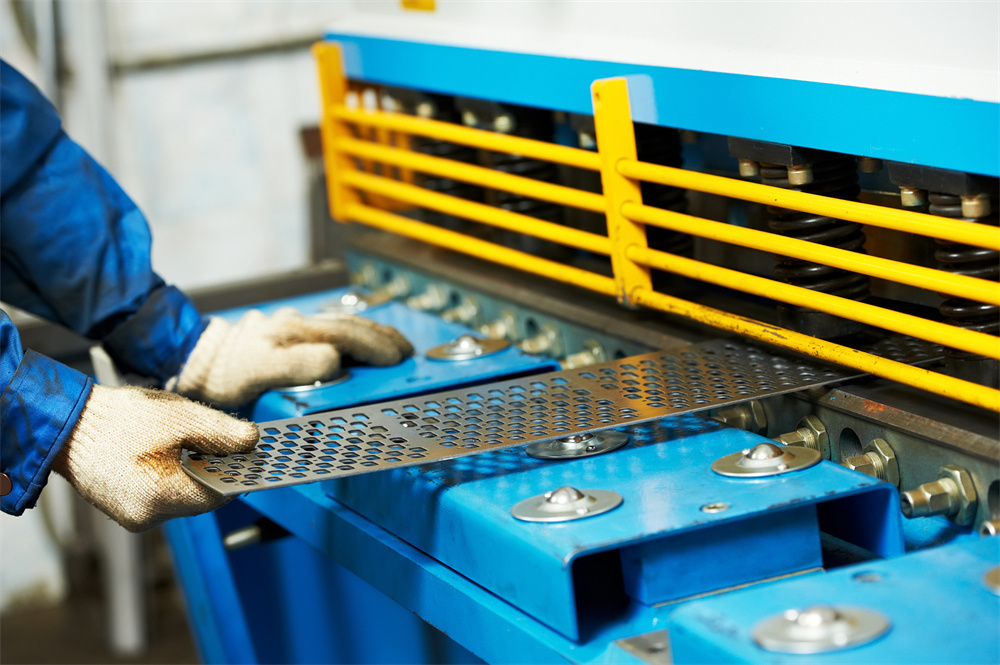
Key Considerations for Stainless Steel Shearing
Understanding Material Properties
The first step in Improving Cutting Accuracy In Stainless Steel Production A Shearing Machine is recognizing that stainless steel behaves differently under pressure than carbon steel. Stainless steel alloys, such as 304 and 316, have a high chromium and nickel content, which contributes to their toughness. This toughness means that the shearing machine must exert significantly more force—often 50% to 60% more—than it would for a mild steel plate of the same thickness. If the machine is underpowered, the frame may deflect, leading to a ‘bowed’ cut.
Furthermore, stainless steel work-hardens rapidly. If the shearing blade is dull or the clearance is incorrect, the material will undergo plastic deformation rather than a clean fracture. This creates a hardened edge that is difficult to weld or machine in subsequent steps. Therefore, the shearing process must be swift and decisive, utilizing sharp, high-quality blades specifically designed for stainless applications.
The Role of Blade Clearance
Blade clearance—the horizontal distance between the upper and lower blades—is perhaps the most critical variable in shearing accuracy. For stainless steel, the clearance must be tighter than for mild steel. Typically, a clearance of 5% to 8% of the material thickness is recommended. If the gap is too wide, the material will ‘roll’ between the blades, resulting in a heavy burr and a rounded edge. If it is too tight, the blades may clash, or the machine may require excessive force, leading to premature wear.
Modern shearing machines, such as those manufactured by HARSLE, often feature rapid blade gap adjustment systems. These allow operators to dial in the exact clearance required for specific stainless grades and thicknesses in seconds. This precision ensures that the fracture line remains consistent across the entire length of the cut, which is essential for maintaining dimensional tolerances.
Rake Angle and Its Impact
The rake angle is the angle of the upper blade relative to the lower blade. A higher rake angle reduces the amount of force required to complete the cut because it shears the material gradually, like a pair of scissors. However, a high rake angle can also introduce ‘twist’ and ‘bow’ in the sheared strip, especially when cutting narrow pieces. For stainless steel production, finding the optimal balance is key. Variable rake shearing machines allow the operator to decrease the angle for thinner sheets to minimize distortion and increase it for thicker plates to protect the machine’s hydraulic system.
Technical Details of High-Accuracy Shearing Machines
Hydraulic Stability and Frame Rigidity
Improving Cutting Accuracy In Stainless Steel Production A Shearing Machine requires a machine with an exceptionally rigid frame. Any vibration or ‘yawning’ of the frame during the cutting stroke will immediately translate into an inaccurate cut. HARSLE shearing machines utilize a heavy-duty, all-steel welded structure that is stress-relieved to ensure long-term stability. This rigidity is complemented by a high-performance hydraulic system that provides consistent pressure throughout the stroke.
The hydraulic hold-downs are equally important. These cylinders exert pressure on the stainless steel sheet before the cut begins, preventing it from shifting. In stainless steel production, where the material surface is often polished or brushed, these hold-downs should be equipped with nylon or rubber pads to prevent marking or scratching the delicate surface.
CNC Controls and Backgauge Precision
The transition from manual to CNC-controlled shearing has revolutionized accuracy in the industry. A CNC backgauge system allows for positioning tolerances as tight as ±0.05mm. For stainless steel production, where material costs are high, this level of precision is vital for nesting parts efficiently and minimizing scrap. Advanced controllers, such as the Delem DAC-360T or the Estun E21S, can store multiple programs, automatically adjusting the backgauge position, stroke length, and even the blade gap based on the material parameters entered by the operator.

Blade Material and Maintenance
Not all shearing blades are created equal. For stainless steel, blades made from High-Carbon, High-Chrome (HCHC) steel or D2 tool steel are required. These materials offer the hardness necessary to resist the abrasive nature of stainless steel. A standard blade used for mild steel will dull rapidly when used on stainless, leading to a decline in cutting accuracy and edge quality. Regular maintenance, including flipping the blades (most shearing blades have four cutting edges) and professional regrinding, is essential for sustained performance.
Selection Advice: Choosing the Right Shearing Machine
Swing Beam vs. Guillotine Shears
When selecting a machine for Improving Cutting Accuracy In Stainless Steel Production A Shearing Machine, fabricators must choose between swing beam (QC12Y series) and guillotine (QC11Y series) designs. Swing beam shears move in a circular arc, which naturally pulls the blade away from the material after the cut, reducing friction. However, guillotine shears move in a straight vertical line and allow for adjustable rake angles. For high-precision stainless steel work, the variable rake guillotine is often preferred because it offers greater control over material distortion and can handle a wider range of thicknesses with higher accuracy.
Capacity and Duty Cycle
Always choose a machine with a capacity that exceeds your maximum requirements. If you frequently cut 6mm stainless steel, a machine rated for 8mm or 10mm mild steel is necessary. Running a machine at its absolute limit when processing stainless steel will lead to frame deflection and inconsistent cuts. Additionally, consider the duty cycle. High-volume production environments require robust cooling systems for the hydraulic oil to maintain consistent viscosity and pressure throughout the workday.
Feature Checklist for Stainless Steel Production
- Automatic Blade Gap Adjustment: Essential for switching between different gauges of stainless steel.
- Anti-Twist Device: A hydraulic mechanism that supports the material during the cut to prevent twisting of narrow strips.
- Shadow Line Lighting: Projects a clear line on the material for accurate manual alignment when cutting to a scribed line.
- Sheet Support Systems: Pneumatic or mechanical supports that prevent thin stainless sheets from sagging before they reach the backgauge.
- Front Feed Systems: For large-scale production, CNC front feeders can increase speed and accuracy by automating the material handling process.
Maintenance Strategies for Long-Term Accuracy
Even the best shearing machine will lose accuracy if not properly maintained. For stainless steel production, a rigorous maintenance schedule is non-negotiable. This includes daily checks of the hydraulic oil levels and weekly inspections of the blade sharpness. Lubrication of the backgauge ball screws and guideways ensures that positioning remains smooth and precise. Furthermore, the machine’s leveling should be checked periodically; a machine that has shifted on its foundation will never produce a perfectly square cut.
Calibration of the CNC backgauge is another critical task. Over time, mechanical wear can lead to small discrepancies between the controller’s readout and the actual position of the gauge. Regular calibration using a precision master square and calipers will keep the machine within its specified tolerances. By investing time in maintenance, fabricators can extend the life of their HARSLE machine and ensure that Improving Cutting Accuracy In Stainless Steel Production A Shearing Machine remains a consistent reality.
Frequently Asked Questions (FAQ)
1. Why does stainless steel require more force to shear than mild steel?
Stainless steel has a higher tensile strength and higher work-hardening rate. This means the molecular bonds within the metal are stronger and resist separation more than those in carbon steel. Consequently, the shearing machine must apply more pressure to initiate the fracture.
2. How can I prevent scratches on my stainless steel sheets during shearing?
To prevent surface damage, use shearing machines equipped with rubber-coated or nylon-tipped hydraulic hold-downs. Additionally, ensure the worktable is clean and free of metal chips, and consider using a machine with ball transfers in the table to allow the sheet to glide easily.
3. What is the ideal blade gap for 3mm stainless steel?
For 3mm stainless steel, a blade gap of approximately 0.15mm to 0.24mm (5-8% of thickness) is generally recommended. However, the specific alloy and the desired edge quality may require slight adjustments. Always refer to the machine manufacturer’s clearance chart.
4. How often should I sharpen the blades when cutting stainless steel?
Stainless steel is abrasive and will dull blades faster than mild steel. The frequency depends on the volume of production, but a general rule is to inspect the edges every 500-1,000 cuts. If you notice increased burr height or a change in the sound of the cut, it is time to flip or regrind the blades.
5. Can I use a swing beam shear for high-precision stainless steel parts?
Yes, swing beam shears are capable of high accuracy, but they are generally better suited for thinner materials where rake angle adjustment is less critical. For heavy-duty or extremely high-precision requirements across varying thicknesses, a variable rake guillotine shear is often the superior choice.
Conclusion: The ROI of Precision Shearing
Improving Cutting Accuracy In Stainless Steel Production A Shearing Machine is a multifaceted challenge that requires the right equipment, technical knowledge, and meticulous maintenance. By focusing on critical factors like blade clearance, rake angle, and frame rigidity, manufacturers can produce high-quality components that meet the stringent demands of the stainless steel industry. Investing in a high-quality HARSLE shearing machine equipped with CNC controls and automatic adjustments not only enhances accuracy but also boosts productivity and reduces material waste.
In the long run, the ability to deliver perfectly sheared stainless steel parts gives fabricators a competitive edge. It reduces the need for secondary grinding or finishing, speeds up assembly and welding, and ensures customer satisfaction. As technology continues to evolve, HARSLE remains committed to providing the metal fabrication industry with the tools necessary to achieve unprecedented levels of precision and efficiency in stainless steel production.