Mastering Torsion Bar Press Brakes: Principles and Synchronization


In sheet metal fabrication, the torsion bar press brake remains a reliable and cost-effective solution for many workshops. Commonly known as the WC67K or WC67Y series, it ensures ram parallelism through a durable torsion bar mechanism, delivering consistent bending accuracy across the entire workpiece. While advanced electro-hydraulic systems are increasingly popular, this mechanical design offers simplicity, stability, and ease of maintenance without relying on complex proportional valves. For production managers and engineers, understanding its synchronization principle and structural design is key to improving efficiency and maintaining stable bending performance.
Understanding the Basics of Torsion Bar Press Brakes

A torsion bar press brake is a type of hydraulic press brake that achieves synchronization through a mechanical shaft, known as a torsion bar, which connects the left and right hydraulic cylinders. Unlike electro-hydraulic machines that use independent linear encoders and proportional valves to monitor and adjust the ram position in real-time, the torsion bar system relies on physical rigidity. When the hydraulic system applies pressure, the torsion bar forces both ends of the ram to move in unison, effectively preventing the ram from tilting even if the bending load is slightly off-center.
The core components include the C-frame, the ram, the worktable, the hydraulic cylinders, and the backgauge system. The primary keyword, torsion bar press brakes, refers specifically to this mechanical-hydraulic hybrid design. It is prized for its simplicity, ease of maintenance, and lower initial investment cost compared to its fully CNC-controlled counterparts. For many standard bending operations involving mild steel and stainless steel, this technology offers more than enough precision for industrial requirements.
Why Torsion Bar Press Brakes Matter in Sheet Metal Fabrication
In a modern manufacturing environment, the selection of machinery often boils down to the balance between precision and ROI (Return on Investment). Torsion bar press brakes are particularly significant for small to medium-sized enterprises (SMEs) and specialized production lines. Their significance lies in their durability and the straightforward nature of their operation. Because the synchronization is mechanical, there are fewer electronic components to fail, making them ideal for environments where high-tech maintenance support might be limited.
Mechanical synchronization through a torsion bar is the bedrock of affordable precision in the sheet metal industry, providing a stable platform for high-tonnage applications without the software overhead of more complex systems.
Furthermore, these machines are highly versatile. They can be equipped with basic NC controllers (like the E21 or DA41S) to automate the backgauge and stroke depth, providing a bridge between manual operation and high-end CNC automation. For projects involving long workpieces where slight variations in bending angle are permissible, the torsion bar system provides exceptional consistency.
Key Factors to Consider in Torsion Bar Systems
When evaluating a torsion bar press brake, several technical factors must be scrutinized to ensure the machine meets the specific needs of your fabrication tasks. These factors influence not only the quality of the bend but also the longevity of the machine itself.
- Ram Parallelism: The diameter and material of the torsion bar are critical. A larger diameter bar provides higher torsional rigidity, ensuring the ram remains parallel even under heavy loads.
- Mechanical Nut Stops: Inside the hydraulic cylinders of a torsion bar machine, there are mechanical nuts that act as hard stops. These define the bottom dead center (BDC) of the stroke. The precision of the motor that adjusts these stops determines the repeatability of the bending angle.
- Frame Deflection: All press brakes experience frame deflection under load. High-quality torsion bar machines use heavy, welded steel plates that are stress-relieved to minimize this effect.
- Tooling Compatibility: Ensure the machine uses standard European or Amada-style clamping to allow for a wide range of punch and die configurations.
Technical Explanation and Tonnage Calculation

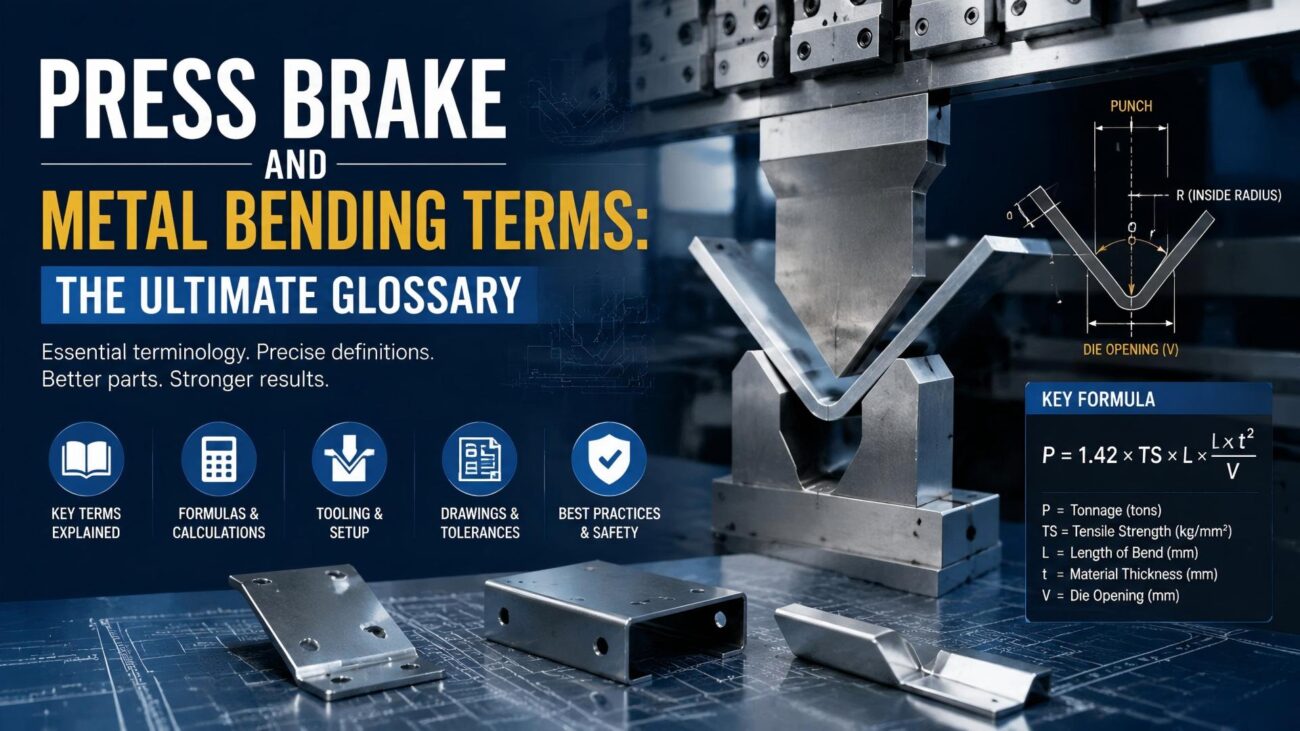
Calculating the required tonnage is the most critical step for any engineer. Overloading the machine can lead to permanent frame deformation or torsion bar failure, while underestimating the force required will result in incomplete bends. The bending force (P) is influenced by the material tensile strength, sheet thickness, and the die opening width.
The standard formula for air bending is: P = (650 * S^2 * L) / (V * 1000)
Where:
- P: Required bending force in Tons.
- S: Sheet thickness in millimeters (mm).
- L: Bending length in millimeters (mm).
- V: Bottom die opening (V-width) in millimeters (mm). Usually, V is 8 to 10 times the sheet thickness.
- 650: This constant represents the tensile strength for standard mild steel (approx. 450 MPa). For stainless steel, this factor should be increased by 50% (approx. 900-1000).
For example, if you are bending a 4mm thick mild steel plate over a length of 2500mm using a 32mm V-die, the calculation would be: P = (650 * 16 * 2500) / (32 * 1000) = 812.5 Tons. Therefore, a 100-ton machine would be the appropriate choice to ensure a safety margin.
| Material Thickness (mm) | Recommended V-Die (mm) | Min. Flange Length (mm) | Force per Meter (T/m) |
|---|---|---|---|
| 1.0 | 8 | 5.5 | 8 |
| 2.0 | 16 | 11.0 | 17 |
| 3.0 | 24 | 16.5 | 25 |
| 6.0 | 48 | 33.0 | 50 |
Comparing Torsion Bar vs. Electro-Hydraulic Synchronization
It is vital to distinguish between the two primary synchronization technologies available today. While torsion bar press brakes are excellent for many, high-precision aerospace or medical components often require the advanced features of electro-hydraulic machines (WE67K series).
| Feature | Torsion Bar (Mechanical) | Electro-Hydraulic (CNC) |
|---|---|---|
| Synchronization Method | Mechanical Torsion Bar | Proportional Valves & Linear Scales |
| Precision | Good (+/- 0.1mm) | Excellent (+/- 0.01mm) |
| Off-Center Loading | Limited resistance | Automatically compensated |
| Cost | Lower Initial & Maintenance | Higher |
Operating Torsion Bar Press Brakes: A Step-by-Step Guide
To achieve the best results with torsion bar press brakes, operators must follow a disciplined setup procedure. Mechanical machines require more physical adjustment than fully automated ones.
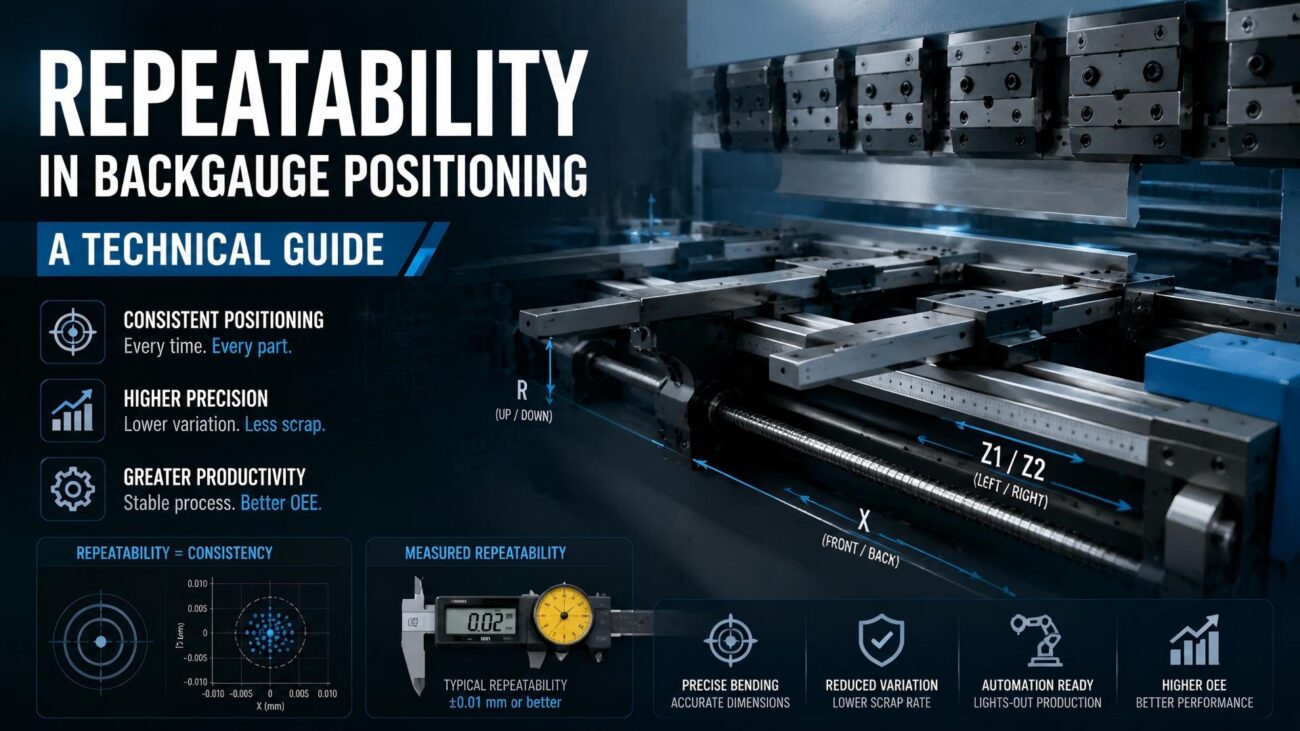
- Machine Zeroing: Start by homing the backgauge (X-axis) and the ram stroke (Y-axis). This ensures the controller knows the physical limits of the mechanical stops.
- Tooling Selection: Select the punch and V-die based on the material thickness and the required bending radius. Secure the tools tightly in the clamps.
- Angle Programming: Input the desired angle into the NC controller. The controller will calculate the necessary depth for the mechanical nuts to stop the hydraulic descent.
- Test Bend: Always perform a test bend on a scrap piece of the same material. Measure the angle at both ends of the bend.
- Parallelism Adjustment: If the angles at the left and right ends differ, adjust the mechanical linkage or the individual cylinder stop until the bend is uniform.
- Production Run: Once the test bend is perfect, proceed with the production run, monitoring for material consistency.
Common Mistakes to Avoid
Even seasoned operators can fall into traps when working with mechanical synchronization systems. Avoiding these common mistakes can save thousands in repair costs and reduce scrap rates.
- Ignoring the Tonnage Limit: Attempting to bend material that is too thick or using a V-die that is too narrow for the sheet thickness will overpressure the system.
- Poor Lubrication: The mechanical joints of the torsion bar and the backgauge lead screws require regular lubrication. Friction here leads to inaccuracy and accelerated wear.
- Off-Center Bending: Torsion bar press brakes are not designed for extreme off-center loading. Always try to bend in the middle of the worktable to prevent unnecessary stress on one end of the torsion bar.
- Incorrect Backgauge Alignment: If the backgauge fingers are not parallel to the die, the bend line will not be square to the edge of the sheet.
Industry Applications
Torsion bar press brakes are found in a variety of industries due to their reliability. In the HVAC industry, they are used to create ductwork and housing for air handling units. The construction industry utilizes them for making brackets, supports, and decorative metal cladding. Furthermore, they are excellent for agricultural machinery fabrication, where thick plates are common and extreme sub-micron precision is often less critical than structural integrity and speed of production.
In many general engineering shops, the torsion bar machine is the unsung hero, handling 80 percent of the daily workload while the expensive CNC machines are reserved for high-complexity prototypes.
Conclusion
The torsion bar press brakes remain a vital tool in the sheet metal fabrication arsenal. By mastering the principles of mechanical synchronization and adhering to correct tonnage calculations, engineers can ensure high-quality output and machine longevity. While it may lack the bells and whistles of high-end electro-hydraulic systems, its simplicity, durability, and cost-effectiveness make it a formidable choice for many industrial applications. When choosing a machine, always consider the material types, required tolerances, and the technical support available to ensure you select the best equipment for your specific fabrication needs.
FAQ
What is the main advantage of a torsion bar press brake?
The main advantage is its cost-effectiveness and mechanical simplicity, leading to lower maintenance costs and high durability in demanding shop environments.
Can I upgrade a torsion bar press brake to full CNC?
While you can upgrade the controller and backgauge (NC to simple CNC), you cannot easily convert it to an electro-hydraulic synchro system because the fundamental mechanical synchronization logic is built into the frame.
How often should I lubricate the torsion bar?
The torsion bar bearings and mechanical linkages should be lubricated daily or weekly, depending on usage intensity, to ensure smooth operation and maintain parallelism.
Why does my machine bend different angles at each end?
This is usually due to a lack of parallelism in the torsion bar setup or uneven wear in the mechanical stops inside the cylinders. It can be corrected through mechanical adjustment of the linkage.
Is air bending possible on these machines?
Yes, torsion bar press brakes are primarily used for air bending. The accuracy of the bend angle depends on the precision of the mechanical depth stops controlled by the NC or CNC unit.