How a Shearing Machine Improved Sheet Metal Production Efficiency in a Fabrication Workshop


Introduction: The Evolution of Cutting in Metal Fabrication
In the competitive landscape of modern manufacturing, the ability to deliver high-quality components quickly and cost-effectively is the hallmark of a successful business. For many years, small to medium-sized fabrication workshops relied on manual cutting methods or outdated mechanical shears that often resulted in bottlenecks, material waste, and inconsistent quality. However, the introduction of advanced hydraulic and CNC-controlled equipment has revolutionized the floor. This article explores a comprehensive case study on how a shearing machine improved sheet metal production efficiency in a fabrication workshop, transforming a struggling operation into a high-throughput powerhouse.
Before the integration of modern shearing technology, the workshop in question faced significant challenges. Their existing equipment was prone to frequent breakdowns, and the manual adjustment of blade gaps meant that switching between different material thicknesses was a time-consuming process. This led to a backlog of orders and a high rate of scrap material due to inaccurate cuts. By investing in a HARSLE hydraulic shearing machine, the workshop was able to address these pain points directly, streamlining their entire production workflow from the moment raw sheets arrived at the facility.
The transition to a modern shearing machine is not just about replacing an old tool; it is about adopting a new philosophy of precision and automation. In the following sections, we will delve into the specific ways that a shearing machine improved sheet metal production efficiency in a fabrication workshop, looking at the technical advancements, the operational shifts, and the long-term economic benefits that such an investment provides to the metalworking industry.
Key Considerations for Improving Production Efficiency
When analyzing how a shearing machine improved sheet metal production efficiency in a fabrication workshop, several key factors come into play. Efficiency in a workshop is measured by the ratio of output to input, where input includes time, labor, and raw materials. A modern shearing machine optimizes all three of these variables through superior design and technological integration.
1. Reduction in Setup and Downtime
One of the primary ways efficiency is gained is through the reduction of setup time. Older machines required operators to manually measure and set the backgauge for every cut, a process fraught with human error. Modern shearing machines feature CNC-controlled backgauges that can be programmed with multiple cutting sequences. This allows the operator to move from one dimension to the next with the push of a button, drastically reducing the idle time between cuts.
2. Precision and Material Savings
Inaccurate cuts are the enemy of efficiency. If a part is cut incorrectly, it must either be reworked or scrapped, both of which are costly. The high-precision blades and rigid frames of HARSLE shearing machines ensure that every cut is square and clean. By minimizing the “burr” and distortion common in lower-quality machines, the workshop reduces the need for secondary finishing processes like grinding or deburring, allowing parts to move straight to the next stage of production, such as bending or welding.
3. Enhanced Operator Safety and Ergonomics
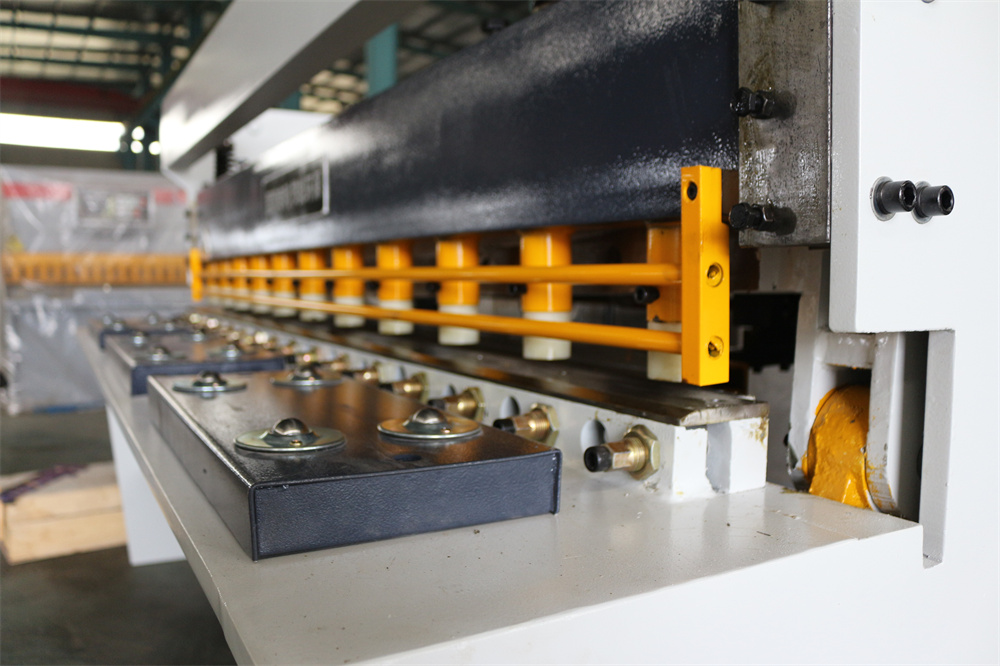
Efficiency is also tied to the well-being and confidence of the machine operator. Modern shearing machines are equipped with advanced safety features, including light curtains, emergency stop buttons, and protective finger guards. When operators feel safe, they can work more consistently and at a higher pace. Furthermore, ergonomic features like front support arms with ball transfers make handling heavy sheets much easier, reducing physical fatigue and the risk of workplace injuries.
4. Versatility Across Material Types
A fabrication workshop rarely works with just one type of metal. Whether it is carbon steel, stainless steel, or aluminum, each material requires different shearing parameters. A modern machine allows for quick adjustment of the blade gap and rake angle. This versatility means the workshop can take on a wider variety of projects without needing multiple specialized machines, thereby maximizing the utility of their floor space and capital investment.
Technical Details: The Mechanics of High-Efficiency Shearing
To truly understand how a shearing machine improved sheet metal production efficiency in a fabrication workshop, one must look under the hood at the technical specifications that drive performance. HARSLE machines are engineered with a focus on durability and precision, utilizing components that are designed to withstand the rigors of continuous industrial use.
Hydraulic System and Power Delivery
The heart of a modern shearing machine is its hydraulic system. Unlike mechanical shears that rely on a flywheel and clutch, hydraulic shears provide consistent pressure throughout the entire stroke. This allows for smoother cutting and the ability to stop or reverse the stroke at any point, which is a critical safety and functional advantage. Integrated hydraulic valve blocks from reputable brands like Bosch-Rexroth ensure leak-free operation and precise control over the shearing beam’s movement.
Blade Quality and Geometry
The quality of the cut is directly related to the quality of the blades. High-carbon, high-chrome blades (often Cr12MoV or 9CrSi) are standard in HARSLE machines. These blades are heat-treated to maintain their edge over thousands of cycles. Furthermore, the ability to adjust the rake angle—the angle at which the upper blade meets the material—is vital. A lower rake angle reduces distortion in thin materials, while a higher rake angle allows the machine to shear thicker plates without overloading the hydraulic system.
| Feature | Impact on Efficiency | Technical Advantage |
|---|---|---|
| CNC Backgauge | Reduces setup time by 70% | High-speed ball screw and AC motor drive |
| Variable Rake Angle | Prevents material twisting | Adjustable hydraulic cylinders for beam tilt |
| Rapid Blade Gap Adjustment | Faster material changeover | Manual or motorized dial with scale readout |
| Shadow Line Lighting | Increases alignment speed | LED projection for precise manual positioning |
Control Systems: E21S and Beyond
The integration of digital controllers like the ESTUN E21S or Delem DAC-series has been a game-changer. These controllers manage the backgauge position, stroke length, and even the number of cuts. By storing programs for recurring jobs, the workshop can ensure that the second batch of parts is identical to the first, months later. This level of repeatability is essential for workshops serving industries like automotive or aerospace, where tolerances are tight.
Selection Advice: Choosing the Right Shearing Machine
Not all shearing machines are created equal, and choosing the wrong one can actually hinder efficiency. When looking at how a shearing machine improved sheet metal production efficiency in a fabrication workshop, the selection process is the first step toward success. Here is a guide on what to look for based on your specific needs.
Assess Your Material Requirements
The most critical factors are the maximum thickness and the maximum length of the sheets you intend to cut. It is always advisable to choose a machine with a capacity slightly higher than your current maximum requirement. For example, if you primarily cut 4mm mild steel, a machine rated for 6mm will operate more comfortably and have a longer lifespan. Remember that stainless steel is harder than mild steel; a machine rated for 6mm mild steel may only be able to handle 3mm or 4mm stainless steel.
Swing Beam vs. Guillotine Type
There are two main types of hydraulic shears: Swing Beam and Guillotine.
- Swing Beam Shears: The upper blade moves in an arc. These are generally more affordable and easier to maintain. They are excellent for general-purpose fabrication.
- Guillotine Shears: The upper blade moves in a straight vertical line. These machines allow for adjustable rake angles and are typically more robust, making them better suited for heavy-duty applications and thicker materials where precision and minimal distortion are paramount.
Check the Backgauge Range and Accuracy
If your workshop produces large panels, ensure the backgauge has enough travel (typically 500mm to 1000mm). Look for backgauges that utilize ball screws rather than T-screws, as ball screws offer much higher precision and faster movement speeds. A “swing-up” backgauge feature is also useful for cutting sheets that are longer than the backgauge’s maximum reach.
After-Sales Support and Component Availability
Efficiency is lost every minute a machine is down. When selecting a manufacturer like HARSLE, consider the availability of spare parts and the quality of technical support. Using standardized components (like Schneider electrics or Siemens motors) ensures that if a minor part fails, it can be sourced locally and replaced quickly, keeping your production line moving.
FAQ: Common Questions About Shearing Machine Efficiency
How often should the blades be sharpened?
The frequency of sharpening depends on the material being cut and the volume of production. Generally, for a workshop operating a single shift, blades should be checked every 6 to 12 months. HARSLE blades are often four-sided (for the bottom) and two-sided (for the top), meaning you can flip them several times before needing a full regrind, which significantly extends their service life.
Can a shearing machine cut materials other than steel?
Yes, shearing machines can cut aluminum, copper, brass, and even some plastics. However, the blade gap must be adjusted specifically for the hardness and thickness of the material to prevent “pulling” or a ragged edge. Always consult the machine’s capacity chart before attempting to cut non-standard materials.
What is the ROI on a new hydraulic shearing machine?
Most workshops see a Return on Investment (ROI) within 12 to 24 months. This is calculated by adding the savings from reduced scrap, the decrease in labor hours per part, and the ability to take on more complex or higher-volume orders that were previously impossible with manual methods.
Does a shearing machine require a special foundation?
For smaller machines (under 6mm capacity), a standard reinforced concrete floor is usually sufficient. For larger, heavy-duty guillotine shears, a dedicated foundation may be required to absorb vibration and ensure the machine remains perfectly level, which is crucial for maintaining cutting accuracy over time.
Conclusion: The Future of Your Fabrication Workshop
In conclusion, the evidence is clear: a shearing machine improved sheet metal production efficiency in a fabrication workshop by addressing the core pillars of manufacturing success—speed, precision, and reliability. By moving away from outdated cutting methods and embracing the power of hydraulic and CNC technology, workshops can significantly lower their overhead costs while increasing the quality of their output.
The journey to an efficient workshop begins with understanding your production needs and choosing a partner like HARSLE that provides the technology and support required to excel. Whether you are a small job shop or a large-scale industrial manufacturer, the right shearing machine is not just a purchase; it is a strategic investment in the future of your business. As the industry continues to evolve toward more automated and integrated systems, having a high-performance shearing machine at the start of your production line ensures that every subsequent process—from bending to assembly—is built on a foundation of accuracy.
If you are looking to replicate the success seen in this case study, now is the time to evaluate your current cutting capabilities. The gains in efficiency, the reduction in waste, and the improvement in worker safety make the transition to a modern shearing machine one of the most impactful decisions a fabrication manager can make. Invest in quality, invest in precision, and watch your production efficiency reach new heights.